
Cogeneration Equipment Market Outlook: Combined Heat and Power Adoption & Forecast 2034
Growing emphasis on reducing energy losses and improving industrial energy efficiency is boosting demand for advanced cogeneration equipment worldwide.

FOR IMMEDIATE RELEASE
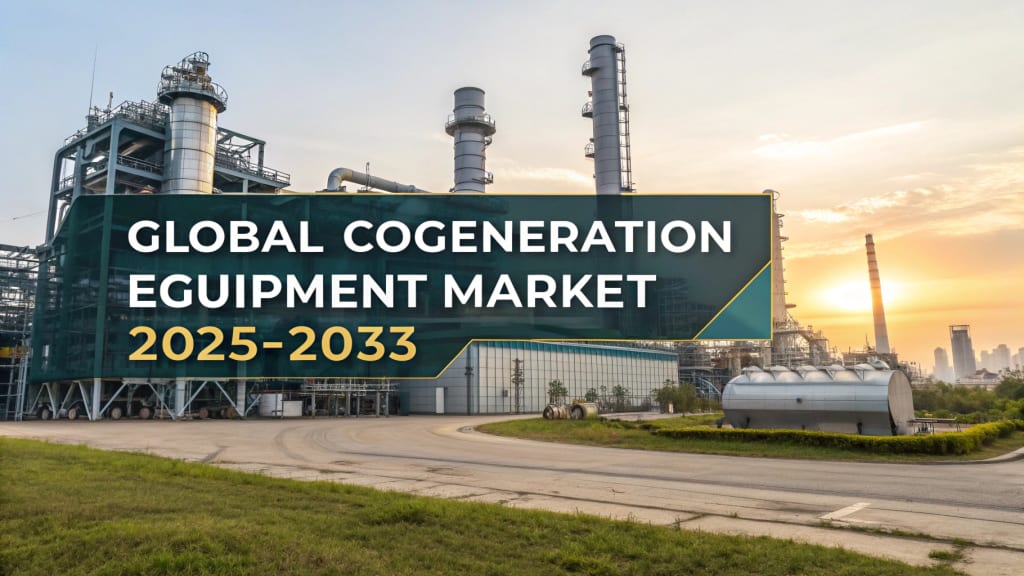
SHERIDAN, WY – The global cogeneration equipment market is witnessing a major shift as industrial and commercial sectors move away from traditional, fragmented energy procurement. According to the latest comprehensive research by IMARC Group, the global cogeneration equipment market reached a valuation of USD 29.94 Billion. The market is on a strong upward trajectory, projected to reach a value of USD 57.90 Billion.
This growth is largely attributed to the urgent need for operational resilience and the aggressive pursuit of decarbonization. Cogeneration, or Combined Heat and Power (CHP), is being recognized not just as a cost-saving measure, but as a critical infrastructure upgrade for a net-zero future.
Get a Sample Report for Actionable Market Insights
Market Segmentation at a Glance:
Breakup by Fuel: Natural Gas (Market Leader), Biogas, Coal, Diesel, Others.
Breakup by Capacity: Up to 30 MW (Highest Demand), 31 MW–60 MW, 61 MW–100 MW.
Breakup by Technology: Gas Turbines (Largest Share), Steam Turbines, Combined Cycle Gas Turbines, Reciprocating Engines.
Breakup by Application: Industrial (Primary User), Commercial, Residential.
Breakup by Region: North America (Dominant Region), Asia-Pacific, Europe, Latin America, Middle East and Africa.
Market Growth Drivers:
The accelerating global demand for energy security and grid independence is a primary driver for cogeneration equipment. As aging power grids face increasing strain from extreme weather and surging demand, industrial facilities—such as data centers and hospitals—are turning to on-site CHP systems to ensure 24/7 reliability. These systems capture waste heat that would otherwise be lost, pushing total fuel efficiency from a standard 45% in traditional plants to over 80%. This dramatic reduction in energy waste directly translates to lower utility bills and a significantly smaller carbon footprint, making it an essential investment for energy-intensive manufacturing sectors.
Furthermore, the "electrification of everything" is pushing commercial enterprises to seek localized power solutions. In North America alone, businesses are grappling with fluctuating electricity prices, prompting a move toward decentralized generation. By producing electricity and thermal energy simultaneously from a single fuel source, companies can hedge against volatile market rates. The ability to use diverse fuels, ranging from natural gas to hydrogen blends, offers a versatile path for organizations to transition toward cleaner energy profiles without sacrificing the high-torque power required for industrial processes, thereby sustaining long-term market interest from a broad demographic of corporate stakeholders.
Market Trends:
A defining trend in the current market is the rapid "Hydrogen-Ready" evolution of cogeneration hardware. Manufacturers are no longer just building for natural gas; they are engineering turbines and engines capable of burning hydrogen blends to meet future emissions standards. For example, recent successful tests of 400kW systems using 30% hydrogen blends in Japan have proven that existing infrastructure can be retrofitted for a low-carbon future. This trend allows industrial players to "future-proof" their energy assets, ensuring that the equipment they install today will remain compliant as global environmental regulations tighten and green hydrogen becomes more accessible and cost-effective.
Additionally, we are seeing the "Digitalization of CHP" through the integration of AI-driven monitoring and IoT sensors. Modern cogeneration units are now becoming "smart" assets that can predict maintenance needs before a failure occurs and optimize fuel consumption in real-time based on current grid prices. This shift toward "Energy-as-a-Service" (EaaS) models is lowering the barrier to entry, allowing firms to deploy high-efficiency equipment with minimal upfront capital. By leveraging data-driven insights, operators can maximize the thermal output for industrial cooling or heating, turning a piece of heavy machinery into a sophisticated, self-optimizing energy hub that responds dynamically to market conditions.
Recent News and Developments in the Cogeneration Market:
Siemens Energy Expansion: In March 2026, Siemens Energy completed a strategic acquisition of a European CHP specialist to enhance its portfolio in industrial energy optimization and expand its service footprint across the EU’s manufacturing belt.
GE Vernova’s Modular Solutions: GE Vernova recently launched a new line of modular gas turbine packages. These units are designed for rapid deployment and feature remote diagnostics, significantly reducing installation timelines for commercial facilities.
Hydrogen Milestones: In mid-2025, a joint venture between major utilities in the U.S. Northeast successfully integrated a 100% hydrogen-fueled micro-cogeneration system into a net-zero housing development, proving the technology's viability for residential applications.
Government Support: The U.S. Inflation Reduction Act continues to provide substantial tax credits (up to 30%) for CHP systems, which has spurred a wave of new projects in the chemical and food processing industries through 2024 and 2025.
The Consultant’s Take: Navigating the Energy Transition
From an experienced marketer's perspective, cogeneration is moving from the "boiler room" to the "boardroom." It is no longer just an engineering choice; it is a strategic financial tool. In an era where "Scope 2" emissions reporting is becoming mandatory for many corporations, the ability to generate your own high-efficiency power is a competitive advantage. The real-world application of this technology—saving a single textile mill millions in annual heating costs—is a powerful story. For businesses looking to thrive, the focus must be on modularity, fuel flexibility, and smart integration. Cogeneration isn't just about making power; it's about making power smarter.
About the Creator
Rahul Pal
Market research professional with expertise in analyzing trends, consumer behavior, and market dynamics. Skilled in delivering actionable insights to support strategic decision-making and drive business growth across diverse industries.
White-Label vs. Custom Crypto Exchanges Under MiCA - And How Smart Founders Prepare?
The European crypto market is entering a new phase of maturity. With the implementation of the Markets in Crypto-Assets (MiCA) regulation, the EU is rapidly becoming one of the most structured and institutionally trusted digital asset ecosystems in the world. Analysts estimate that compliant exchanges operating under MiCA could collectively process over €1 trillion in annual trading volume by 2028, driven by institutional participation and regulatory clarity.
By Nia Higgins7 days ago in 01




Comments
There are no comments for this story
Be the first to respond and start the conversation.