
7 Fairy Tale Books You Must Read in 2026
Discover the Top 7 Fairy Tale Books to Read in 2026: Enchanting Stories, Timeless Lessons, and Must-Have Reads for Every Imagination.


Fairy tales are not just whimsical stories for children—they are timeless narratives that explore universal human experiences, moral dilemmas, and the power of imagination. From enchanted forests to magical kingdoms, these stories transport us to worlds where courage, resilience, and hope prevail. Whether you’re a lifelong reader or a newcomer seeking inspiration, exploring the right fairy tale books can expand your imagination, sharpen critical thinking, and offer profound life lessons.
Below is a list of 7 fairy tale books you must read in 2026.
1. The Paper Bag Princess – Robert Munsch
The Paper Bag Princess is a groundbreaking modern fairy tale that challenges conventional storytelling. Princess Elizabeth rescues herself from a dragon, subverting traditional gender roles and promoting empowerment, resilience, and ingenuity. Munsch’s story blends humor with critical life lessons, teaching young readers the importance of self-reliance, clever thinking, and self-respect. Unlike classic fairy tales that focus on passive princesses awaiting rescue, this narrative celebrates initiative, independence, and personal growth. The story’s simplicity, charm, and progressive message have made it a modern classic, influencing educators, parents, and writers while reinforcing the idea that fairy tales can evolve to reflect contemporary values.
2. Stardust – Neil Gaiman
Neil Gaiman’s Stardust is a modern fairy tale for adults, blending romance, adventure, and magical realism. The story follows Tristan Thorn, who ventures into the mystical land of Faerie to retrieve a fallen star for his beloved, only to discover that the star is a living being with its own destiny. Gaiman weaves humor, danger, and moral dilemmas seamlessly, creating a story that feels timeless yet fresh. Themes of love, courage, and personal growth dominate, while the lush, lyrical prose evokes classic fairy tales. Stardust demonstrates how modern fairy tales can captivate adults while honoring traditional storytelling.
3. Spinning Silver – Naomi Novik
In Spinning Silver, Naomi Novik reinvents the Rumpelstiltskin tale, weaving a complex story of magic, family, and ambition. Miryem, a miller’s daughter, turns her talent for turning silver into gold into a path of empowerment and self-realization. The novel features strong female protagonists, high-stakes magical dilemmas, and richly detailed settings inspired by Eastern European folklore. Themes of greed, generosity, and moral choice dominate the narrative, with fairy tale elements like bargains, curses, and enchanted creatures driving the plot. This standalone novel exemplifies how modern fairy tale retellings can combine intricate plotting, cultural richness, and ethical reflection into a compelling, immersive story.
4. Howl’s Moving Castle – Diana Wynne Jones
Diana Wynne Jones’ Howl’s Moving Castle is a whimsical, standalone fairy tale novel blending magic, humor, and adventure. Sophie, cursed into an old woman’s body, seeks liberation while encountering the mysterious wizard Howl and his enchanted, walking castle. Jones creates a vibrant, imaginative world with magical logic, moral dilemmas, and character growth. Themes of identity, love, and courage permeate the narrative, while the inventive storytelling and clever plot twists engage both young and adult readers. This novel demonstrates how fairy tale conventions—curses, quests, magical transformations—can be woven into standalone narratives that are entertaining, thought-provoking, and timelessly charming.
5. Uprooted – Naomi Novik
Uprooted is a standalone dark fantasy novel inspired by Eastern European fairy tales. It follows Agnieszka, a young woman chosen to serve the enigmatic and powerful wizard known as the Dragon, defending her village against the corrupted Wood. Novik masterfully blends magic, folklore, and psychological depth, crafting a story of courage, friendship, and self-discovery. Themes of power, sacrifice, and resilience run throughout, and the vivid, lyrical prose immerses readers in a fully realized, fairy-tale world. Uprooted demonstrates how traditional fairy tale structures—heroic quests, magical mentors, and moral challenges—can be adapted for modern adult audiences with sophistication and emotional resonance.
6. The Bloody Chamber – Angela Carter
Angela Carter’s The Bloody Chamber reinvents classic fairy tales with a modern, feminist lens, often incorporating elements of Gothic horror. Stories like The Company of Wolves and The Bloody Chamber explore sexuality, power dynamics, and morality, subverting traditional narratives of passive heroines. Carter’s prose is lush, symbolic, and psychologically complex, challenging readers to reconsider familiar tales through critical, contemporary perspectives. The collection demonstrates how fairy tales can evolve while retaining their archetypal power. Her work is not only a literary achievement but also a cultural statement, emphasizing empowerment, agency, and the enduring relevance of fairy tales in exploring human desires and social structures.
7. The Neverending Story – Michael Ende
Michael Ende’s The Neverending Story is a masterful example of modern fantasy, blending fairy tale motifs with an expansive, imaginative narrative. Protagonist Bastian Balthazar Bux embarks on a journey of self-discovery, courage, and moral responsibility in the magical land of Fantastica. The novel explores themes of imagination, storytelling, and identity, emphasizing how narratives shape perception and personal growth. Unlike traditional short fairy tales, Ende creates a world with depth, continuity, and emotional resonance. The story’s enduring appeal lies in its ability to engage readers of all ages, demonstrating that fairy tales can expand beyond folklore into transformative literary experiences that inspire reflection and wonder.
Conclusion
Fairy tales are far more than simple bedtime stories—they are mirrors of our collective psyche, vessels of moral guidance, and gateways to imagination. By exploring these narratives, we not only honor centuries of storytelling tradition but also enrich our understanding of humanity, culture, and the enduring power of imagination.
About the Creator
Diana Meresc
“Diana Meresc“ bring honest, genuine and thoroughly researched ideas that can bring a difference in your life so that you can live a long healthy life.
Keep reading
More stories from Diana Meresc and writers in BookClub and other communities.
7 Portal Fantasy Books You Must Read in 2026
Portal fantasy has captivated readers for generations, offering a magical escape from the ordinary into worlds brimming with wonder, danger, and possibility. From hidden wardrobes to enchanted mirrors, the portal fantasy genre thrives on the thrill of discovery—inviting readers to step through the threshold and explore universes where imagination rules.
By Diana Meresc3 days ago in BookClub
Rachel Reviews: Lakefront Wolves by Joseph Deegan
Meet Finn. He's an 18 year old kid who has potential. He's bright with great school scores and he's also an athlete, a footballer of some prowess. He has it all going for him, it would seem, and yet, he's determined to send what could be a well-planned, stable existence firmly off the rails. He drinks, he smokes, he takes drugs, he has violent tendencies and he's in danger of losing not only his mind but all that he holds dear.
By Rachel Deeming9 days ago in BookClub
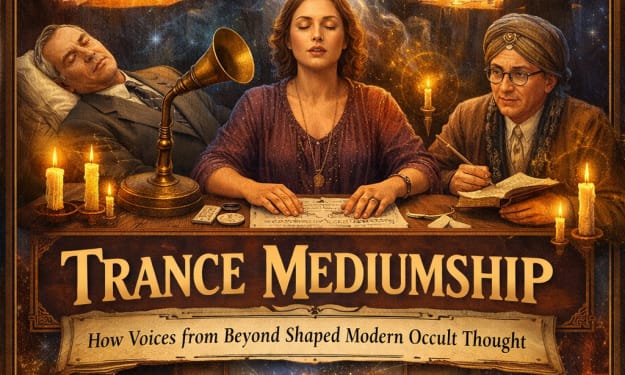
Trance Mediumship
The Living Voice in Altered States Trance mediumship holds a distinctive place within Western esoteric tradition. Unlike intuitive divination or clairvoyant perception, trance mediumship is defined by an altered state of consciousness in which speech, posture, facial expression, and temperament appear to shift under the influence of a perceived external intelligence. Observers have documented changes in tone, vocabulary, accent, and manner. Adherents interpret these manifestations as communication from discarnate beings. Psychical researchers have examined the same phenomena through frameworks of dissociation, subconscious cognition, and culturally conditioned religious experience. Occult practitioners have regarded trance as a disciplined method for accessing unseen dimensions of reality.
By Marcus Hedare6 days ago in BookClub



Comments
There are no comments for this story
Be the first to respond and start the conversation.