
Iran vs Israel War: What Options Does Iran Have After US-Israeli Airstrikes Weaken Its Military?
Iran vs Israel war US Israel airstrikes Iran Iran military strategy Iran missiles and drones Middle East war analysis Strait of Hormuz crisis Iran war of attrition Iran military capability Israel Iran conflict 2026 US Iran tensions

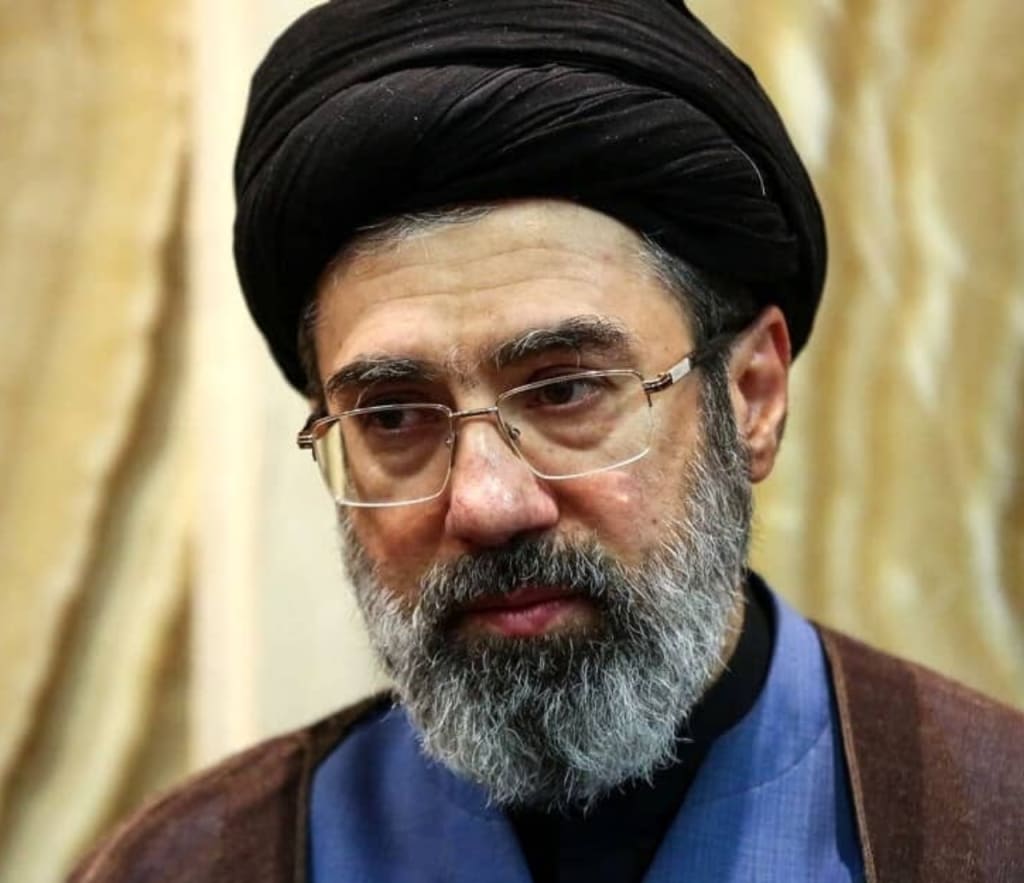
what options does Iran have in this war, and what strategy is it pursuing?
Depleting Resources
Dr. H.A. Hellyer, a Middle East security expert at the Royal United Services Institute (RUSI) in the United Kingdom, says Iran’s current military approach is not to defeat the United States or Israel in a conventional war, but to make any conflict long, region-wide, and economically costly.
He says:
“Iran cannot win conventionally, but its strategy is to make victory expensive and uncertain for others.”
Nicole Grajewski, Assistant Professor at the Center for International Studies at Sciences Po in France, agrees.
She describes Iran’s strategy as a “war of attrition” — a type of war in which the goal is not to deliver a decisive defeat but to gradually weaken the opponent through continuous attacks and losses until their resources and ability to fight are affected.
This strategy also has a psychological dimension.
According to Grajewski:
“During last year’s 12-day war with Israel, Iran directed many of its attacks toward civilian areas. The purpose was less about precision and more about creating fear and psychological shock among the population.”
Missiles and Drones
Missiles and drones are generally considered the backbone of Iran’s defense doctrine.
Grajewski says Iran’s ballistic missile stockpile reportedly suffered significant damage during the 12-day war, but the exact numbers are uncertain because the missiles are stored underground and production continues.
According to Israeli estimates, by February 2026 Iran had about 2,500 missiles, including:
Short-range missiles (up to 1,000 km)
Medium-range missiles (1,000–3,000 km)
Iranian officials say they have used systems like Sejjil, which reportedly has a range of about 2,000 km.
They also say they used Fattah, which Tehran describes as a hypersonic missile, meaning it travels much faster than the speed of sound.
Missile Cities
Iranian media and officials often mention underground missile facilities known as “missile cities,” although their size and stockpiles have not been independently verified.
According to senior U.S. commander General Dan Caine, Iran’s ballistic missile attacks have decreased by 86% since the first day of fighting, Saturday, February 28.
The U.S. Central Command (CENTCOM) says there was a further 23% drop by Tuesday, March 4.
Despite this, Hellyer says Iran still has the ability to effectively target Israeli infrastructure, U.S. regional bases, and Gulf allies, while also threatening the global energy flow through the Strait of Hormuz.
He says:
“Even a small disruption in the Strait of Hormuz could have severe consequences for the global economy.”
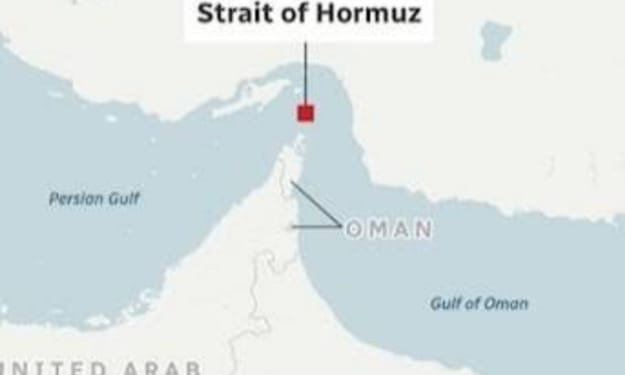
About 20% of the world’s oil passes through this narrow waterway, and Iran has now effectively closed it, warning that any ship attempting to pass through will be targeted.
Drone Capability
Although Iran may face shortages of advanced missiles and solid fuel, Grajewski says its drone capability remains significant.
It is believed that before the war Iran had produced tens of thousands of ‘Shahed’ one-way attack drones.
This design has been exported to Russia, and even the United States has reportedly studied aspects of the technology.
These drones are not just for direct damage but also serve a strategic purpose:
They force opponents to use expensive interceptor missiles, gradually weakening air defense systems.
Grajewski says:
“Part of the strategy is to exhaust interceptor capabilities. Iran is doing this with UAVs and drones. It’s similar to what the Russians did in Ukraine.”
However, the United States says Iran’s drone attacks have fallen by 73% compared to the first day of the conflict.
According to the Institute for National Security Studies in Tel Aviv:
The U.S. and Israel have launched over 2,000 weapons of different types.
Iran has fired 571 missiles and 1,391 drones, many of which were intercepted.
Experts say that as the war continues, it will become harder for both sides to maintain this pace.
A Long Conflict
Iran has one of the largest standing military forces in the Middle East.
According to the International Institute for Strategic Studies (IISS) Military Balance 2025 report, Iran has around 610,000 active military personnel, including:
350,000 regular army troops
190,000 members of the Islamic Revolutionary Guard Corps (IRGC), which oversees missile and drone programs as well as many regional operations
Iran also relies on a regional network of allies, including:
Houthi rebels in Yemen
Armed groups in Iraq
Hezbollah in Lebanon
Hamas in the Palestinian territories
However, these groups have suffered heavy losses during the wave of regional fighting that followed Hamas’s October 2023 attack from Gaza.
Grajewski says that despite sanctions, Iran has experience enduring long conflicts.
She notes that this resilience partly comes from the Iran-Iraq War, when Iranian cities were repeatedly targeted despite the country’s military weaknesses.
However, the sustainability of Iran’s strategy also depends on internal unity.
She says:
“It largely depends on how united the security and political elites remain and whether divisions emerge. If divisions grow, it could create more disorder in military strategy.”
She adds:
“Missile operators appear to be under intense pressure and fatigue, which sometimes leads to firing at incorrect targets or reduced accuracy. Some operations appear more disorganized, and overall there are signs of exhaustion.”
If this situation continues alongside ongoing attacks on Iran’s missile stockpiles and forces, it could lead to unintentional escalation.
Rising Tensions
Grajewski points to Turkey, noting that NATO air defenses intercepted an Iranian ballistic missile on Wednesday that was entering Turkish airspace.
Turkey, which borders Iran and had tried to mediate U.S.–Iran negotiations before the air war began, warned that:
“All parties should avoid actions that could lead to further escalation.”
Grajewski says Iran’s broader objective is to make conditions so difficult for neighboring countries that they pressure the United States to move toward negotiations, a compromise, or a ceasefire.
She says:
“It is still unclear whether this strategy will succeed. However, it could also fail.”
Hellyer says Gulf countries may decide that although they initially opposed the U.S.–Israel war against Iran, their own security is now threatened by Iran’s retaliatory attacks, and therefore it may be better to support the U.S. campaign to remove the immediate Iranian threat.
However, he adds:
“I don’t think the Gulf countries have reached that point yet.”
About the Creator
Keep reading
More stories from Real content and writers in Chapters and other communities.
If the Strait of Hormuz is closed for a long time, it will benefit Russia.
A war involving the United States and Israel with Iran carries the risk that the Strait of Hormuz could remain closed for a prolonged period. This is a crucial route in the global economy through which 20% of the world’s oil and liquefied natural gas is supplied from the countries of the Persian Gulf.
By Real content3 days ago in Chapters
Edwin Roberts Russell
Edwin Roberts Russell: Edwin Roberts Russell In the shadows of one of the most consequential scientific efforts in human history stood a man whose name remains far less known than the magnitude of his contributions. Edwin Roberts Russell (1913–1996) was not a general, politician, or battlefield commander — yet his work would shape the outcome of World War II and alter the global landscape for generations.
By TREYTON SCOTT5 days ago in Chapters
The BAFTA Awards
By now, in a stunning departure from recent years, most of the world is aware of what happened at the BAFTA film awards. Social Media Headlines will tell you the bare bones: that John Davidson, a Tourette's Syndrome advocate, shouted a racial slur at two Actors of Colour, Michael B Jordan and Delroy Lindo.
By Natasja Rose5 days ago in Psyche


Comments
There are no comments for this story
Be the first to respond and start the conversation.