
Icons: Between Belief and Doubt-Part 4
A conversation on icon theology between belief and hesitation;

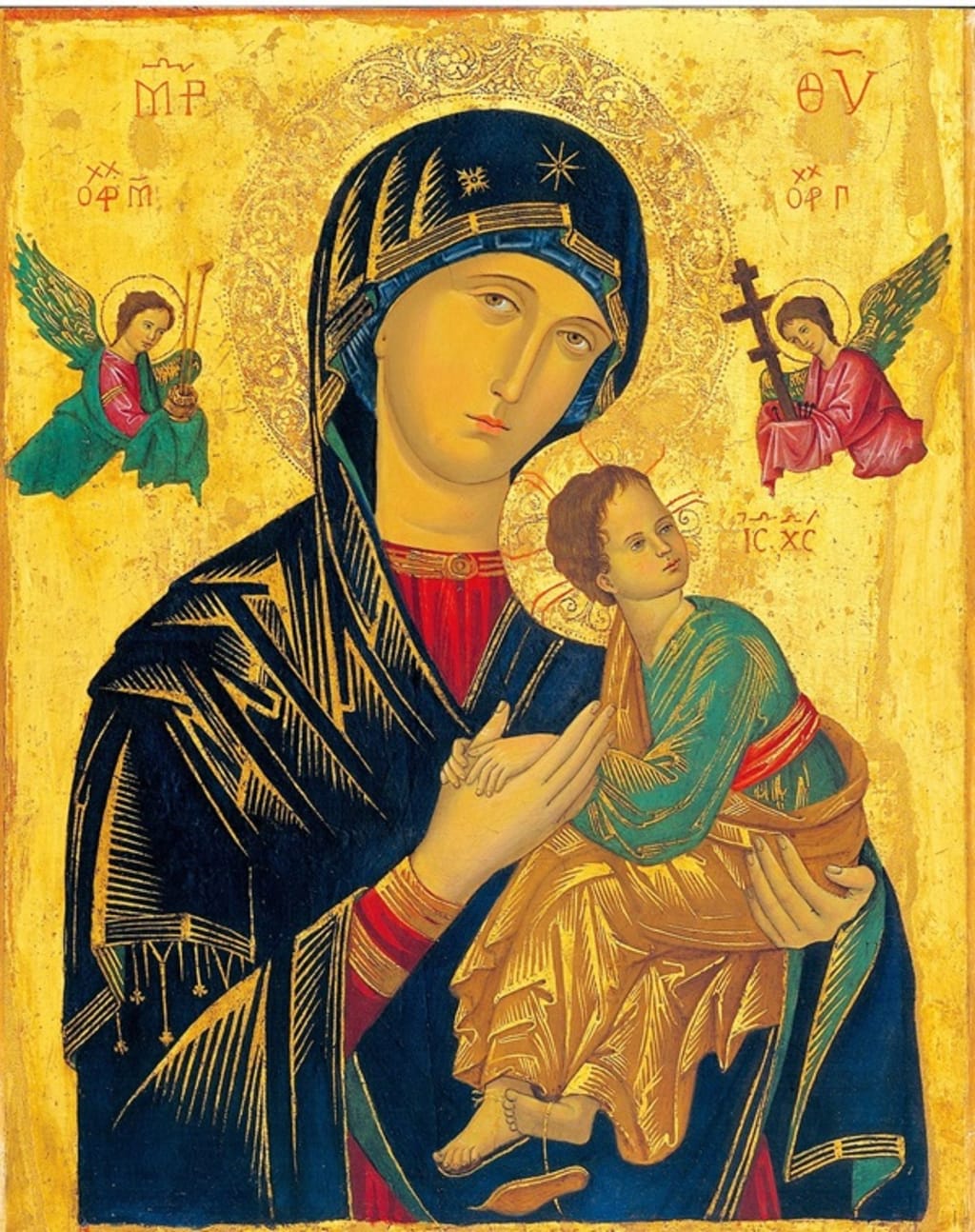
The expression ‘but opened toward deification.’ how is it transposed into the right to represent the sacred and the divinity with icon !?📜
Excellent question — because this is exactly where the point of connection lies between the theology of the Incarnation and the legitimacy of the icon, and this is how this transposition is made. ‘Opened toward deification’ means, in Orthodox theology, that matter, although fallen, can be transfigured through the grace of God, and the body of Christ, born of the Virgin Mary, is matter sanctified par excellence.
Through the Incarnation, God not only stepped into the world, but assumed matter and made it a vehicle of salvation. The icon is not a simple image, but a visual testimony of the Incarnation: God became man, therefore He can be represented. As St. John of Damascus says: ‘In former times God, who is bodiless and without form, could not be represented in an icon. But now, after He has appeared in the flesh and lived among men, I depict in an icon what is visible of God.
The conclusion is that there is no verse that literally says “matter was sanctified through the Incarnation,” but the entire theology of the Incarnation affirms this idea. God entered the world, took on a human body, lived, ate, suffered, died, and rose again in matter. Because of this, matter is no longer seen only as fallen but as something opened toward deification, capable of being touched and transformed by divine presence.
Your question about the expression “opened toward deification” is important, because this is exactly where the connection is made between the theology of the Incarnation and the right to represent the sacred through icons. In Orthodox theology, the phrase means that matter, although affected by the fall, can be transfigured by God’s grace. The body of Christ, born from the Virgin Mary, is the clearest example of sanctified matter. Through the Incarnation, God did not simply enter the world; He assumed matter and made it a vehicle of salvation.
This is where the icon comes in. The icon is not just an image but a visual testimony of the Incarnation. God, who was once invisible and without form, became visible in Christ. Because He took on a human body, He can be represented. Saint John of Damascus explains it this way: “In former times, God, who is without body and without form, could not be depicted in an image. But now, after He has appeared in the flesh and lived among men, I depict what is visible of God.” In other words, the right to paint Christ comes from the fact that Christ truly became human, with a real face, real features, and a real body.
This does not mean that matter becomes divine by itself, nor that every image is automatically sacred. It means that matter is no longer closed to God. It can be used, lifted, and transformed into a sign that points beyond itself. The icon is not worshipped as God; it is honoured as a witness to the God who entered the visible world. The representation is possible because the divine chose to become representable.
The dogmatic argument of the Seventh Ecumenical Council (Nicaea, 787) affirmed that the icon is legitimate precisely because Christ became incarnate. The icon does not represent the divine nature, but the person of Christ in His humanity — what we have seen, heard, touched. It is a symbolic ladder, not a replacement of the divine: it lifts our mind toward heaven, it does not fix it in matter.
Through the Incarnation, matter was opened toward deification, and the icon is the visual expression of this opening. It is not a simple artistic work, but a confession of faith that God stepped into the world and can be contemplated — not in His essence, but in His image made flesh.
We are open toward salvation. The divinity after salvation as elevation, but spiritual after we leave this life and Christ will resurrect us!
©Ca De Luce> MINDFUL MIND Medium Blog 2025. All rights reserved.
©Ca De Luce> MINDFUL MIND Medium Blog 2025. No part of this publication may be copied or reproduced without permission.
©Ca De Luce> MINDFUL MIND Medium Blog 2025. Content protected — copying prohibited.
©Ca De Luce> MINDFUL MIND Medium Blog 2025. Unauthorized use of text or media is not allowed. All images and photo are fulfilling the copyrights regulations. Much obliged to you all!
About the Creator
CA'DE LUCE
I speak of spirit, soul, and flame,
Of humanity’s quest, our endless aim.
Religion, memory, stories untold,
Poetry woven with truths, oh! so bold.
Evolution’s path, the heart’s deep call,
Media’s noise, I’ll sift it all.
.
Keep reading
More stories from CA'DE LUCE and writers in Confessions and other communities.
Icons: Between Belief and Doubt
The origin and theological justification is based on the idea that God became incarnate in Christ, therefore He can be represented visually. Saint Paul says in Colossians 1:15 that Christ is ‘the image of the invisible God.’ In the Old Testament, God Himself commands the making of sacred images, such as the cherubim on the Ark of the Covenant (Exodus 25:18).
By CA'DE LUCEabout 7 hours ago in Confessions
Tips For Building Healthy Relationships That Last And Thrive
Every healthy and strong relationship is built on trust. Lack of trust even the most emotional bond can weaken with time. The trust is built on being honest, consistent and transparent in day-to-day interactions. It is necessary that partners feel secure that they can count on each other both emotionally and practically. With trust in place, people do not fear to share their thoughts, fears, and dreams without any chances of being judged or betrayed. Such emotional security enhances the relationship between the partners and leads to intimacy.
By Robert Smith4 days ago in Confessions
Guard Your Battery
Why are some people so attractive just by standing there? It’s not because they are "likable," but because they don’t need everyone to like them. I realized later that truly charismatic people allow themselves to be criticized, but they never criticize themselves. They never try to please the world; instead, the world stops to watch them.
By Emily Chan - Life and love sharing6 days ago in Poets



Comments
There are no comments for this story
Be the first to respond and start the conversation.