
Inside the Hermit Kingdom: 5 Shocking Ways North Korea Allegedly Funds Its Regime in 2026
From cybercrime to secret arms deals, here’s how the world’s most isolated nation keeps its economy alive despite crushing sanctions.

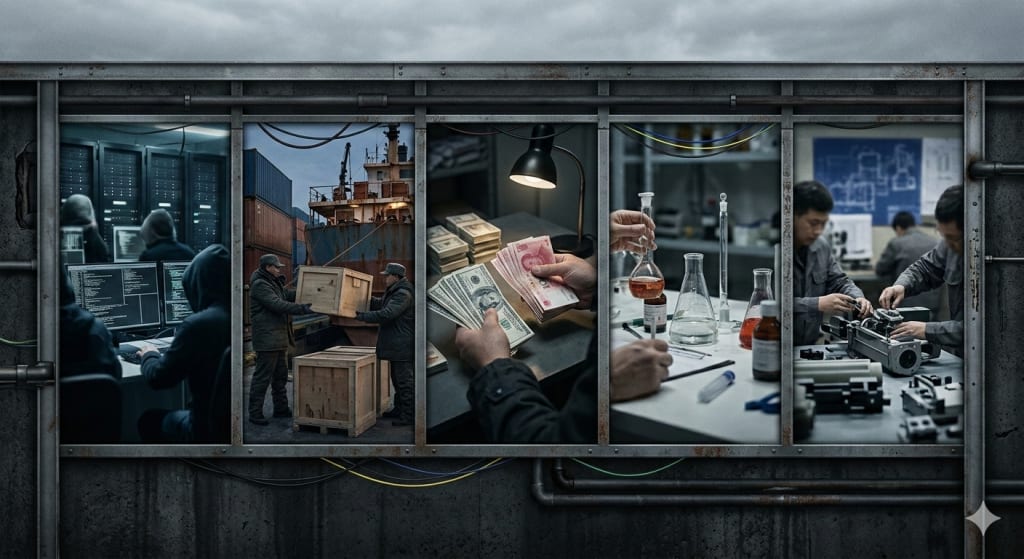
For decades, North Korea has been known as the “Hermit Kingdom,” a nation that deliberately sealed itself off from much of the world. Officially called North Korea or the DPRK, it remains one of the most secretive and tightly controlled countries on Earth.
Behind its closed borders, global leaders constantly wonder:
- What’s happening inside?
- How does its government survive under heavy sanctions?
- And more importantly, how does it keep funding its nuclear and missile programs?
Despite years of restrictions imposed by the United Nations and Western powers, the regime under Kim Jong-un continues weapons development with surprising resilience.
So how does the money keep flowing?
Let’s break down five controversial and widely reported revenue streams that analysts believe help keep North Korea financially afloat.
5. The Black Market Economy
When the Soviet Union collapsed in 1991, North Korea lost its biggest financial backer. The economic shock was devastating. Industries crumbled, food shortages worsened, and the country entered a prolonged crisis.
Out of desperation, an underground economy began to flourish.
Reports over the years have alleged involvement in:
- Illicit exportation of goods
- Money laundering operations
- Smuggling networks
- Counterfeit currency distribution
One long-running accusation involves high-quality fake U.S. $100 bills, sometimes nicknamed “supernotes.” While Pyongyang has consistently denied state involvement, counterfeit currency concerns have circulated in international intelligence discussions for decades.
Whether exaggerated or not, one thing is clear: informal and underground markets have become central to survival inside North Korea.
4. Alleged Drug Trade Operations
Another serious accusation tied to the regime is involvement in the international narcotics trade.
Various investigative reports have linked North Korean networks to:
- Heroin trafficking
- Methamphetamine production
- Counterfeit prescription drugs
Analysts from organizations like the Atlantic Council have described North Korea’s illicit drug industry as a potential source of “hard currency”, the foreign cash that’s critical for bypassing sanctions.
North Korea denies these allegations. However, defectors and intelligence assessments suggest that black-market trade plays a significant role in generating revenue where legitimate trade channels are restricted.
3. Cybercrime and Digital Heists
If there’s one area where North Korea has stunned the world, it’s cyber warfare.
Over the past decade, cybersecurity firms, including Kaspersky, have linked North Korean-backed hacking groups to cyberattacks across multiple continents.
One of the most infamous incidents occurred in 2016, when hackers stole $81 million from Bangladesh’s central bank account at the Federal Reserve Bank of New York. Investigations by outlets like The Wall Street Journal reported links to North Korean actors.
Beyond bank theft, cyber operations have allegedly included:
- Cryptocurrency exchange hacks
- Ransomware attacks
- Digital espionage
Cybercrime is particularly attractive because it requires no physical export routes, no ships, and no border crossings, just internet access and skilled programmers.
And for a sanctioned nation, that’s a powerful tool.
2. Arms Deals and Military Exports
Ironically, the very weapons that trigger sanctions may also generate revenue.
Security experts have long suspected that North Korea exports conventional weapons and military technology to various regions. Analysts at the Economist Intelligence Unit have argued that arms sales form a significant part of the country’s external earnings.
According to past United Nations Security Council reports, shipments of rockets, small arms, and military components have been intercepted in transit.
Some investigations have also speculated about cooperation between North Korea and Iran in missile and defense technologies, though both nations typically reject such claims.
Weapons are controversial, dangerous, and heavily monitored, but they’re also profitable.
1. Forced Labor and Overseas Workers
Perhaps the most disturbing alleged revenue source involves forced labor.
Human rights organizations claim that North Korea sends workers abroad, often to countries like China and Russia, where a significant portion of their wages is reportedly confiscated by the state.
At home, labor camps and mining operations reportedly contribute to:
- Coal exports
- Mineral extraction
- Infrastructure projects
The revenue generated from labor exports and resource extraction reportedly provides much-needed foreign currency.
Critics argue that this system is not just economic, it’s political. By controlling income and opportunity, the regime strengthens loyalty among elites while maintaining tight control over ordinary citizens.
Why Sanctions Haven’t Collapsed the Regime
It’s easy to assume that heavy sanctions would cripple any economy. But North Korea has adapted in unconventional ways.
Several factors explain its resilience:
- Centralized control over resources
- Limited reliance on global trade compared to other nations
- Support networks through informal channels
- Heavy investment in cyber capabilities
According to analysts like Robert Manning of the Atlantic Council, cutting off access to hard currency could potentially shift internal political dynamics, but so far, the regime has managed to survive.
Final Thoughts: Mystery, Power, and Survival
North Korea remains one of the most unpredictable countries in the world. Under Kim Jong-un, it has faced:
- Economic sanctions
- Diplomatic isolation
- International condemnation
And yet, its weapons programs continue.
Whether through underground markets, cyber operations, arms exports, or labor exploitation, the regime appears to have found alternative pathways to survival.
The full truth may remain hidden behind its borders, but one thing is certain: the Hermit Kingdom has mastered the art of enduring pressure.
.
.
.
.
.
.
.
.
.
.
North Korea economy 2026, Kim Jong-un sanctions, how North Korea makes money, DPRK cybercrime, North Korea arms deals, North Korea black market, forced labor North Korea, North Korea nuclear funding.
About the Creator
Areeba Umair
Writing stories that blend fiction and history, exploring the past with a touch of imagination.
Keep reading
More stories from Areeba Umair and writers in Criminal and other communities.
The Chilling Mystery of Kuru: The “Laughing Death” That Shocked the World
There are diseases… and then there are mysteries that haunt science for decades. Back in the 1930s, something terrifying was unfolding in the highlands of Papua New Guinea. Among the Fore people, a tribe of roughly 11,000 individuals, a strange illness was claiming around 200 lives every year.
By Areeba Umair21 days ago in History
The Midnight Train Murder
M Mehran Late one winter night, the last train leaving the city of Blackridge carried only a handful of passengers. The midnight train was usually quiet—mostly travelers returning home after long days or strangers heading toward destinations unknown. But on this particular night, the train carried something far more dangerous. A secret. At 12:18 AM, while the train rushed through the dark countryside, a passenger screamed from the third carriage. The sudden panic caused the conductor to stop the train immediately. When the train staff reached the scene, they discovered a horrifying sight. A man lay lifeless across one of the seats. His briefcase had fallen to the floor, papers scattered across the aisle. The passengers nearby stared in shock, unsure of what had just happened. Within thirty minutes, police arrived at the nearest station where the train had been stopped. Detective Ryan Carter stepped aboard to investigate. He quickly realized this was no ordinary case. A Murder in a Moving Train The victim was identified as Jonathan Blake, a financial analyst working for a large investment company. According to the passengers, Blake had boarded the train alone and sat quietly for most of the journey. No one noticed anything unusual. Then suddenly he collapsed. At first, people assumed he had suffered a heart attack. But when the medical examiner inspected the body, the truth became clear. Blake had been stabbed. The wound was small but precise—clearly delivered by someone who knew exactly where to strike. The biggest problem for investigators was simple. No one had seen the attack. The train had been moving the entire time, meaning the killer had to be someone on board. Detective Carter now faced a chilling possibility. The murderer was still sitting among the passengers. The Suspects Only seven passengers were present in the carriage when the crime occurred. Police questioned each of them carefully. First was Emily Dawson, a university student traveling home for the holidays. She claimed she had been listening to music and noticed nothing unusual. Next was Harold Finch, a retired engineer reading a newspaper at the time of the incident. Then there was Lucas Grant, a businessman who appeared extremely nervous during questioning. The remaining passengers included an elderly couple and a quiet man sitting near the window who gave his name as Victor Lane. At first glance, none of them seemed capable of murder. But Detective Carter knew appearances could be deceiving. The Hidden Motive While searching Blake’s belongings, investigators discovered something interesting inside his briefcase. Several confidential documents. The papers revealed that Blake had recently uncovered a major financial fraud involving millions of dollars being secretly transferred through international accounts. Someone inside his company had been stealing money for years. Blake had been planning to expose the crime. Which meant someone had a powerful reason to silence him. Detective Carter focused on the passengers again. One by one, their stories were examined. Most checks came back clean—until investigators looked deeper into Lucas Grant’s background. A Dangerous Connection Lucas Grant claimed to be a businessman traveling for work. But financial records showed something different. Grant had recently received large payments from a shell company connected to the same fraud Blake was investigating. When confronted with the evidence, Grant began to sweat. But he still denied everything. Carter knew he needed one final piece of proof. So he carefully reviewed the security footage from the train station where passengers had boarded. There it was. The camera showed Grant walking behind Blake on the platform. But more importantly, it revealed Grant slipping something into his coat pocket—a small folding knife. The Final Confrontation When detectives searched Grant’s luggage, they discovered the weapon hidden inside a shoe. The blade matched the wound perfectly. Realizing the evidence against him was overwhelming, Grant finally confessed. Blake had discovered the fraud network and was preparing to report it to federal authorities the next morning. Grant, who was deeply involved in the scheme, followed him onto the midnight train to stop him. When the lights dimmed in the carriage, Grant quietly moved behind Blake and delivered the fatal stab. The attack was so quick that no one noticed. Grant believed the crowded train would make it impossible for police to identify the killer. But he underestimated one thing. Truth always leaves traces. Justice on the Rails Grant was arrested and later sentenced to life in prison for murder and financial crimes. His confession helped authorities uncover the entire fraud network, leading to several additional arrests. For Detective Carter, the case became known as The Midnight Train Murder—a chilling reminder that danger can appear even in the most ordinary places. Passengers eventually returned to their normal lives, but many never forgot that night. Because somewhere between two quiet stations, on a train speeding through darkness, a murderer had almost escaped justice. And only careful investigation had stopped him.
By Muhammad Mehrana day ago in Criminal


Comments
There are no comments for this story
Be the first to respond and start the conversation.