
The Middle East at a Crossroads
Rising Tensions, Global Powers, and the Fear of a Wider Regional War

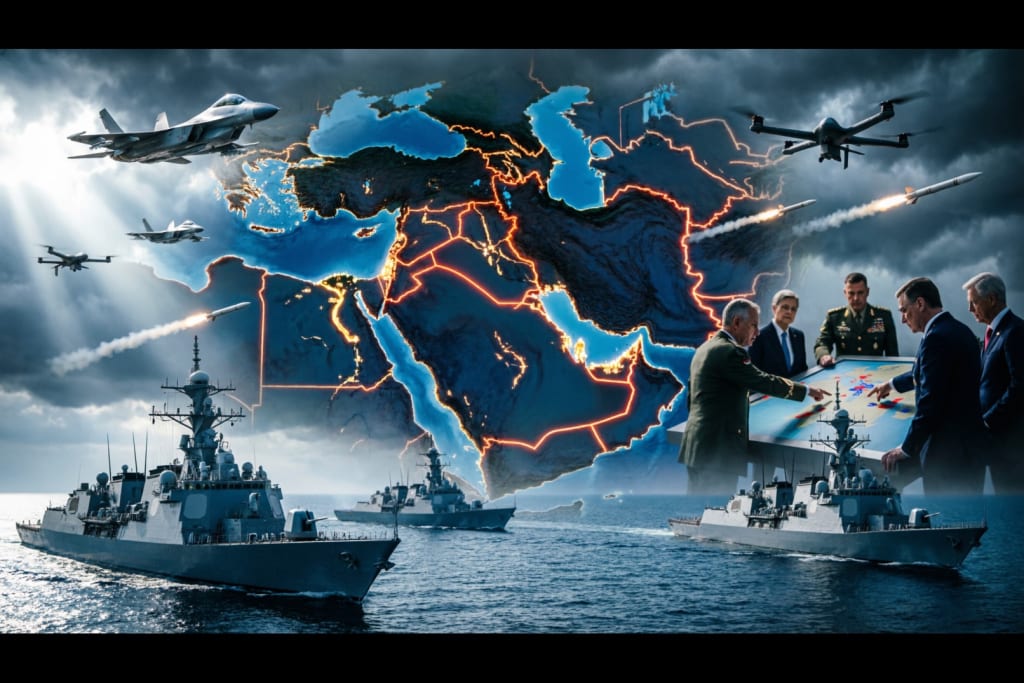
The Middle East at a Crossroads
The Middle East has once again become the center of global attention as tensions rise between several powerful countries and regional actors. Conflicts, political rivalries, and military movements have created an atmosphere of uncertainty that many analysts believe could reshape global politics in the coming years. Although wars and crises have occurred in this region for decades, the current situation feels more fragile and dangerous because multiple global powers are indirectly involved.
One of the key sources of tension in the region is the ongoing rivalry between Iran and Israel. For many years, these two countries have been locked in a strategic confrontation that includes intelligence operations, cyber warfare, and proxy conflicts. Israel views Iran’s expanding military capabilities and regional influence as a direct threat, while Iran sees Israel and its Western allies as obstacles to its political and strategic ambitions in the Middle East.
Another major player in the region is the United States, which has maintained a strong military presence in the Middle East for decades. American naval forces patrol the Persian Gulf, and the United States maintains partnerships with several regional allies. Washington often positions itself as a stabilizing force, but its involvement also means that regional conflicts can quickly gain global significance.
The role of proxy groups has made the situation even more complex. Iran has developed alliances with several organizations and armed groups across the region. These groups operate in countries such as Lebanon, Syria, Iraq, and Yemen. Through these networks, Iran can influence events across the Middle East without engaging in direct military confrontation.
Israel, meanwhile, has responded by increasing its military readiness and conducting targeted operations designed to prevent the transfer of advanced weapons to hostile groups. These actions often involve airstrikes, intelligence missions, and defensive operations aimed at protecting Israeli territory and maintaining regional deterrence.
The situation is further complicated by the involvement of other global powers. Russia has a strong presence in Syria and has built strategic ties with several governments in the region. China, while less militarily involved, has major economic interests in Middle Eastern energy resources and trade routes. Both countries carefully monitor developments in the region because instability could affect global markets and international alliances.
Energy resources remain one of the most important factors behind the global interest in Middle Eastern stability. A significant portion of the world’s oil passes through the Strait of Hormuz, a narrow waterway connecting the Persian Gulf to international markets. Any disruption in this area could cause oil prices to surge and lead to economic consequences across the world.
In addition to traditional military threats, modern conflicts in the region increasingly involve cyber warfare, drones, and advanced missile systems. These technologies allow nations and armed groups to strike targets quickly and from long distances. While such capabilities can strengthen national defense, they also increase the risk of sudden escalation because attacks can occur without clear warnings.
Despite the rising tensions, many international organizations continue to work toward preventing a major war. Institutions such as the United Nations frequently call for diplomatic solutions and encourage negotiations between rival states. Diplomacy remains one of the most important tools for preventing small conflicts from turning into larger wars.
Another important factor is public opinion. Citizens across the Middle East have experienced the devastating effects of war for generations. Economic challenges, refugee crises, and humanitarian concerns have made many societies cautious about the possibility of another large-scale conflict. This pressure sometimes encourages governments to pursue negotiation rather than direct confrontation.
The current Middle East situation therefore represents a delicate balance. On one side are rising tensions, advanced weapons, and powerful alliances that could push the region toward a larger conflict. On the other side are diplomatic efforts, economic cooperation, and international pressure aimed at preventing war.
History shows that conflicts in this region rarely remain isolated. Because the Middle East sits at the crossroads of Europe, Asia, and Africa, any major crisis can quickly attract global attention and involvement. For this reason, world leaders closely monitor every development in the region.
In conclusion, the Middle East today stands at a critical moment. The decisions made by governments, military leaders, and diplomats in the coming years could determine whether the region moves toward stability or deeper conflict. While a large-scale war has not yet begun, the current tensions serve as a reminder that global peace often depends on careful diplomacy and responsible leadership.
About the Creator
Wings of Time
I'm Wings of Time—a storyteller from Swat, Pakistan. I write immersive, researched tales of war, aviation, and history that bring the past roaring back to life
Keep reading
More stories from Wings of Time and writers in Criminal and other communities.
The Epstein Files
The Epstein Files The Jeffrey Epstein case is not just the story of one criminal. It is a mirror showing how power, money, and silence can protect wrongdoing at the highest levels of society. While Epstein was officially charged and convicted for serious crimes, many questions remain unanswered about how his network operated for decades without being stopped.
By Wings of Time 27 days ago in Criminal
Convicted Murderer Escaped Prison 50 Years Ago
It is shocking to know that prison inmates had such freedom in the old days. Lester Eubanks should be in prison right now. He, instead, walked away from an inmate program 50 years ago and hasn't been seen since. By all appearances, he lived a normal life during this time. He worked, dated women, and hung out with friends. He maintained contact with his dad, Mose, until his death. He even attended his funeral. Why did Eubanks go to prison, and how did he elude authorities for so long?
By Criminal Matters2 days ago in Criminal
Ten Days of Marriage, A Lifetime Lost: A Wake-Up Call Against Greed, Dowry, and Domestic Violence
Ten Days of Marriage, A Lifetime Lost: A Wake-Up Call Against Greed, Dowry, and Domestic Violence a relationship that only lasted ten days. A young woman who had visions of the future as she entered her new residence. After that, a shocking end: her husband killed her with a broken piece of glass following an argument about money, property, and a car.
By Farida Kabir4 days ago in Criminal



Comments
There are no comments for this story
Be the first to respond and start the conversation.