
Amid European Energy Fears, Coal Creeps Back Into Favour
Rising gas prices and geopolitical tensions push European nations to reconsider coal despite climate commitments.

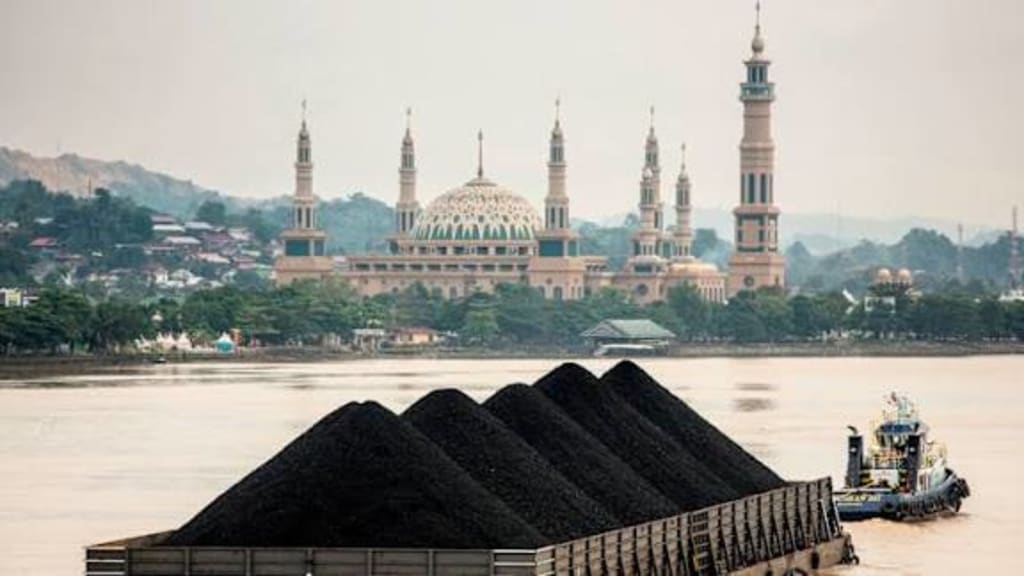
Europe’s energy landscape is shifting as fears over supply security and rising costs drive some countries back toward coal, a fossil fuel many had hoped to phase out entirely. The resurgence comes amid heightened tensions over energy imports, particularly natural gas, as the war in Ukraine and geopolitical friction with Russia have exposed vulnerabilities in the continent’s energy systems.
Germany, long seen as a leader in renewable energy adoption, recently announced plans to keep several coal-fired power plants online longer than initially scheduled. Officials cited winter energy demands and the need to maintain a reliable baseload while natural gas supplies remain constrained. Similar considerations are emerging in Poland, the Czech Republic, and other nations that rely heavily on imported energy.
“The energy crisis has forced governments to make difficult choices,” said Dr. Klaus Weber, an energy policy analyst at European Energy Institute. “While the climate goals remain important, ensuring citizens have access to electricity and heat this winter has become a more immediate priority.”
The return to coal is not simply a response to price spikes. Energy security has become a pressing concern after European reliance on Russian gas pipelines was disrupted, prompting countries to diversify sources and store reserves. Coal, abundant in Europe and globally traded at competitive prices, provides a short-term buffer against shortages.
At the same time, rising electricity costs have placed enormous pressure on households and industries. According to recent statistics from the International Energy Agency, European electricity prices surged by nearly 40% in the past year, prompting governments to subsidize energy bills and rethink fuel strategies. Coal-fired generation, though more polluting, offers predictable output and can be ramped up quickly to stabilize grids.
Renewable energy advocates have expressed concern that this shift could undermine Europe’s climate leadership. Coal emits roughly twice the CO₂ per unit of energy compared to natural gas, posing challenges to achieving net-zero targets. Critics warn that extending coal use—even temporarily—risks locking in infrastructure that is inconsistent with long-term decarbonization goals.
“Every megawatt-hour produced from coal is a step backward for Europe’s climate ambitions,” said Maria López, senior campaigner at Greenpeace Europe. “Governments need to pair any temporary measures with accelerated renewable deployment to avoid backsliding on emissions reductions.”
Some nations are attempting to balance these pressures by deploying cleaner coal technologies. Advanced coal plants with carbon capture and storage (CCS) can reduce emissions by capturing a significant portion of CO₂ before it enters the atmosphere. Germany and the Netherlands are investing in pilot projects to integrate CCS into existing power plants, though critics note that large-scale implementation remains costly and complex.
Analysts suggest that Europe’s return to coal is likely to be temporary. Once gas supplies stabilize and renewable infrastructure expands, reliance on coal is expected to decline. Yet the episode has highlighted the fragility of energy systems in the face of geopolitical shocks and the tension between short-term energy security and long-term climate goals.
Meanwhile, citizens and businesses are feeling the immediate impact. Many households in Eastern and Central Europe face sharply higher heating costs this winter, and industrial manufacturers are warning that energy-intensive production could be scaled back if prices remain high. Policymakers are caught between the urgent need to maintain supply and the imperative to meet climate commitments.
The European Union is working on strategies to mitigate these challenges. Measures include expanding LNG import terminals, investing in cross-border electricity interconnectors, and boosting renewable energy capacity. However, the gap between energy supply and demand, exacerbated by geopolitical tensions, means coal may remain a stopgap solution for months to come.
Europe’s cautious return to coal underscores a broader reality: energy transitions are never linear. Even as governments and citizens push toward a greener future, external shocks—conflict, supply disruptions, and price volatility—can temporarily alter priorities. The key challenge for policymakers will be ensuring that short-term reliance on fossil fuels does not derail long-term climate ambitions.
About the Creator
Fiaz Ahmed
I am Fiaz Ahmed. I am a passionate writer. I love covering trending topics and breaking news. With a sharp eye for what’s happening around the world, and crafts timely and engaging stories that keep readers informed and updated.
Keep reading
More stories from Fiaz Ahmed and writers in Earth and other communities.
Prudence or backsliding? China’s new climate target mirrors shifting realities
China, the world’s largest emitter of greenhouse gases, recently announced a revised climate target that has drawn attention from policymakers, environmentalists, and energy analysts worldwide. While officials describe the adjustments as “prudent and realistic,” critics warn that the changes could signal a slowdown in Beijing’s commitment to achieving net-zero emissions and meeting the goals of the Paris Agreement. The new targets, unveiled at a high-level government briefing, suggest that China will slightly delay the peak of its carbon dioxide emissions and extend timelines for reducing reliance on coal-fired power plants. These adjustments are being framed as responses to complex economic realities, including slower-than-expected industrial growth, energy security concerns, and global market volatility. “China is balancing its climate ambitions with the practical need to maintain stable economic growth,” said Li Wei, a senior policy analyst at the China Development Research Foundation. “The government wants to avoid sudden shocks to energy supply or employment in sectors that are heavily reliant on fossil fuels.” Coal remains a cornerstone of China’s energy system, accounting for roughly 60% of electricity generation. Recent spikes in global energy prices, coupled with domestic electricity demand surges, have made Beijing cautious about implementing aggressive coal phase-out plans too quickly. Policymakers fear that rapid cuts could trigger power shortages, industrial slowdowns, and public discontent. Despite these challenges, China has continued to invest heavily in renewable energy. Wind, solar, and hydroelectric capacity have expanded rapidly over the past decade, and the country remains the world leader in renewable energy installations. Analysts note that the revised targets do not halt progress but recalibrate timelines to accommodate economic and geopolitical realities. “The question is whether this adjustment reflects prudence or a subtle form of backsliding,” said Rachel Wong, climate policy director at Green Future International. “It may be a temporary compromise, but it also risks sending the wrong signal internationally, especially to countries relying on China’s commitments to reduce global emissions.” International reactions have been mixed. Some governments and climate advocates view the revised targets as a practical acknowledgment of real-world constraints, emphasizing that flexibility may be necessary to avoid economic disruptions. Others warn that delays in emission reductions could make it more difficult for the global community to limit warming to 1.5°C, potentially undermining multilateral climate efforts. Analysts also point out that China’s energy strategy is increasingly influenced by geopolitics. Tensions over trade, supply chains, and global energy markets have heightened the country’s focus on energy self-sufficiency. Expanding renewable capacity is part of the long-term plan, but in the short term, reliance on coal and natural gas remains a central feature of Beijing’s approach. Domestic messaging has emphasized that China remains committed to sustainability and environmental stewardship. Government statements highlight ongoing investments in electric vehicles, clean manufacturing, and carbon capture technologies. However, environmental watchdogs caution that the credibility of these commitments depends on transparent implementation and measurable outcomes. “The next five years will be critical,” said Wong. “We need to see concrete action, not just revised targets on paper, if China is to maintain its leadership role in global climate policy.” China’s recalibrated climate target reflects the delicate balance Beijing must maintain between environmental responsibility, economic stability, and energy security. Whether this approach represents prudent realism or a retreat from global expectations will be closely watched by governments, investors, and environmental groups worldwide.China’s revised climate target also reflects domestic political considerations. Leaders are keen to maintain public confidence by avoiding sudden energy price hikes or industrial disruptions that could spark social unrest. At the same time, international observers are closely monitoring China’s carbon trajectory, as any delay in emission reductions could influence global markets and climate negotiations. Experts emphasize that Beijing’s approach highlights the tension between short-term economic priorities and long-term environmental commitments. How China balances these competing pressures will be pivotal—not only for its own sustainable development but also for global efforts to curb climate change and meet Paris Agreement goals.
By Fiaz Ahmed 2 days ago in Earth
Guard Your Battery
Why are some people so attractive just by standing there? It’s not because they are "likable," but because they don’t need everyone to like them. I realized later that truly charismatic people allow themselves to be criticized, but they never criticize themselves. They never try to please the world; instead, the world stops to watch them.
By Emily Chan - Life and love sharing6 days ago in Poets



Comments
There are no comments for this story
Be the first to respond and start the conversation.