
The World’s Safest Countries: Where Doors Stay Unlocked and Police Rarely Carry Guns
In some nations, trust, low crime, and strong communities make it normal for people to leave their doors unlocked and for police to patrol without firearms.
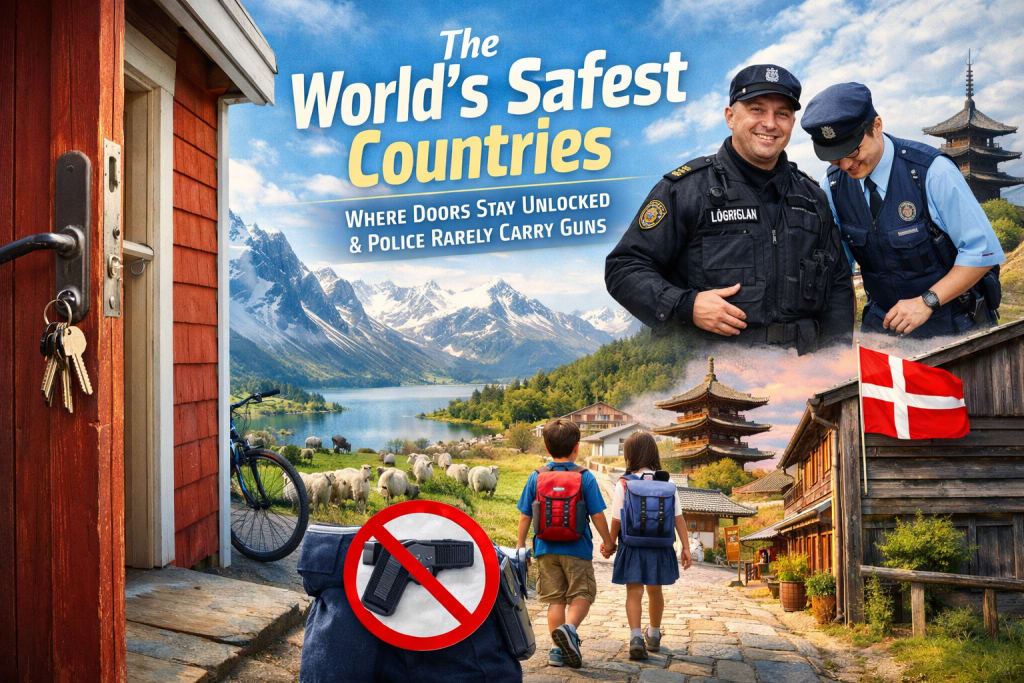
In many parts of the world, locking doors, installing security cameras, and relying on heavily armed police forces are everyday realities. However, there are a few countries where life feels very different. In these places, crime rates are extremely low, communities are tightly connected, and trust among citizens is remarkably high. As a result, people often leave their doors unlocked, and in some cases, police officers patrol the streets without carrying firearms.
These nations have built reputations as some of the safest places on Earth, where social trust, strong institutions, and effective governance create a sense of security rarely seen elsewhere.
#### Iceland: The Global Leader in Safety
Iceland frequently ranks as the safest country in the world. With a population of just under 400,000 people, the country has one of the lowest crime rates globally. Violent crime is extremely rare, and most communities are small and closely connected.
One of the most remarkable aspects of Icelandic society is the level of trust people have in each other. In many neighborhoods, residents do not feel the need to lock their doors. It is also common to see babies sleeping in strollers outside cafes while their parents sit inside — a practice that might seem shocking in other countries but is considered normal in Iceland.
Another unique feature is Iceland’s police force. Officers generally do not carry guns during routine patrols. Instead, they rely on communication, de-escalation, and strong relationships with the community.
#### Norway: Trust and Strong Social Systems
Norway is another country known for its exceptional safety and quality of life. With low crime rates and strong social welfare systems, Norwegian society places a high value on equality, trust, and community well-being.
Many rural areas in Norway maintain traditions of leaving doors unlocked because neighbors know and trust one another. Although Norwegian police are trained to use firearms when necessary, they usually do not carry them during daily patrols.
The country’s investment in education, healthcare, and social services helps reduce inequality and crime. As a result, people generally feel safe walking alone at night, even in major cities like Oslo.
#### New Zealand: A Peaceful Island Nation
New Zealand consistently ranks among the safest countries in the world. Its relatively small population and geographic isolation contribute to a strong sense of community and security.
In many small towns and rural areas, residents feel comfortable leaving their doors unlocked. Crime exists, as it does everywhere, but violent crime rates are comparatively low.
New Zealand’s police officers are also notable for usually patrolling without firearms. Guns are kept in patrol cars and only used in specific situations. This approach reflects the country’s emphasis on community policing and conflict resolution.
#### Japan: Safety Through Culture and Discipline
Japan is widely known for its safety, even in its largest cities. Despite having some of the world’s busiest urban centers, crime rates remain impressively low.
Cultural values play a significant role in maintaining this safety. Respect for rules, social responsibility, and consideration for others are deeply ingrained in Japanese society.
In many smaller communities, residents may leave doors unlocked or feel comfortable allowing children to walk to school alone. Lost items are frequently returned to police stations, and honesty is strongly emphasized.
Japanese police do carry firearms, but they are rarely used. Their work focuses heavily on neighborhood patrols, community engagement, and prevention.
#### Denmark: A Culture of Trust
Denmark is often cited as one of the happiest and safest countries in the world. High levels of trust between citizens and government institutions contribute to a peaceful environment.
In some Danish communities, especially smaller towns, people feel comfortable leaving their homes unlocked. The country’s police are generally unarmed during routine duties, though they have access to firearms if needed.
Denmark’s strong social safety net, high living standards, and emphasis on equality all help maintain low crime rates and a stable society.
#### Why These Countries Are So Safe
Several factors explain why these countries maintain such high levels of safety.
First, strong social welfare systems reduce poverty and inequality, which are often linked to crime. When citizens have access to healthcare, education, and employment opportunities, social tensions tend to decrease.
Second, trust plays a major role. People in these societies tend to believe that others will behave responsibly and honestly. This shared sense of accountability strengthens community bonds.
Third, effective governance and transparent institutions ensure that laws are enforced fairly and consistently. Citizens feel confident in the justice system, which further reinforces stability.
Finally, community-focused policing strategies emphasize prevention and cooperation rather than force. This approach helps maintain positive relationships between citizens and law enforcement.
#### A Different Vision of Security
While no country is completely free from crime, the examples of Iceland, Norway, New Zealand, Japan, and Denmark demonstrate that safety does not always depend on strict security measures or heavily armed police.
Instead, trust, equality, and strong communities can create environments where people feel secure enough to leave their doors unlocked — a powerful symbol of social harmony and peace.
About the Creator
Irshad Abbasi
Ali ibn Abi Talib (RA) said 📚
“Knowledge is better than wealth, because knowledge protects you, while you have to protect wealth.
Keep reading
More stories from Irshad Abbasi and writers in Education and other communities.
Ice Boy: The Frozen Morning That Changed a Child’s Destiny
In the winter of 2018, a single photograph from a remote village in China shocked the world. The image showed a young boy with hair and eyebrows frozen white from the bitter cold, his cheeks red and cracked, yet standing firmly in a classroom. That boy became known globally as “Ice Boy.” His real name was Wang Fuman, and in just one year, his life changed in ways no one could have imagined.
By Irshad Abbasi 2 days ago in Education
Cutting for Impact: How Film Editing Shapes Powerful Stories Behind the Scenes
When audiences watch a great film, they rarely think about the countless decisions made in the editing room. Performances feel seamless, scenes flow naturally, and emotions rise at precisely the right moments. Yet behind this smooth experience lies a complex creative process. Film editing is often called the invisible art because, when done well, it goes unnoticed. However, its influence on storytelling is profound and far-reaching.
By Nigel Sinclair4 days ago in Education
Beyond the Protein: Mastering Wine Pairings by Understanding the Sauce
When planning a remarkable dinner, many hosts instinctively choose the wine based on the main protein. They assume red wine belongs with beef and white wine suits chicken or fish. However, this traditional rule often oversimplifies the art of pairing. Because sauces concentrate seasoning, texture, and aroma, they define the dish’s personality more than the protein itself. Therefore, if you want a truly elevated dining experience, you should evaluate the sauce before selecting the wine.
By Joel Barjenbruch3 days ago in Education
Who is your "Person"?
It's important to recognize that you cannot go through life as easily on your own. My name is Elizabeth and I'm a survivor of child abuse and horrific trauma. Healing from trauma is not a quick fix and recognizing that it will take time, is part of the struggle.
By Elizabeth Woods3 days ago in Psyche


Comments
There are no comments for this story
Be the first to respond and start the conversation.