
Using Scan-to-BIM for Florida’s 30-Year Structural Recertification
Surviving the Milestone Inspections

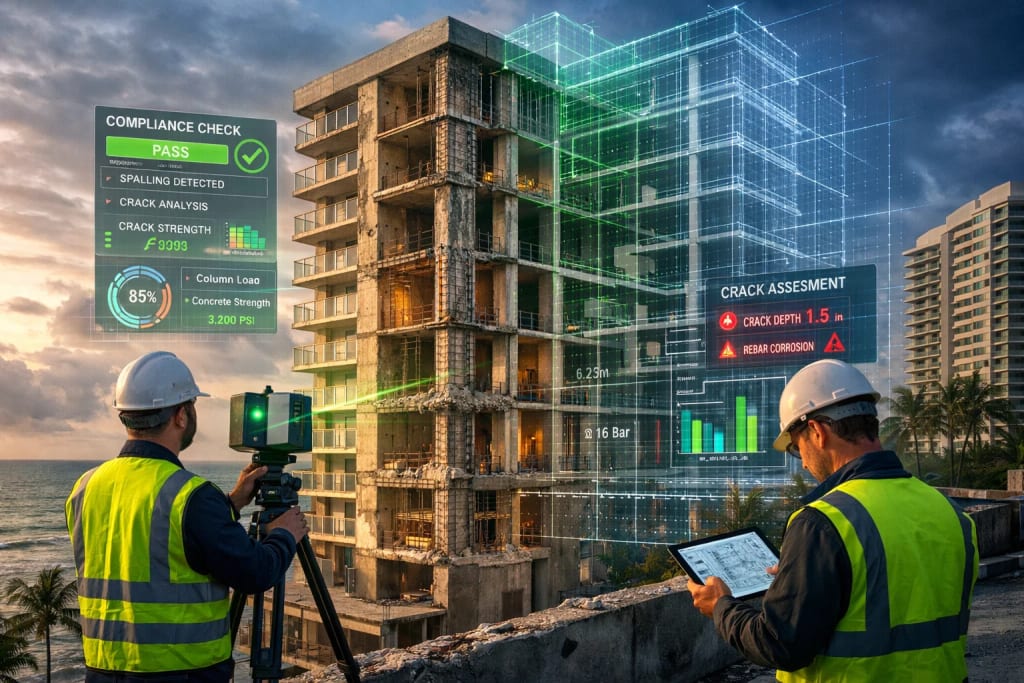
Florida’s coastal climate, aging buildings, and increasing safety regulations have made structural inspections more critical than ever. Following several high-profile building failures and growing concerns about aging infrastructure, the state has strengthened its building safety laws.
Today, property owners, condominium associations, and facility managers must comply with strict milestone inspection requirements, particularly for buildings that are 30 years or older.
To meet these requirements efficiently and accurately, many engineering and construction teams are turning to Scan-to-BIM technology. By combining 3D laser scanning with Building Information Modeling (BIM), this modern approach helps engineers assess structural conditions, create precise documentation, and streamline the recertification process.
This article explains how Scan-to-BIM can help buildings successfully pass Florida’s 30-year structural recertification inspections.
Understanding Florida’s 30-Year Structural Recertification Requirement
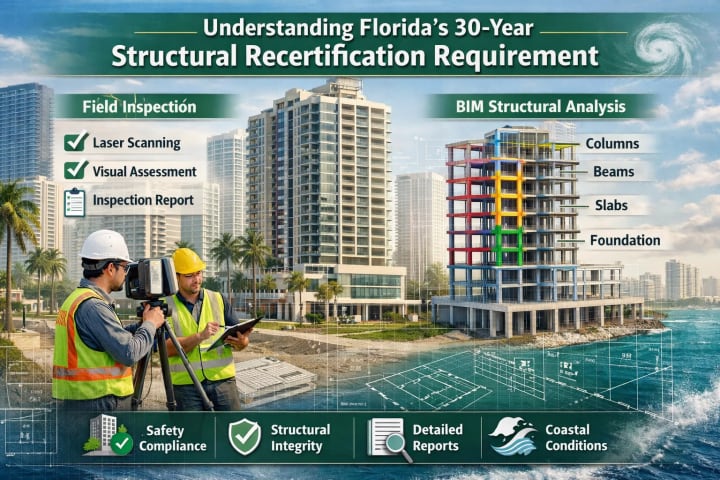
In Florida, many buildings—especially condominiums and commercial structures—must undergo structural recertification after reaching a specific age. These inspections ensure that the building remains safe for occupancy and complies with modern structural standards.
Milestone inspections are typically required for:
- Residential condominiums and cooperative buildings
- Multi-story commercial buildings
- Mixed-use developments
- Coastal properties exposed to severe weather
The inspection process usually includes a comprehensive evaluation of:
- Structural systems
- Load-bearing components
- Concrete and steel conditions
- Exterior façade systems
- Roof structures and drainage
Mechanical and electrical systems affecting safety
These inspections are governed by legislation such as the Florida Senate Bill 4-D, which was enacted to strengthen structural safety requirements after the Surfside condominium collapse.
Because many older buildings lack reliable documentation, engineers often face challenges during the inspection process. This is where Scan-to-BIM provides a major advantage.
What is Scan-to-BIM?
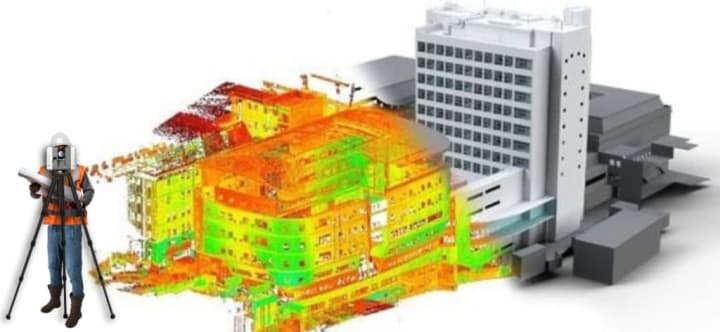
Scan-to-BIM is a process that converts real-world building conditions into an accurate digital model. It begins with 3D laser scanning, which captures millions of spatial data points to create a detailed point cloud representation of the structure.
This data is then converted into a Building Information Model using platforms such as Autodesk Revit.
The result is a highly accurate digital model that reflects the true geometry and condition of the building, enabling engineers to conduct detailed structural analysis and documentation.
Why Milestone Inspections Are Challenging for Older Buildings
Many buildings constructed decades ago were built using paper drawings or outdated documentation methods. Over time, renovations and repairs often change the structure, making original drawings unreliable.
Common challenges include:
- Missing or outdated as-built drawings
- Hidden structural modifications
- Incomplete documentation of renovations
- Difficult access to structural components
- Complex façade or roof systems
Without accurate building documentation, engineers must spend additional time conducting manual surveys and measurements, which increases both inspection costs and project timelines.
How Scan-to-BIM Supports Structural Recertification
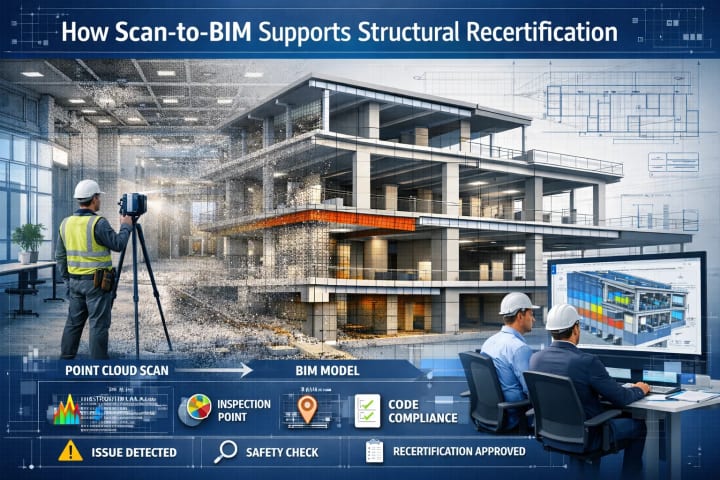
Scan-to-BIM helps engineers overcome these challenges by providing precise digital documentation of existing conditions.
Accurate Existing Condition Documentation
3D laser scanners capture detailed information about the building’s structure, including:
- Columns and beams
- Slabs and structural framing
- Exterior façades
- Mechanical and electrical systems
- Roof geometry and drainage systems
These scans produce a digital point cloud that represents the building with millimeter-level accuracy.
This level of precision allows engineers to verify structural conditions quickly and confidently.
Faster Structural Assessments
During milestone inspections, structural engineers must evaluate whether the building can safely continue operating.
Using BIM models generated from scan data, engineers can:
- Analyze structural components
- Identify deformation or settlement
- Detect structural irregularities
- Verify load-bearing elements
This digital approach allows engineers to conduct assessments more efficiently compared to traditional field measurements.
Improved Retrofit and Repair Planning
If a milestone inspection reveals structural deficiencies, building owners must implement repairs before receiving recertification.
Scan-to-BIM helps design teams plan these improvements by allowing them to:
- Simulate structural repair strategies
- Coordinate retrofit designs with existing conditions
- Identify potential clashes with MEP systems
- Generate accurate construction drawings
This ensures that repairs are implemented correctly and that the building meets regulatory requirements.
Better Compliance Documentation
Local authorities reviewing milestone inspections require clear documentation that demonstrates structural safety.
BIM models generated through Scan-to-BIM provide:
- Accurate floor plans and elevations
- Structural component documentation
- Detailed inspection records
- Visual models that simplify review processes
These digital deliverables make it easier for engineers to submit compliance reports to regulatory agencies and pass the recertification process.
Technology Used in Scan-to-BIM Workflows
Modern milestone inspection projects often rely on advanced laser scanning equipment such as the Leica RTC360.
These scanners can:
- Capture millions of points per second
- Document complex structures rapidly
- Reduce time spent on manual measurements
- Improve overall project accuracy
The scan data is processed and converted into BIM models that serve as a digital foundation for inspection and repair planning.
Benefits of Scan-to-BIM for Building Owners
Property owners and condominium associations can gain several advantages by adopting Scan-to-BIM during the milestone inspection process.
- Reduced Inspection Time - Digital scans capture building data quickly, reducing site visits and manual surveys.
- Lower Risk of Documentation Errors - Accurate digital models eliminate guesswork and outdated drawings.
- Improved Repair Planning - Engineers can design targeted retrofit solutions using real building data.
- Better Collaboration - Architects, engineers, and contractors can work from the same digital model.
- Long-Term Asset Management - BIM models can be used for future maintenance, renovations, and facility management.
The Future of Structural Safety in Florida
As Florida continues to strengthen building safety regulations, technologies like 3D laser scanning and BIM modeling are becoming essential tools for the architecture, engineering, and construction (AEC) industry.
Scan-to-BIM not only helps buildings pass milestone inspections but also provides long-term digital documentation that supports better facility management and structural monitoring.
For property owners managing aging buildings, adopting digital inspection technologies can significantly reduce the risks associated with structural recertification.
Conclusion
Florida’s 30-year structural recertification requirements are designed to ensure the safety and longevity of buildings across the state. However, the inspection process can be complex—especially for older structures with incomplete documentation.
Scan-to-BIM offers a powerful solution by capturing accurate building data and transforming it into intelligent digital models. This approach allows engineers to assess structural conditions more efficiently, plan necessary repairs, and provide clear compliance documentation.
By integrating laser scanning, BIM modeling, and digital inspection workflows, property owners and engineering teams can navigate milestone inspections with confidence while ensuring safer, more resilient buildings.
Further Reading
About the Creator
Matt Sharon
A professional content writer. Having years of experience in Technology, health, finance, and construction and real estate field. Writing is my passion and I love to play with words Confidently.
Keep reading
More stories from Matt Sharon and writers in Education and other communities.
How BIM Improves MEP Coordination for Large-Scale Projects?
In large-scale construction projects—such as hospitals, airports, commercial towers, data centers, and industrial facilities—MEP (Mechanical, Electrical, and Plumbing) systems account for nearly 30–50% of total project cost. Yet, they are also the most coordination-intensive disciplines.
By Matt Sharon3 days ago in Education
How to Install Floodlight Cameras: Step-by-Step Guide
Floodlight cameras give strong security for homes and businesses. They mix bright lights with video recording to scare away intruders and catch clear footage. When you pick the best floodlight camera, you get reliable protection that works day and night. This guide takes you through the installation process in clear steps.
By Bilal Ahmad4 days ago in Education
Best Termux Ethical Hacking Tools for Learning Cybersecurity
If you have been using Termux for a while, you already know how powerful it can be. It looks simple. Just a terminal on Android. But once you start installing packages and learning basic Linux commands, you realize it can turn your phone into a small cybersecurity lab.
By Stephano kambeta2 days ago in Education
Review of 'Man on the Run'
My wife and I saw Man on the Run, a nearly 2-hour documentary on Amazon Prime, about Wings, Paul McCartney's group that flew around the world from shortly after The Beatles broke up in early 1970 to shortly after John Lennon was murdered at the end of 1980, making a Beatles reunion forever impossible.
By Paul Levinson6 days ago in Beat


Comments
There are no comments for this story
Be the first to respond and start the conversation.