
In Chinatown, I Saw the Truth About Survival
A Short Story About Survival

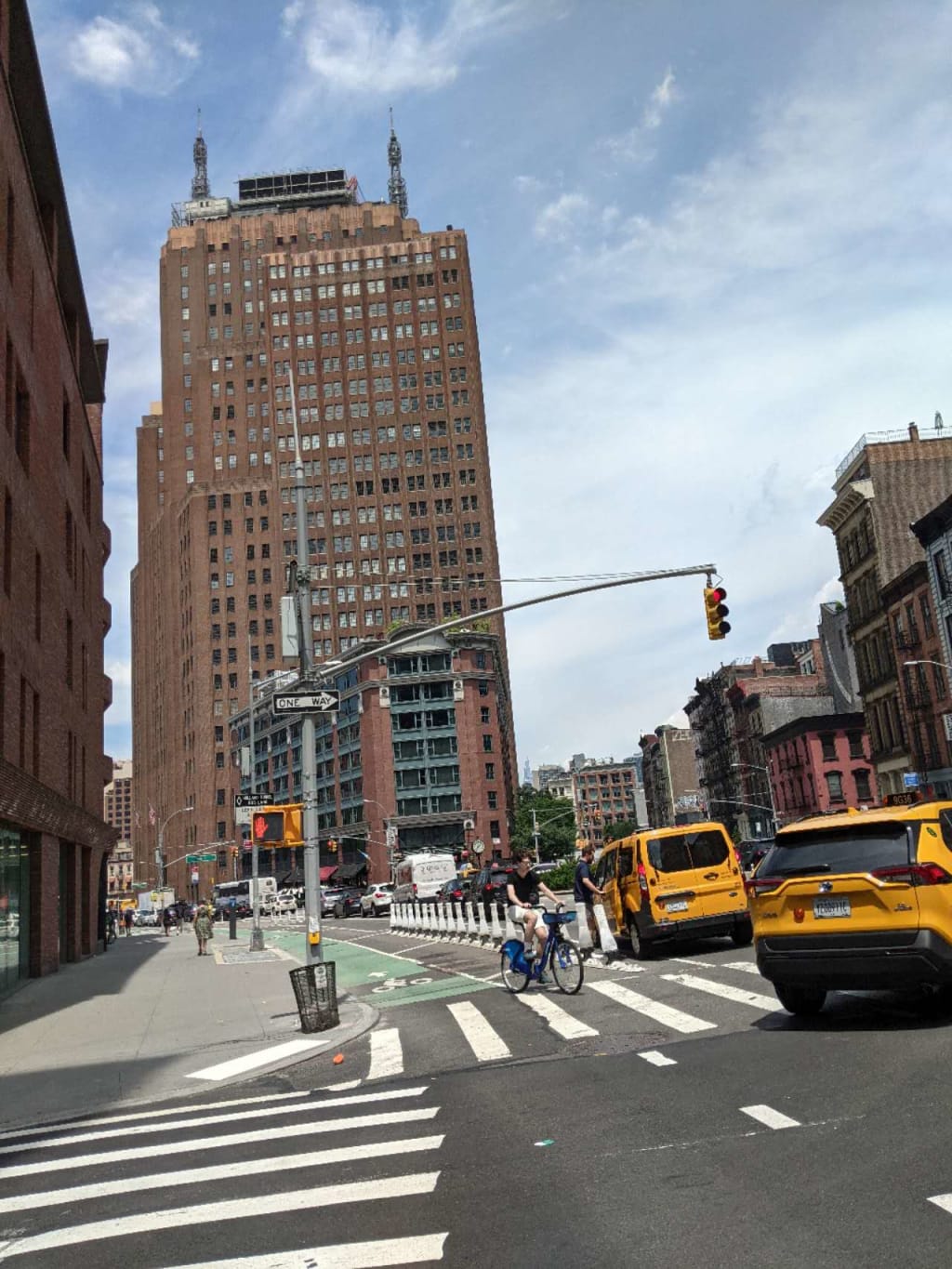
When I first started working in Chinatown, Manhattan, I thought it was only a temporary stop.
Just a job.
Just a way to pay rent while I searched for something better in New York City.
But I didn’t know that behind the bright red lanterns and the smell of roasted duck hanging in restaurant windows, there were thousands of quiet stories about survival.
Stories no one wrote about.
Stories people carried silently in their bodies.
And once you see them, you never look at Chinatown the same way again.
The First Morning
My first shift started at 7:30 a.m.
The street was still half asleep when I arrived at the restaurant on Canal Street.
Delivery trucks were unloading boxes of vegetables.
The air smelled like fish, ginger, and cold metal.
Inside the restaurant, the kitchen lights were already blazing.
The chef, Mr. Wong, looked at me for half a second.
“You’re the new guy?”
“Yes.”
“You’re late.”
I looked at the clock.
7:28.
“I came early,” I said.
He snorted.
“In Chinatown, early means 7:00.”
That was my welcome.
The Kitchen
If you have never worked in a Chinatown kitchen, it is hard to imagine the speed.
Orders came like machine gun fire.
“Two fried rice!”
“Three wonton soup!”
“Table six waiting!”
Steam filled the air so thick it felt like breathing through a wet towel.
My job was simple.
Carry plates.
Clear tables.
Run dishes back to the kitchen.
But even simple work becomes complicated when everything moves at twice the normal speed.
On my first day, I dropped a bowl of soup.
The bowl shattered across the floor.
Mr. Wong didn’t yell.
He just looked at me and said quietly,
“If you break too many, you go home.”
The Workers
Over time I began to notice the people around me.
There was Mrs. Lin, the dumpling maker.
She arrived at 6 a.m. every morning.
Her hands moved so quickly it looked like magic.
Fold. Press. Twist.
Hundreds of dumplings before lunch.
One afternoon I asked her,
“How long have you worked here?”
She thought for a moment.
“Twenty-two years.”
I almost dropped the tray I was holding.
“Twenty-two?”
She nodded.
“Since my son was three.”
“Where is he now?”
“California. Engineer.”
She smiled proudly.
Then she went back to folding dumplings.
The Dishwasher
The dishwasher was an older man named Chen.
He rarely spoke.
For twelve hours a day he stood at the sink, water splashing against his apron.
His hands were always red from hot water.
One night after closing, I asked him,
“How long have you been in New York?”
“Fifteen years.”
“Do you like it here?”
He shrugged.
“It’s work.”
That was the entire answer.
But something in his eyes told me there was more behind those two words.
The Lunch Rush
Every day at noon, the restaurant exploded.
Office workers from nearby buildings flooded the dining room.
Orders stacked faster than we could carry them.
My legs burned from running between tables.
Sweat soaked through my shirt.
At 2 p.m., when the rush finally ended, everyone leaned against walls catching their breath.
Mr. Wong lit a cigarette near the back door.
“Good,” he said simply.
In Chinatown, that meant excellent.
The Woman Who Cried
One rainy afternoon, a woman sat alone at table seven.
She ordered a bowl of noodle soup.
When I brought it to her, I noticed something strange.
She wasn’t eating.
She was crying.
Quietly.
I hesitated, unsure what to do.
Finally I asked,
“Is everything okay?”
She wiped her eyes quickly.
“Yes.”
But a few minutes later she spoke again.
“You speak Chinese?”
“Yes.”
“I just arrived last week,” she said softly.
“From Fujian.”
Her hands trembled slightly as she held the spoon.
“I thought America would be easier.”
I didn’t know what to say.
Because I had once believed the same thing.
The Night Shift
Chinatown changes at night.
Tourists disappear.
Neon lights glow against wet sidewalks.
Inside the restaurant, the pace slows.
Workers finally sit down to eat staff meals.
Rice.
Vegetables.
Sometimes leftover meat.
One night, Mr. Wong surprised us with roast duck.
“Why today?” someone asked.
“My daughter got into college,” he said.
Everyone cheered.
For a moment the kitchen felt like a family celebration.
Then someone asked the obvious question.
“Which college?”
He named a famous university.
The room fell silent for a second.
Then Mrs. Lin clapped her hands.
“Your daughter won,” she said.
Mr. Wong shook his head slowly.
“No,” he said.
“We all did.”
The Truth
That night, walking home through Chinatown, Manhattan, I finally understood something.
Most people in the restaurant weren’t working for themselves.
They were working for someone else’s future.
A son in college.
A daughter in medical school.
A family back in China.
Their dreams had quietly shifted from their own lives to someone else’s opportunity.
And they were willing to sacrifice decades for it.
The Accident
One evening something happened that I will never forget.
Chen, the dishwasher, slipped on the wet kitchen floor.
He fell hard against the sink.
For a moment the entire kitchen froze.
“Are you okay?” someone shouted.
Chen tried to stand but winced in pain.
Mr. Wong immediately called a taxi to take him to the hospital.
When Chen left, the kitchen felt strangely empty.
No one spoke for several minutes.
Finally Mrs. Lin said quietly,
“He never takes a day off.”
The Next Day
The next morning, Chen was back.
His arm was wrapped in a thick bandage.
“You should rest,” I said.
He shook his head.
“No work, no money.”
“But your arm—”
He turned on the water and began washing dishes.
“Life doesn’t stop,” he said simply.
What Survival Looks Like
That moment stayed with me.
Because suddenly I saw Chinatown differently.
The restaurants.
The grocery stores.
The bakeries.
Behind each one were people like Chen.
People who worked through pain.
Through exhaustion.
Through loneliness.
Not because they loved the work.
But because survival left them no choice.
A Quiet Realization
Months later, standing outside the restaurant on Canal Street, I watched the crowd moving through the night market.
Tourists laughed.
Phones took photos of dumplings and bubble tea.
For them, Chinatown was colorful.
Exotic.
Fun.
But I knew another side.
The side hidden behind kitchen doors.
Where steam filled the air.
Where hands worked until midnight.
Where survival was not dramatic.
Just quiet persistence.
The Truth About Survival
Working in Chinatown taught me something no classroom ever could.
Survival rarely looks heroic.
It looks like Mrs. Lin folding dumplings for twenty-two years.
It looks like Chen washing dishes with an injured arm.
It looks like immigrants sending half their paycheck home every month.
And it looks like people waking up before sunrise, walking through the narrow streets of New York City, ready to start another day.
Not because life is easy.
But because giving up is harder.
That is the truth I saw in Chinatown.
And once you see it, you begin to understand the quiet courage hidden inside ordinary lives.
About the Creator
New Normalcy
I and my team of five were at least convinced that the HEIST was not the result of greed; rather, it was due to the banking system's stupidly overinclined and ever-increasing reliance on biometric identity verification. We thought it would work in our favor, but in a hyper-digital world, the tragedy isn't just that the body fails but that the body's degradation outpaces the rigidity of the encryption.
By Viral Ranaabout 12 hours ago in Fiction



Comments
There are no comments for this story
Be the first to respond and start the conversation.