
In New York, No One Cares About My Past
A Story About Survival

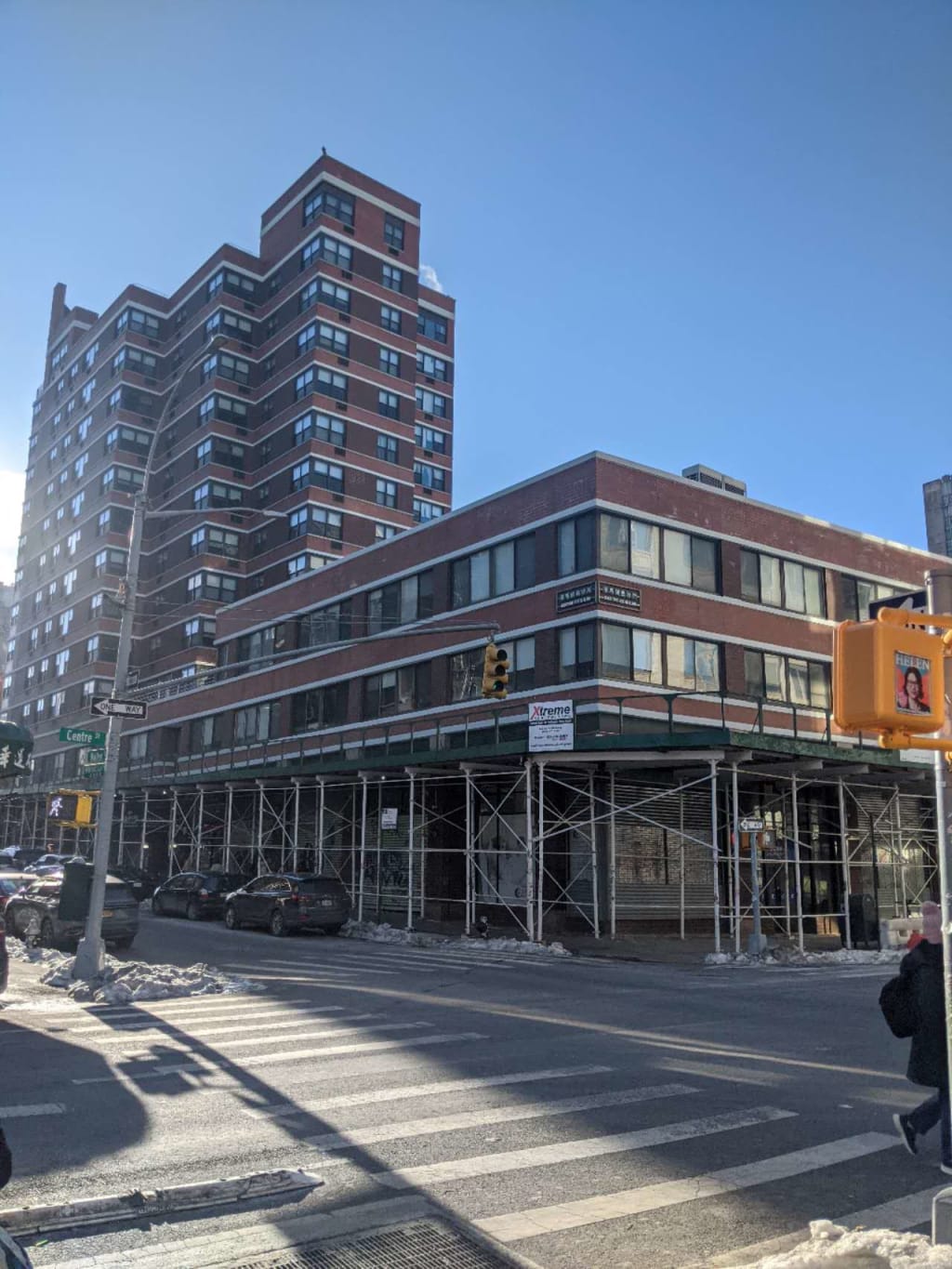
The first thing New York taught me was silence.
Not the silence of emptiness, but the silence of indifference.
It was February, and the wind cut through Manhattan like broken glass. I stood outside the subway entrance at Canal Street, my fingers buried deep inside thin gloves that were no match for winter. Steam rose from the grates in the pavement, twisting upward like ghosts escaping the underground.
No one looked at me.
Thousands of people passed. Shoes struck the pavement with mechanical urgency. Boots, heels, sneakers. Fast, determined, indifferent.
I could have been invisible.
And perhaps, in some way, I was.
Three months earlier, I had still been someone else.
Back then, in another country, I had a name people respected. I had an office with glass walls. A desk that reflected the afternoon sun. People knocked before entering. They called me “Manager Xu.”
Here, no one called me anything.
Here, I was just another immigrant with an accent.
Just another middle-aged man standing in the cold, waiting for the light to change.
—
My first job in New York was in a restaurant kitchen in Chinatown.
The manager didn’t ask about my past. He didn’t ask about my education. He didn’t ask what I had done before.
He only asked one question.
“Can you work?”
His English was sharp and efficient, like a knife.
“Yes,” I said.
He looked at my hands.
“They soft,” he said. “You work before?”
“Yes,” I said again, though we both knew the truth hiding behind the word.
He shrugged.
“Come tomorrow. Eleven o’clock.”
That was my interview.
That night, I lay awake in my small rented room. The radiator hissed beside me like an impatient animal. Outside, a siren screamed into the darkness.
I stared at the ceiling and understood something for the first time.
My past had no value here.
None.
—
The kitchen was hotter than I expected.
Steam filled the air. Oil snapped and crackled. Metal clanged against metal. Voices shouted in Cantonese, Mandarin, Spanish, and English, all layered together into a single language of survival.
The chef, a short man with a cigarette permanently hanging from his lips, pointed at a mountain of dishes.
“You wash.”
I nodded.
The sink was already full. Grease floated on the surface of the water in rainbow patterns. My hands plunged into it.
The heat burned.
But I did not stop.
Behind me, orders were shouted.
“Two beef lo mein!”
“Three dumplings!”
“Move faster!”
The pace never slowed.
After two hours, my back ached. After four hours, my fingers were wrinkled and numb. After eight hours, I could no longer feel the tips of them at all.
But no one cared.
No one asked if I was tired.
No one asked who I had been.
At midnight, the manager handed me cash.
“Good,” he said. “Come tomorrow.”
That was all.
No praise.
No welcome.
Just survival.
—
A week later, I met Carlos.
He was from Ecuador. He worked beside me at the sink. He moved quickly, efficiently, like someone who had done this his entire life.
“You new,” he said.
“Yes.”
He nodded.
“You have family here?”
“No.”
He smiled, but there was sadness in it.
“Me too,” he said.
We worked in silence for a while.
Then he asked, “What you do before?”
The question caught me off guard.
I hesitated.
“I was…” I began.
I stopped.
The words sounded foolish in my own ears.
I was a manager.
I was respected.
I was someone.
But none of that existed here.
“I worked,” I said finally.
He nodded, as if he understood everything I did not say.
In New York, everyone had a past.
No one talked about it.
—
One night, near closing time, a customer walked into the kitchen.
He was drunk.
His tie hung loose around his neck. His face was red.
“Where my order?” he shouted.
The chef tried to calm him.
“Coming soon,” he said.
The man slammed his fist on the counter.
“You people slow!”
No one answered.
We kept working.
He looked at me.
“You understand English?” he demanded.
“Yes,” I said quietly.
He stared at me for a moment.
Then he said something I would never forget.
“Then why you here?”
I did not answer.
Because I did not know how.
Because the answer was too long.
Because he did not really care.
He laughed.
“You come to America to wash dishes?”
His words hung in the air.
No one defended me.
Not the chef.
Not Carlos.
No one.
Because this was New York.
And in New York, dignity was not given.
It was earned.
Or it was lost forever.
—
That night, after work, I walked across the Manhattan Bridge.
The city stretched around me, endless and indifferent. Lights filled every window. Each one contained a life. A story. A struggle invisible to everyone else.
Cars rushed past.
No one stopped.
I leaned against the railing and looked down at the dark water.
Back home, I had been someone.
Here, I was no one.
And yet…
There was something strangely freeing about it.
No expectations.
No history.
No identity to protect.
Only the present.
Only survival.
Only forward.
—
Months passed.
My hands grew rough.
My English improved.
My movements became faster.
More efficient.
One day, the manager called me over.
“You want more hours?”
“Yes,” I said.
He nodded.
“You good worker.”
That was the first time anyone had called me that.
Good worker.
Not manager.
Not professional.
Not educated.
Just worker.
And strangely, I felt proud.
—
Then, one morning, everything changed.
The restaurant closed.
COVID had arrived.
The streets emptied.
The city stopped breathing.
For the first time since I arrived in New York, there was silence everywhere.
No traffic.
No crowds.
No noise.
I sat alone in my room.
No job.
No income.
No certainty.
For a moment, fear returned.
The old fear.
The fear of falling.
The fear of disappearing.
But then I remembered something New York had taught me.
No one was coming to save me.
And that was not cruelty.
That was truth.
—
Weeks later, I found new work.
A grocery store.
Stocking shelves.
Carrying boxes.
Simple work.
Honest work.
One night, as I helped an old woman carry her groceries, she smiled at me.
“Thank you,” she said.
Her voice was soft.
Kind.
For a moment, I felt something I had not felt in a long time.
Seen.
Not for my past.
Not for my title.
Not for who I had been.
But for what I was doing now.
In New York, no one cared about my past.
At first, that truth had felt like loss.
Now, I understood it was freedom.
Because if no one cared about who I had been…
Then I could become anyone.
Even someone stronger than before.
I walked home that night beneath the endless lights of the city.
The wind was still cold.
The streets were still indifferent.
But I was no longer invisible to myself.
And in New York, that was enough.
About the Creator
The Language of Absence
The stovetop ticked as the burner cooled, a rhythmic, cooling sound that bit into the silence of the kitchen. John didn’t move. He sat at the pine table, his fingers tracing the wood grain, waiting. He watched the steam curl toward the ceiling, a white plume turning grey in the dim morning light. Only when the heat had settled into a low, radiating warmth did his daughter, Mara, enter the room.
By Tim Carmichaela day ago in Fiction


Comments
There are no comments for this story
Be the first to respond and start the conversation.