

The sign at the entrance was tasteful, navy lettering on cream stock, the font the sort that suggested old money had always been there, like a geological feature. The Meridian at Founders' Ridge: A Curated Community for Patriot Families. Below it, in smaller text: By Appointment or Open House. Today: 1 to 4 PM.
Nora had found the listing online. By the time she showed it to Marcus, she'd already favorited three photos: the kitchen, the primary bath, and a view of the rear lawn that dissolved into tree line. Marcus had said it looked like exactly the place where they could finally exhale. He used that word. She remembered it now as they pulled into the circular drive and she felt, actually felt, her shoulders drop an inch.
The agent's name was Phillip, and he was waiting on the front steps with the posture of a man who had never doubted a decision. He wore a blazer the color of a calm sea and shook their hands with both of his.
"Marcus, Nora, welcome to the Meridian." He said it the way a pastor says amen. Final, warm, closing something. "You're going to love what we've done with the natural light."
The foyer was tall. That was the first thing. The ceiling climbed two stories and the afternoon came through a transom window and fell across the marble floor in a clean white rectangle. Nora thought: we would keep very little here. A bench. An orchid, maybe.
The television was mounted above the bench. It was large, perhaps sixty inches, set flush into the wall with a thin brushed-nickel frame that made it look architectural rather than electronic. The sound reached them before the image registered. A woman's voice, steady and precise in the way that voices become when they are recounting something under oath and the recounting itself has required years of preparation:
"And I was fourteen. He told me it was normal. He said everyone did it and that if I told anyone..."
"Original white oak," Phillip said, gesturing down at the floor. "Three-inch planks, wire-brushed finish. You won't find this in new construction." He tapped his heel against the wood twice, as though testing a melon.
Marcus crouched and ran his palm along the grain. "It's beautiful," he said. "Nora, feel this."
She crouched beside him. The wood was cool and smooth and the finish had been done with restraint. Above them the woman's voice continued at full volume, unhurried.
"I remember the carpet. It was the carpet that..."
"Is there a way to..." Nora began.
"The smart home system is app-integrated," Phillip said, smiling, moving toward the arched doorway. "The full walkthrough packet covers all of it. Shall we do the kitchen first? Most people want to do the kitchen first."
The kitchen was, in fact, extraordinary. The countertops were a quartzite quarried, Phillip mentioned, in Portugal, and the veining was so fine and so irregular that Nora thought of topographic maps, of altitude. The island seated four comfortably and six if you were among friends. The refrigerator was paneled to match the cabinetry and the range hood was solid brass and Marcus stood in front of it with his arms loosely crossed in the posture he used when he had already decided something but was allowing himself the pleasure of the deciding.
There were two televisions in the kitchen. One above the range, one mounted on the wall beside the breakfast nook. Both were on.
The second voice was a man's, older, with the flat mid-Atlantic affect of someone who had given depositions before and understood that the performance of cooperation was its own form of refusal:
"The flight logs were, as I understand them, a matter of record, yes. I was present on four, perhaps five, occasions. The island was..."
"The cabinetry is custom," Phillip said. "Soft-close hinges throughout, dovetail joinery. These aren't boxes with doors. These are furniture." He opened one to demonstrate. It closed with a whisper.
"I love that it goes all the way to the ceiling," Nora said.
"It does. No dead space up there. The previous owners used it for the entertaining pieces, the large serving platters, the punch bowl."
"We have a punch bowl," Marcus said. "From my grandmother."
"Then you're already home," Phillip said.
Nora was looking at the breakfast nook. There was a stack of papers on the banquette, loose, maybe two inches thick, the paper curl of documents that have been handled many times. She could see the headers on the top pages, the bolded words in all-caps, the phrase EXHIBIT A on one and on the next a name she recognized from a news cycle that had briefly surfaced and then been smoothed over again.
She picked up the stack and set it on the counter beside the sink, neatening the edges.
"Is there a recycling bin?" she asked.
"Under the left side of the island," Phillip said.
The primary bedroom faced east, which Phillip explained was intentional. The community had been master-planned with morning light in mind, with the understanding that how you began the day was, in some fundamental sense, who you were.
The television here was larger than the others. It occupied most of the wall opposite the bed, which was positioned so that you would see it the moment you opened your eyes. The screen was divided. On the left, a woman in her thirties was reading from a legal document in a voice that had gone flat in the way voices go flat when flatness is the only remaining protection. On the right, a scrolling transcript in white text on black, the words moving at the pace of speech.
"He said I had been chosen because I understood discretion. I did not understand discretion. I was sixteen..."
"The primary suite is just over eight hundred square feet including the bath," Phillip said. "The closet system is California Closets, built-in. His and hers. The lighting in the closet is color-corrected for garment selection."
"That's very practical," Marcus said.
"It is. These are practical people, the ones who chose this community. They thought about their lives in advance."
Nora was standing at the window. The lawn behind the house was generous and rolled gently toward the tree line she'd seen in the photos. There was a small ornamental pond.
"Is the pond maintained by the HOA?" she asked.
"Koi and all," Phillip said. "They've been there for eleven years. The koi. They're part of the property, technically, in the same way that certain trees are."
"We've always wanted a pond," Marcus said to Nora.
She turned from the window. The woman's voice from the television had been replaced now by an attorney's, reading a list of names in the precise and terrible way that attorneys read lists of names when the names themselves are the evidence.
"Where would you put the reading chairs?" Marcus asked her. He was standing in the far corner, measuring the space with his body the way he always did, feet apart, arms slightly out.
"There," she said, pointing to the window. "Both of them. Facing out."
"That's where I'd put them too."
There were documents in the hall bathroom as well, a manila folder left open on the vanity beside the vessel sink. Nora closed it while Marcus tested the water pressure in the shower. She did not read it first. She folded it shut the way you fold a newspaper when you've read enough and set it on the back of the toilet where it would be out of the way.
The guest room had a television in the closet, which seemed, architecturally, like an oversight, but when she opened the closet door it was clearly intentional. The screen was mounted at eye level between the built-in shelves, and it was on, and a man was describing in clinical and unhurried language a series of events that had occurred in a room he described as having a blue sofa and a specific lock on the door. His voice was not distressed. He had arrived, it seemed, at a place beyond distress. He was accounting.
Nora stood at the closet door for a moment.
The shelves were cedar-lined. She could smell it.
She closed the door.
Downstairs, in the room Phillip called the study, there was a fireplace with a limestone surround and built-in bookshelves flanking it and two large windows looking onto the side yard. It was the room Nora had imagined most clearly before today, a room with a door that closed, a room where you could work or read or be contained in a way that the rest of life rarely offered.
Phillip was explaining the gas insert, how it was remote-controlled, how it threw heat efficiently.
The television above the fireplace showed a courtroom. The courtroom was empty except for the attorneys and the judge, and the judge was speaking in the measured voice of someone who has spent a career ensuring that the record reflects exactly what occurred. She was reading from a document.
Marcus had his phone out, taking photographs.
"I could see us here," he said. "I genuinely could."
"Tell me your hesitations," Phillip said. He said it the way a good therapist says it, not as an invitation to doubt, but as the final step in removing doubt's architecture.
"Only the practical things," Marcus said. "The commute, the school assessment for when we're ready. Nothing about the house itself."
Phillip nodded. "The school assessment is favorable. I can get you the data."
Nora sat in one of the two leather chairs staged on either side of the fireplace. It was a good chair. It had the weight of a chair that does not call attention to itself, which is the highest thing a chair can do.
The judge's voice continued. Nora heard the name again, the same name that had been on the papers in the kitchen, and then a phrase she had heard before, years ago, in a different context, a phrase that had been briefly everywhere and then had been left to disappear:
"The totality of the evidence..."
The gas fire came on. Phillip had clicked the remote to demonstrate.
It was a good fire.
They signed in the dining room, which had a coffered ceiling and wainscoting and a built-in china cabinet that Nora had photographed three separate times. The table was oval and seated ten and currently held a leather portfolio, two pens, a small vase of white ranunculus, and in the far corner, slightly pushed aside, another stack of papers that no one had addressed and no one was going to address.
The television in the dining room was smaller, a secondary screen above the china cabinet, and the sound from it had mingled with the sound from the study and the sound from the kitchen until they had all become a weather, atmospheric, present, the way traffic hums in the background of a city room and you stop hearing it but it doesn't stop.
Phillip walked them through the pages, organized and tabbed, and his voice had become rhythmic in a way that was professional and kind and wholly confident. He had done this before. He believed in it. There was no performance in him, just the clean certainty of a man who had found his work.
Marcus signed where indicated. His signature was quick and sure.
Nora held her pen.
The voice from the television, she couldn't have said now which room it was coming from, or which testimony, or which name, because they had all layered into something ambient, had reached a moment of silence. Just briefly. The silence that occurs in sworn testimony when the question has been asked and the witness has heard it and has understood it and the court is waiting.
Nora looked up.
Not at the television. Not at Phillip. She looked at the china cabinet, at the beveled glass fronts, at the faint reflection of the room she could see in them. The three of them at the table, the portfolio open, the ranunculus white and precise in their vase, the papers in the corner still unaddressed, still stacked, still exactly where someone had left them.
She was quiet for a long moment.
Phillip waited. Marcus waited. The house waited, all its screens alive and speaking.
Then Nora looked back down at the page, found the line, and signed her name.
Her pen scratched against the paper with a dry, clean sound that was almost musical in its brevity. From somewhere in the house, the study, the kitchen, the room at the top of the stairs, a gavel came down. The sound of it traveled through the walls with a clarity that good construction allows.
Phillip smiled and gathered the portfolio.
"Welcome to the Meridian," he said.
Marcus squeezed her hand.
"Is there anything to drink?" she asked. Her voice was pleasant. It surprised her, how pleasant.
"Still water and sparkling in the kitchen," Phillip said. "Help yourself. You own the kitchen now."
She stood and smoothed the front of her jacket and walked toward the sound of the voices, into the room with the quartzite countertops and the custom cabinetry and the range hood of solid brass, and she took a glass from the cabinet, a clean glass, part of a set, left for exactly this purpose, and she filled it from the tap and drank it standing at the island, looking at nothing in particular, while the screen above the range continued at full volume, as it would tomorrow and the day after that, unhurried, patient, unbothered by the fact that no one was listening.
About the Creator
Tim Carmichael
I am an Appalachian poet and cookbook author. I write about rural life, family, and the places I grew up around. My poetry and essays have appeared in Beautiful and Brutal Things, My latest book. Check it out on Amazon
Keep reading
More stories from Tim Carmichael and writers in Fiction and other communities.
The Library of Possible Prefaces
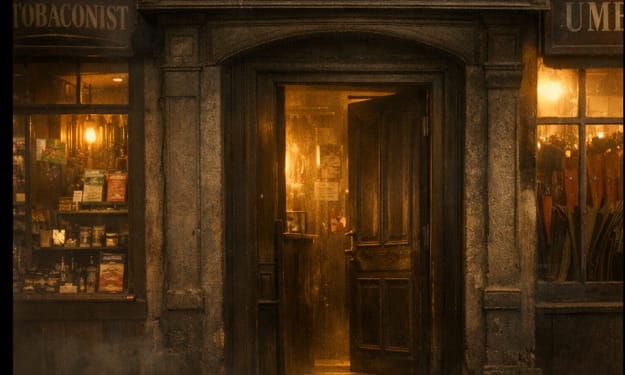
If you have come this far, you have already made a mistake. The library does not let you know you are there. It appears between a tobacconist and a shop that sells umbrellas, in a city whose name I will not give you, because the name of a city is the end of a city, and this city has not yet decided what it is.
By Tim Carmichael3 days ago in Fiction
Whispers Beneath the Ash Tree
The first time Elara heard the whispers, she was twelve, crouched beneath the gnarled branches of the old ash tree that crowned the hill behind her grandmother’s house. The air smelled of wet earth and burned wood, a memory of last night’s fire still clinging to the soil. The voices were not loud—never loud—but soft murmurs that trembled through the leaves like wind through strings.
By Ihsanullahabout 11 hours ago in Fiction
A More Human Vocal
When we launched Vocal nearly a decade ago, the world was a very different place. LLMs did not exist, and stories were created one at a time by people sitting down to write, revise, and share something personal. Many of our assumptions about publishing, trust, and participation were built for a world where effort and output were inseparable.
By Justin @ Vocalabout 4 hours ago in Resources



Comments
There are no comments for this story
Be the first to respond and start the conversation.