
Neuralink: The Dawn of the Connected Mind or the Death of Private Thought?
As Elon Musk’s brain-chip technology moves toward human reality, we must ask: In an age of total connectivity, are our deepest secrets still safe?

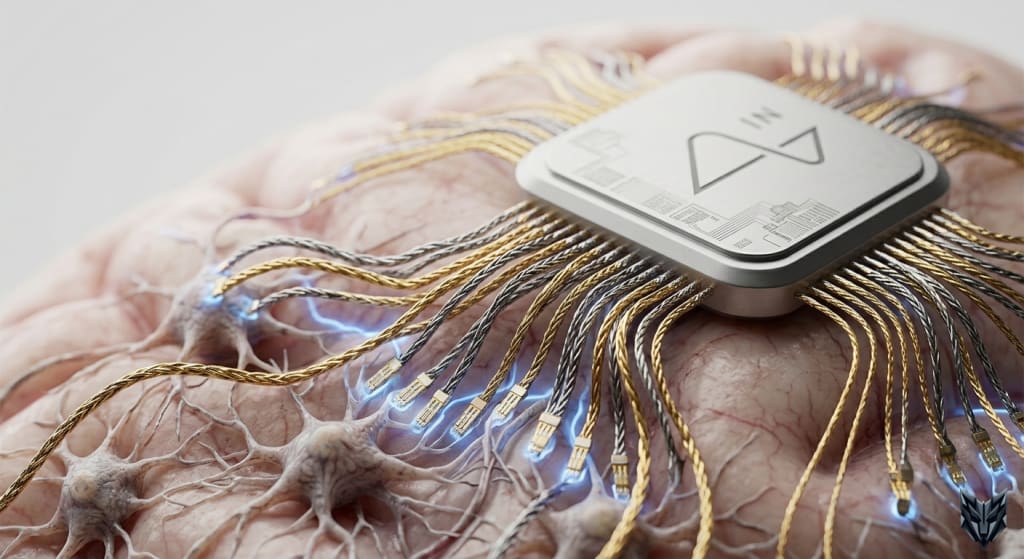
The Last Frontier of Privacy
For centuries, the human mind has been the only truly private place left on Earth. You can hide your browser history, you can encrypt your messages, and you can wear a mask in public. But your thoughts? Those were yours alone. No algorithm could touch them, and no surveillance camera could see them.
But the walls are coming down. With Elon Musk’s Neuralink successfully completing its initial human trials, we are standing on the edge of a biological revolution. We are no longer just using tools; we are becoming the tool. At Tech VIRA, we don't just look at the convenience of technology—we look at the cost of our humanity.
The Power of the Link
The premise is simple but world-changing. A series of microscopic electrodes are woven into the motor cortex of the brain. These "threads" can read the electrical signals of your neurons and translate them into digital commands. Imagine a paralyzed person controlling a robotic limb just by thinking, or a blind person seeing through a digital camera feed directly linked to the brain.
This is the "Neural Renaissance." It promises to cure neurological diseases like Parkinson's and Alzheimer's, enhance human intelligence to keep up with AI, and perhaps, one day, allow us to communicate telepathically.
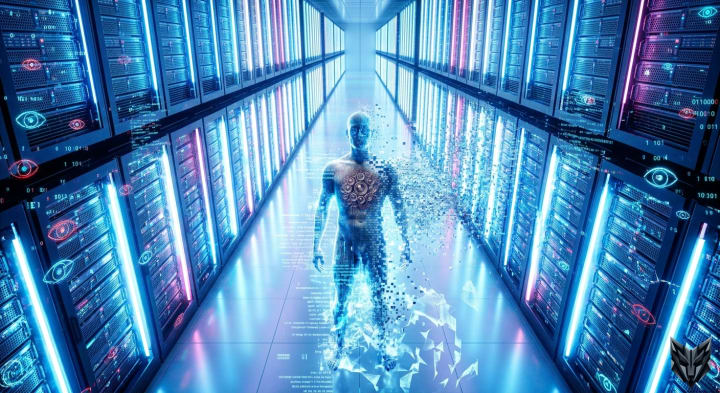
The Dark Side: Can You Hack a Human?
Every connected device is a vulnerable device. If your brain is connected to a network, the golden question is: Can someone hack you?
In a world where data is the new oil, your thoughts are the ultimate prize. Imagine a future where corporations don't just track your clicks, but your subconscious desires. Imagine "Brain-Jacking," where a hacker doesn't steal your credit card, but manipulates your emotions or rewrites your memories.
If a computer can "read" your brain, it can eventually "write" to it. This isn't just a security flaw; it’s an existential crisis. If your thoughts can be influenced by an external algorithm, are you still "you"?
The "Memory Market": Your Past for Sale?
If Neuralink can record memories, we are looking at the birth of a new economy—the Memory Market. Imagine being able to "buy" the experience of a world-class athlete, or "download" the skills of a master pianist directly into your motor cortex. On the surface, it sounds like the ultimate educational tool.
However, at Tech VIRA, we see the cracks in this digital utopia. If memories can be bought and sold, they can also be deleted or altered. Could a government "edit" history by simply wiping a specific event from the collective neural cloud? Could a corporation "insert" a preference for their brand directly into your childhood nostalgia? When our internal narrative is no longer sacred, the very definition of "truth" disappears. We become biological hard drives that can be formatted at will.
Digital Immortality and the "Save Game" of Life
Elon Musk has hinted at a future where we can "save and replay" memories. Imagine backing up your consciousness to a cloud server. If your biological body fails, your mind lives on in a digital void.
But this brings us to the ultimate Tech VIRA paradox: If we digitize our souls, do we become immortal, or do we just become another line of code in a corporate database? Are we evolving into gods, or are we surrendering our humanity to the "Great Algorithm"?
The Evolution of Social Inequality
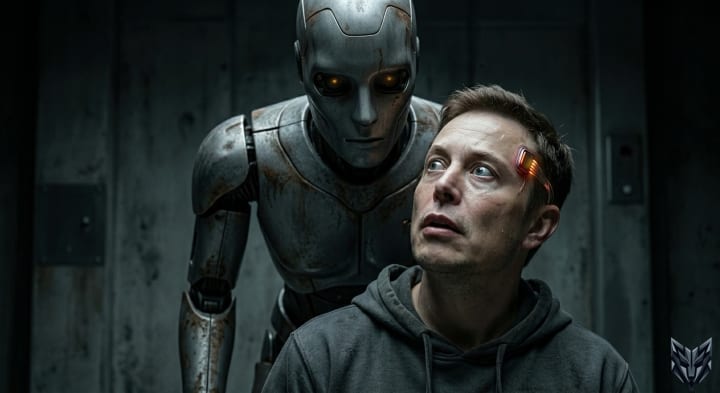
There is also the terrifying reality of the "Digital Divide." Neuralink won’t be cheap. In the beginning, it will be a luxury for the elite. This creates a terrifying scenario: a world divided not just by wealth, but by biology.
On one side, you have "Enhanced Humans"—individuals with high-speed internet access in their brains, perfect recall, and AI-assisted decision-making. On the other side, you have "Natural Humans" who simply cannot compete in the job market or in society. We aren't just talking about a gap in bank accounts anymore; we are talking about a gap in cognitive evolution. If the wealthy can literally upgrade their children’s brains, "equality" becomes a ghost of the past. Are we accidentally creating a two-tier human race?
Neural Surveillance: The Ultimate Spyware
Current surveillance tracks where you go and what you buy. But Neuralink-level technology tracks what you feel. It monitors your dopamine spikes, your fear responses, and your secret frustrations.
For the first time in history, "Thought Crime" could become a technical reality. If an algorithm detects a spike in "rebellious" neural activity, could you be flagged before you even utter a word? This is the ultimate spyware—one that you cannot uninstall, and one that lives inside your skull. As we embrace the "Link," we must ask if we are voluntarily walking into a digital prison where the warden knows our every dream.
Conclusion: The Tech VIRA Perspective
Neuralink is the ultimate bridge between biology and technology. It is a miracle for medicine but a minefield for human rights. As we move toward 2030, the "Connected Human" will become a reality.
The question is no longer "Can we do it?" The question is "Should we let them in?" Our minds are the last fortress of human identity. Before we plug in, we must ensure we aren't just opening a back door for the world to own our souls.
Stay Tech. Stay VIRA.
About the Creator
Priyantha Wijethunga
"Tech enthusiast and future-thinker. Exploring the latest trends in Artificial Intelligence, IT breakthroughs, and how technology is reshaping our world. Join me on a journey into the future."
Keep reading
More stories from Priyantha Wijethunga and writers in Futurism and other communities.
Living in 2030: How Smart Cities are Redefining Human Life
As we move deeper into the decade, the concept of a "home" is shifting from a simple physical shelter to an intelligent ecosystem. By 2030, our cities won't just be concrete jungles; they will be living, breathing organisms powered by Artificial Intelligence and renewable energy. This transition is not just about luxury; it’s about survival and sustainability in a rapidly changing world.
By Priyantha Wijethunga3 days ago in Futurism
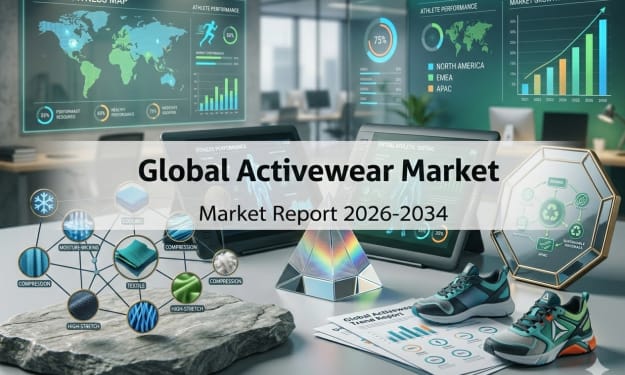
Activewear Market: How Performance Clothing Became the Uniform of Modern Life
There is the moment everyone knows․ Pulling on a good pair of fitted leggings or a technical performance top, something shifts․ You feel ready․ Ready not just physically, but ready for the day․ It is that feeling in hundreds of millions of people worldwide that moves one of the most powerful stories in today's fashion and retail landscape forward․
By Frank Morgan3 days ago in Futurism
Education ERP Market to Surpass USD 66.3 Billion by 2033
Education ERP Market Overview The global Education ERP Market is experiencing steady expansion as educational institutions adopt digital systems to manage academic and administrative operations. The market is projected to reach USD 66.3 Billion by 2033, rising from USD 16.1 Billion in 2023, reflecting a CAGR of 15.2% during the forecast period from 2024 to 2033. The growth trajectory is associated with increasing digital transformation across schools, colleges, and universities. Institutions are investing in centralized platforms to handle admissions, finance, attendance, and academic records more efficiently.
By Roberto Crumabout 6 hours ago in Futurism



Comments
There are no comments for this story
Be the first to respond and start the conversation.