
The Tesla Model Pi: 5 Surprising Truths Behind the Internet’s Favorite Tech Myth
In the hyper-saturated landscape of consumer electronics, few ghosts haunt the digital zeitgeist quite like the "Tesla Model Pi." The allure is a masterclass in brand gravity:

The Ghost in the Machine
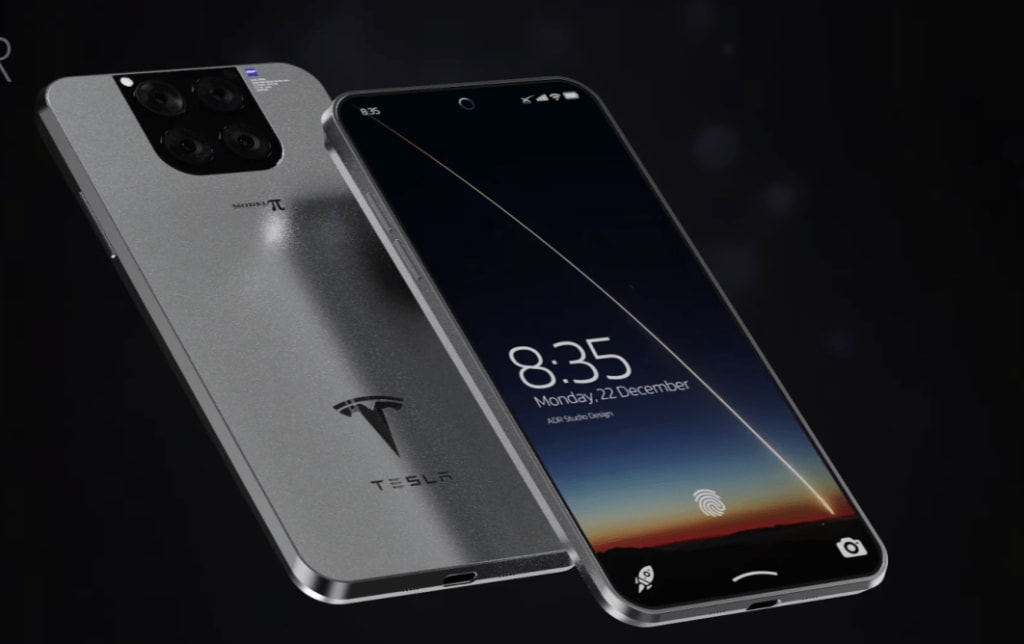
In the hyper-saturated landscape of consumer electronics, few ghosts haunt the digital zeitgeist quite like the "Tesla Model Pi." The allure is a masterclass in brand gravity: a smartphone engineered by the world’s most disruptive industrialist, designed to shatter the Apple-Google duopoly. However, if you have spent any time on TikTok or YouTube lately, you’ve likely been fed a diet of sophisticated engagement-bait—a alternate reality where the device has already launched, costs a pittance, and connects directly to the Red Planet.
The sheer volume of these "leaks" is not a sign of an imminent product launch; it is a symptom of the modern click-arbitrage economy. As a seasoned analyst of the Musk ecosystem, I’ve watched this myth morph from a harmless "what-if" into a full-scale AI-generated campaign of misinformation. To understand why this device remains a digital daydream, we must look past the "shoddy" viral videos and anchor ourselves in Tesla’s official industrial roadmap and the harsh realities of global manufacturing.
The "$100 Tesla Phone" is Pure AI Fiction
If you’ve scrolled past a video claiming Tesla just released a $100 smartphone that "broke the internet," you haven't seen a product launch—you've seen a revenue engine for click-farm architects. These videos are textbook examples of "fake news" tailored for the algorithmic age.
The primary indicator of the hoax is the price. In an era where flagship silicon and high-end optics push prices toward $1,200, the notion of a satellite-connected, high-performance Tesla device selling for $100 is economically illiterate. One particularly pervasive TikTok hoax from late 2025 features a "vibrant blue" handset with a camera bump that looks like a clumsy hybrid of an iPhone 17 Pro and a Samsung Galaxy S25 Ultra. The video features a terrifyingly uncanny AI-generated Elon Musk, though it inadvertently gives the game away by showing a completely different phone model at the very end. There is a deep, cynical irony in these engagement-bait architects using AI versions of Musk to peddle a product he has explicitly expressed a distaste for creating.
Musk’s Motivation: A "Last Resort" Device
Despite the digital frenzy, Elon Musk’s personal appetite for entering the smartphone market ranges from reluctant to visceral repulsion. This is not a project Tesla is "aspiring" to complete; it is a contingency plan. Musk has repeatedly clarified his conditions: a Tesla phone would only exist if the current "gatekeepers"—Apple and Google—began engaging in harmful censorship or acting as predatory throttles on the digital economy.
While out on the political campaign trail recently, Musk’s sentiment remained predictably blunt:
"The idea of making a phone makes me want to die. But if we have to make a phone, we will, but we will aspire not to make a phone."
From a strategic standpoint, Musk has viewed smartphones as "yesterday’s technology" since at least 2020. His focus is on the next leap: brain-machine interfaces. To a visionary aiming for Neuralink integration, a handheld glass rectangle is a relic. Tesla isn't looking to compete with the iPhone; they are looking to make the very concept of a phone obsolete.
Identity Crisis: The Other "Teslas"
A significant portion of the "Model Pi" confusion stems from a phenomenon I call brand hijacking. There are multiple entities currently leveraging the "Tesla" name to sell consumer hardware, none of which have any connection to Musk’s Gigafactories.
The Siberian Exploiters: A company based in Siberia markets rugged devices like the Tesla Explr9 and the Tesla Series 3. The latter is a transparent attempt to lean into the naming convention of the Tesla Model 3 to siphon off brand equity from unsuspecting search engine users.
The Appliance Brand: Another entity uses the name for a range of fridges, ovens, and budget smartphones. Their own FAQ is remarkably honest, stating they are "inspired by Nikola Tesla’s idea to provide technology for all," rather than any affiliation with the EV giant.
When you see a "Tesla" phone in a bargain bin or a Siberian catalog, you aren't seeing a secret Musk project; you're seeing a historical tribute being used as a marketing wedge.
From Mars Connectivity to Mind Control: The Speculation Trap
The information vacuum created by Tesla’s official silence has been filled by "bonkers" rumors that defy the laws of physics and market logic. Let’s apply a much-needed reality check to the speculation:
Starlink Integration: Fans envision a device with full satellite broadband. Reality check: Current satellite tech (seen in the iPhone 14 and beyond) is restricted to "simple emergency communications." The hardware required for full-bandwidth satellite data would turn a sleek smartphone into a bulky brick with a thermal management nightmare.
Solar Charging: A classic Tesla brand fit, but a functional failure. Solar panels on a device that spends 90% of its life in a dark pocket or a bag are virtually useless for maintaining a modern smartphone's power-hungry battery.
Neuralink Compatibility: The dream of a thought-controlled phone ignores the current state of UI. If we can't get Siri to consistently play the right song, the leap to "mind-controlled" browsing is decades away.
Mars Connectivity: The rumor that the Model Pi will work on Mars via Starlink is the height of absurdity. As a tech skeptic, I’d be far more impressed if Musk could ensure a consistent 5G signal in a suburban coffee shop before we start worrying about connectivity on Olympus Mons.
The "Nail in the Coffin": Master Plan Part IV
The definitive proof that the Model Pi is a myth lies in Tesla’s latest strategic manifesto: Master Plan Part IV. This document outlines a radical pivot toward "automation above everything else."
The roadmap is hyper-focused on Tesla Bots (Optimus) and the transition to a purely autonomous transportation network. For Tesla to descend from high-margin robotics and B2B automation into the cutthroat, saturated B2C smartphone market would be a massive strategic regression. Smartphones are a commodity business with razor-thin margins and brutal replacement cycles—the exact opposite of the industrial AI future Musk is building. If it isn't a robot or a self-driving platform, it’s not on the roadmap.
The Future of the Model Pi
The "Tesla Model Pi" is a conceptual urban legend—a digital daydream fueled by the gravity of the Musk brand and the desperation of click-farm architects. While the components exist in isolation (Starlink, Neuralink, Tesla's solar tech), the intent to package them into a handheld consumer device is currently non-existent.
The Model Pi is a "break glass in case of emergency" scenario, a ghost that only takes form if the mobile status quo becomes unbearable for Tesla's broader interests. This leaves us with a final, provocative thought: If Apple or Google eventually push Musk to his breaking point, would you actually want a device that interfaces directly with your thoughts, or is the "Model Pi" better left as a harmless digital daydream?
About the Creator
Mohammad Hamid
Big Dream Work Hard and Achieve 💪
Keep reading
More stories from Mohammad Hamid and writers in Futurism and other communities.
Apple’s Power Move: Everything Announced in the Massive March 2026 Refresh
Apple has never been a company to do things quietly, but the first week of March 2026 will go down in tech history as one of its most aggressive hardware blitzes to date. Foregoing a traditional singular keynote, Apple opted for a "rolling" launch week, dropping bombshell announcements daily before culminating in a press "experience" in New York, London, and Shanghai.
By Mohammad Hamid2 days ago in Futurism
Australia Building Energy Efficiency Systems Market: Sustainability Standards, Technology Innovation & Regulatory Drivers
According to IMARC Group, the Australia building energy efficiency systems market reached USD 9.5 Billion in 2025 and is projected to expand to USD 28.3 Billion by 2034, exhibiting a strong compound annual growth rate (CAGR) of 12.54% during 2026–2034. The significant expansion highlights a structural transformation in building design and infrastructure management across Australia. Growing national commitments to carbon reduction, sustainability compliance and long-term energy cost optimization are accelerating the adoption of advanced efficiency systems. From smart HVAC and lighting solutions to integrated building management systems (BMS), energy efficiency technologies are becoming central to both new developments and retrofitted properties.
By Kevin Cooper7 days ago in Futurism
Stanislav Kondrashov Oligarch Series: Why Semiconductors Sit at the Heart of Modern Oligarchy
Stop for a moment and think about how many devices you’ve used today. Your phone alarm. Your laptop. Contactless payment. Streaming music in the background. None of it works without semiconductors. They are small, silent and easy to overlook. Yet in the Stanislav Kondrashov Oligarch Series, they emerge as one of the clearest lenses through which to understand modern oligarchy.
By Stanislav Kondrashov7 days ago in Futurism



Comments
There are no comments for this story
Be the first to respond and start the conversation.