
Book Review: "The Dead Sea Scrolls: A Very Short Introduction" by Timothy Lim
4/5 - extremely interesting, immersive and filled with history both political and social...

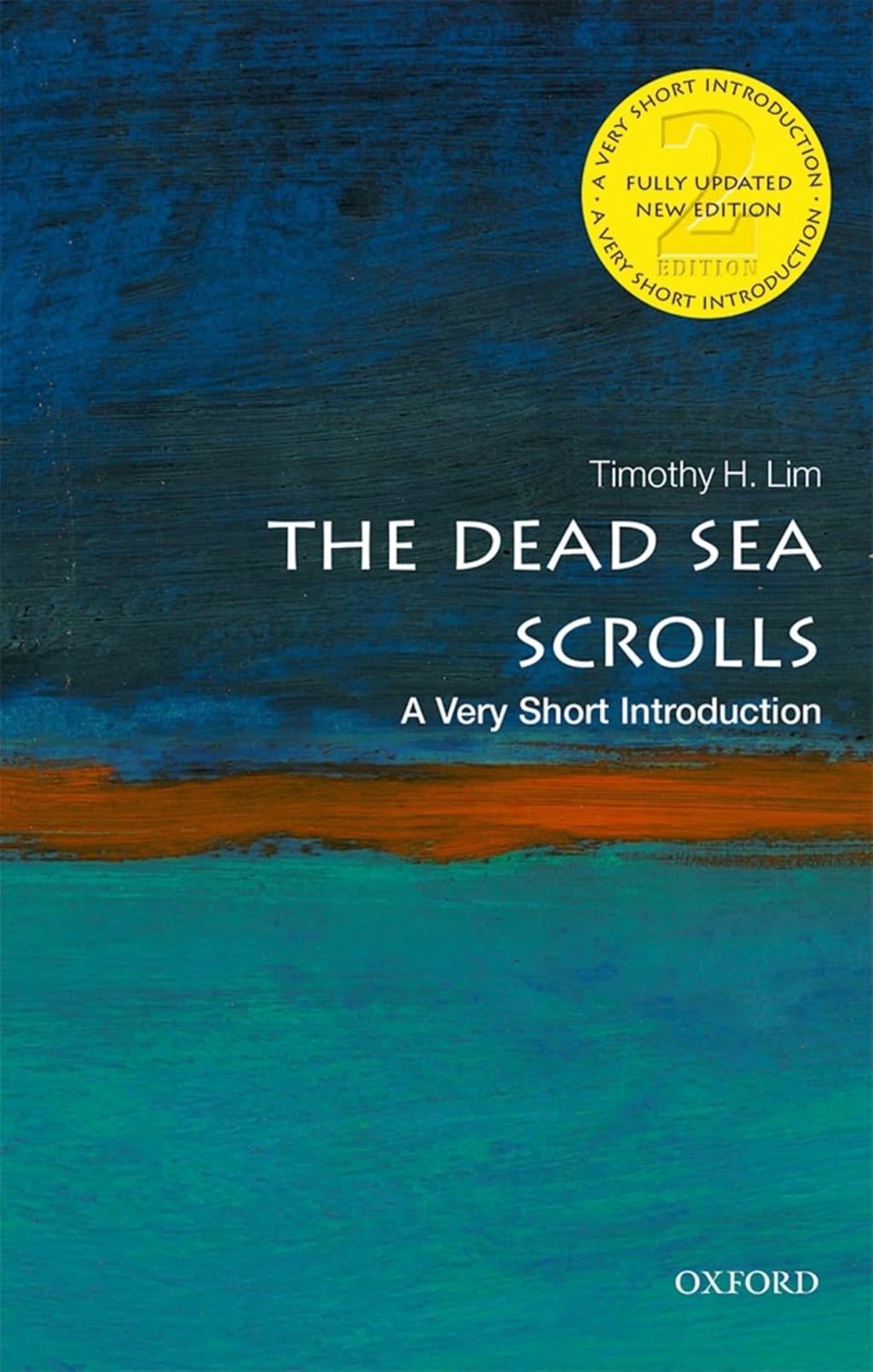
I'm back on reading some books from the Very Short Introduction series and this is because 1) they are cheap and 2) they are usually quite interesting. They give us an overview of a topic and allow us to make the decision of whether we want to dip our toes further down into the waters. I've read some stuff about the Dead Sea Scrolls before but nothing quite like this. I do have to say that one thing that this series does is make things that I previously thought were not extensively interesting, incredibly intriguing through the mixture between anecdotes, history, analysis and how the topic connects to us and our lives.
The book starts with what A Very Short Introduction should always start with: defining what exactly the 'Dead Sea Scrolls' are, when and where they were found and how they have had an impact on the world around us today. The text then expands to teach us how important the handwriting is within them. There is no single long scroll, but several smaller ones each written by a different scribe and to identify them can help us to understand how the 'Dead Sea Scrolls' were put together. The writer states that we have to take these scrolls as being copied out from something else (and that thing we do not have). One thing I enjoyed reading about was the idea that this is not just about one particular faith, but there are several faiths that find themselves in the Dead Sea Scrolls. For example: both Judaism and Catholicism can find their text within, but so can the Greek Christians and others. There may only be fragments, but it's definitely not nothing.
There's quite a bit that challenges what we know about the Bible today. These are not complete stories and books but rather fragmentations of them which tend to show us how these stories were interpreted 2000 years ago. They date roughly from the 3rd century BCE to the 1st century CE. This helped push the date in which the ideas regarding the Jewish faith began to around 1000 years' before previously thought. Thus, it also helps us as readers to understand the way in which not only new information can help us revisit and evaluate older ideas, but it can also show us that there are perhaps things still out there to challenge our points of view currently held. Who knows what we will discover in the future that may render things even older than this?
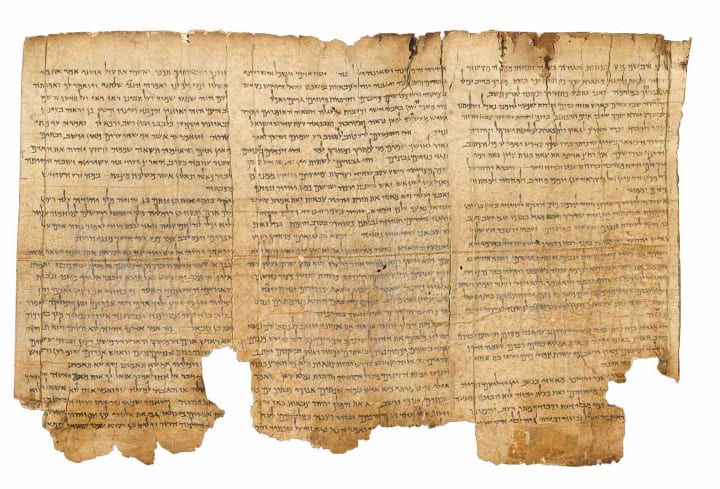
The author then discusses what the scrolls reveal about the formation of the biblical canon. The presence of multiple versions of some books and the inclusion of texts later excluded from the Hebrew Bible (for example: Jubilees, Enoch's literature) suggests that the boundaries of “Scripture” were still fluid. Authority was not yet defined by a closed list of books but by community use and tradition. This seems to be more correct that suggesting that religion was something already set in stone by such an early time period in which migration was not only going on, but somewhat necessary for survival. I love the way in which the writing is actually quite simple to understand, even though there may be a lot of dates to remember. The author makes the story very interesting yes, but he also simplifies it down so that basically anyone can understand the history behind these important documents.
I was really interested to learn about the copper scroll, now I've heard about this thing before but I can definitely see that the author of this book is cynical about what it represents. The copper scroll lists treasures and where they may be found. The author seems to suggest two possibilities about what this scroll is: it is either something realistic and thus, you can go to the locations and find the treasures, or it is symbollic in which there is no actual treasure and thus, you cannot find actual things at these locations. It really represents the difference between each and every scroll, there isn't one genre but in fact, they are multiple fragments, multiple genres and contain tons of different ideas regarding the history of Jewish people.
All in all, I enjoyed this book. It gives us a great overview of everything from history, to the scrolls themselves and how they were found, all the way through the Hellenistic era and what happened there and then all the way down to how we translate the scrolls. If you're going to read any of the Very Short Introduction series books then put this one at the top of your list.
About the Creator
Annie Kapur
I am:
🙋🏽♀️ Annie
📚 Avid Reader
📝 Reviewer and Commentator
🎓 Post-Grad Millennial (M.A)
***
I have:
📖 300K+ reads on Vocal
🫶🏼 Love for reading & research
🦋/X @AnnieWithBooks
***
🏡 UK
Keep reading
More stories from Annie Kapur and writers in Geeks and other communities.
Book Review: "A Meaningful Life" by L.J Davis
The New York Review of Books classics series has always been great for discovering new writers and works by writers you wouldn't have even thought about. There's books about authors, there's books on the topic of war, of identity and everything in between. A short time ago, I wrote my article on my favourite books of the series and yet, I don't think I'm even halfway through digging through the publications. Since they keep coming out with new ones, I have always had something obscure to read. A Meaningful Life is about a man, upon turning thirty, chooses to take a look at how his life hasn't really gone quite the way he planned. He definitely feels as though it is slipping through his fingers.
By Annie Kapura day ago in Geeks
A Knight of the Seven Kingdoms Series Review (Season 1)
As one of the biggest properties in fantasy, A Song of Ice and Fire remains immensely popular with audiences. After reaching far into the past with House of the Dragon, a second spin-off was on the cards. A Knight of the Seven Kingdoms serves up a bite-sized slice of action and drama, but it still claims a spot among the best small-screen titles.
By Robert Cain6 days ago in Geeks
Days of Our Lives: Nikki Crawford is the new Lexi Carver
A new Lexi emerges Days of Our Lives viewers have been speculating that Lexi Carver is the woman in the test tube that Dr. Wilhelm Rolph and EJ Dimera are bringing back to life. It has been confirmed that Nikki Crawford has joined the cast as the new Lexi.
By Cheryl E Prestona day ago in Geeks


Comments
There are no comments for this story
Be the first to respond and start the conversation.