
Ballistic Missiles
Power, Technology, and the Global Debate

Introduction
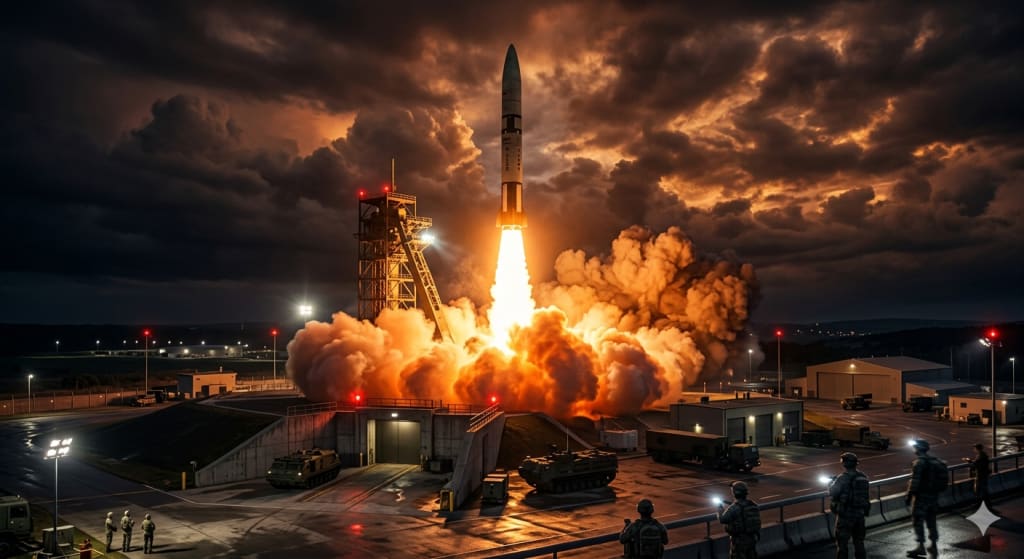
In the modern world, few weapons have captured global attention as much as Ballistic Missile. These powerful weapons are designed to travel long distances at incredible speeds, carrying conventional or nuclear warheads. From the tense years of the Cold War to today's complex geopolitical landscape, ballistic missiles have shaped military strategies and international diplomacy.
Ballistic missiles are not just weapons; they are symbols of technological advancement, political power, and strategic deterrence. Countries invest billions of dollars in missile development to protect their national interests and maintain balance in global security. While they can serve as defensive deterrents, they also raise serious concerns about global stability and the potential for catastrophic conflict.
This article explores the origins, technology, types, global impact, and future of ballistic missiles.

The Origin of Ballistic Missiles
The concept of long-range rockets dates back many centuries, but modern ballistic missiles began developing during World War II. During this period, Germany developed the famous V‑2 Rocket, created by the rocket scientist Wernher von Braun.
The V-2 rocket was revolutionary. It could travel faster than the speed of sound and strike targets over 300 kilometers away. Although it was primarily used to attack cities in Europe, it also laid the foundation for future missile and space technologies.
After the war, both the United States and the Soviet Union captured German rocket technology and scientists. This competition led to rapid advancements in missile systems and eventually sparked the missile arms race during the Cold War.
How Ballistic Missiles Work
A ballistic missile follows a trajectory similar to a thrown ball, which is why it is called "ballistic." After launch, the missile is powered by rocket engines for a short period before entering space and traveling along a curved path toward its target.
The flight of a ballistic missile usually has three stages:
1. Boost Phase
This phase occurs immediately after launch. Powerful rocket engines push the missile into the upper atmosphere. The boost phase usually lasts three to five minutes.
2. Midcourse Phase
During this stage, the missile travels through space in a ballistic arc. This is the longest part of the flight and can last up to 20 minutes or more depending on distance.
3. Terminal Phase
Finally, the missile reenters the Earth’s atmosphere and descends rapidly toward its target. At this stage, the warhead separates and impacts the target area.
Types of Ballistic Missiles
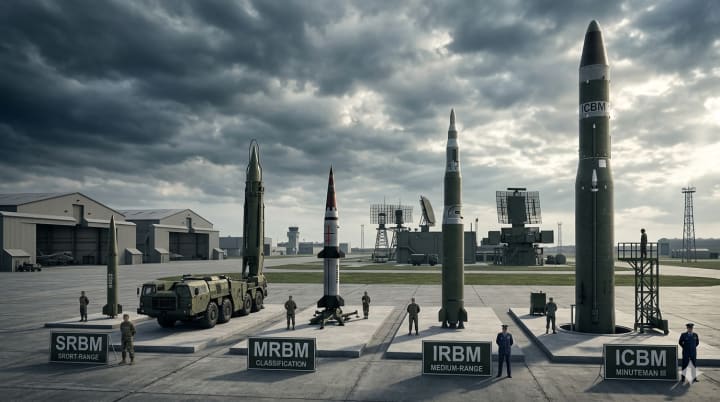
Ballistic missiles are categorized mainly by their range. Different types are designed for different strategic purposes.
Short-Range Ballistic Missiles (SRBM)
These missiles typically travel up to 1,000 kilometers. They are used for regional military operations and tactical battlefield strikes.
Medium-Range Ballistic Missiles (MRBM)
These missiles can reach targets between 1,000 and 3,000 kilometers away. They are often used for strategic deterrence between neighboring regions.
Intermediate-Range Ballistic Missiles (IRBM)
These missiles can travel between 3,000 and 5,500 kilometers and are capable of reaching targets across continents.
Intercontinental Ballistic Missiles (ICBM)
The most powerful category is the Intercontinental Ballistic Missile. These missiles can travel more than 5,500 kilometers and deliver nuclear warheads across continents.
ICBMs are a central part of nuclear deterrence strategies for countries such as:
United States
Russia
China
Ballistic Missiles and Nuclear Deterrence
Ballistic missiles became especially important during the Cold War. During this time, the United States and the Soviet Union built massive nuclear arsenals capable of destroying each other many times over.
This led to the strategy known as Mutually Assured Destruction. The idea was simple but terrifying: if one country launched nuclear missiles, the other would retaliate with equal or greater force, ensuring total destruction for both sides.
Because of this, ballistic missiles were seen not only as offensive weapons but also as tools of deterrence.
Missile Defense Systems

To counter the threat of ballistic missiles, countries have developed missile defense technologies. These systems are designed to detect, track, and destroy incoming missiles before they reach their targets.
One example is the Terminal High Altitude Area Defense system, which can intercept missiles during their terminal phase.
Another well-known system is Patriot Missile System, which has been used in multiple conflicts to defend against missile attacks.
Missile defense remains one of the most challenging technological problems in modern warfare because intercepting an object traveling several kilometers per second is extremely difficult.
Countries With Ballistic Missile Programs
Today, several countries maintain ballistic missile programs as part of their national defense strategies.
Some of the most notable include:
United States
Russia
China
India
North Korea
Each country has developed unique missile systems with different ranges, technologies, and strategic purposes.
Some missiles can even carry multiple warheads, known as MIRVs, allowing a single missile to strike multiple targets simultaneously.
Ethical and Global Security Concerns
While ballistic missiles serve as powerful deterrents, they also raise serious ethical and security concerns. The destructive capability of modern missiles is immense, especially when equipped with nuclear warheads.
International organizations like the United Nations have attempted to regulate missile proliferation through treaties and diplomatic agreements.
However, missile technology continues to spread, and the risk of escalation remains a major concern for global security.
Many experts argue that diplomatic dialogue and arms control agreements are essential to prevent catastrophic conflicts in the future.
The Future of Missile Technology
Missile technology is constantly evolving. Modern research is focusing on hypersonic weapons, which can travel at speeds greater than Mach 5 and maneuver during flight.
One example is the Hypersonic Glide Vehicle, which can evade many existing missile defense systems.
Countries like China, Russia, and the United States are investing heavily in these technologies.
These advancements may redefine global military power and create new challenges for international security.
Conclusion
Ballistic missiles are among the most powerful and controversial weapons ever created. From their origins in World War II to their role in modern military strategy, they have significantly shaped global politics and defense systems.
While they serve as tools of deterrence, their destructive potential reminds humanity of the dangers of advanced warfare. The future of missile technology will likely bring even faster and more sophisticated weapons, making international cooperation and responsible policies more important than ever.
Ultimately, the story of ballistic missiles is not just about technology or warfare — it is about how humanity chooses to balance power, security, and peace in an increasingly complex world.
About the Creator
Ashen Asmadala
Hi, I’m Ashen, a passionate writer who loves exploring technology, health, and personal development. Join me for insights, tips, and stories that inspire and inform. Follow me to stay updated with my latest articles!
Keep reading
More stories from Ashen Asmadala and writers in Humans and other communities.
Understanding Gold Rates: How They Change and What It Means for You
Gold has always been a symbol of wealth, power, and security. From ancient civilizations to modern-day investors, people have trusted gold as a store of value. But if you’ve ever checked the gold rates lately, you might have noticed how unpredictable they can feel. One day the price rises, the next it falls. So why does this happen, and how can you, as a buyer or investor, make sense of it? Let’s dive in.
By Ashen Asmadalaabout a month ago in Humans
Bad Parenting
“Mommy, look. I can do it mommy. I can do it. Watch me. Mommy. Mommy!” I heard a young boy shout for attention in the park. He’s wobbling on his little bike, tongue sticking out, one leg down. Another push, and off he goes. Wobbly at first, swerving left and then picks up speed.
By Elizabeth Woods5 days ago in Humans



Comments
There are no comments for this story
Be the first to respond and start the conversation.