
The Best Historical Reenactments You Can Join.
Travel Through Time by Participating in Living History Events.


Historical reenactments offer a rare chance to step into the past. Participants wear period clothing, perform traditional activities, and recreate major historical moments. These events combine education, culture, and entertainment. You do not only watch history. You take part in it.
Many reenactments welcome beginners. Organizers train new participants and provide guidance on costumes, historical roles, and event rules. Students, teachers, historians, and travelers join these events across the world.
Understanding Historical Reenactments
Historical reenactments recreate events from earlier centuries. Participants attempt accurate representation of clothing, tools, weapons, and behavior from the time period.
Common reenactment activities include:
• battlefield demonstrations
• medieval markets
• traditional crafts
• historical cooking
• military drills
• theatrical storytelling
These experiences help people understand historical life beyond textbooks.
One major example is the famous Battle of Gettysburg reenactment in the United States. Thousands of participants recreate scenes from the American Civil War, attracting visitors from around the world.
Why People Join Historical Reenactments
Participants join reenactments for different reasons.
Education
Students and educators use reenactments as living classrooms. Historical scenes make past events easier to understand and remember.
Community
Reenactment groups often form close communities. Members share interest in history, research, costume design, and traditional crafts.
Cultural preservation
Many reenactments protect cultural heritage. Traditional music, food, and skills remain alive through these events.
Adventure
Participants experience travel, performance, and storytelling while representing historical characters.
Popular Historical Reenactments Around the World
Many reenactment events attract global participants.
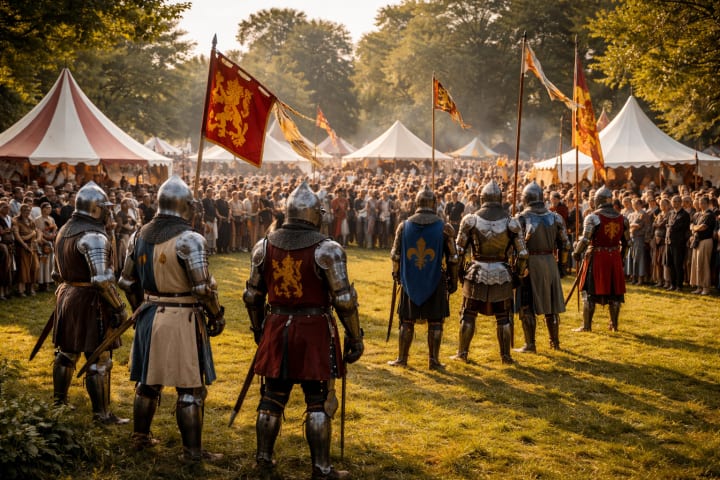
The Battle of Hastings Reenactment in England recreates the famous Battle of Hastings of 1066. Hundreds of reenactors dress as Norman and Anglo Saxon warriors. The event includes archery displays, medieval camps, and battlefield demonstrations.
Another major event takes place in France during the Napoleonic Wars reenactments. Participants recreate famous battles involving the armies of Napoleon Bonaparte. These reenactments include cavalry formations, artillery demonstrations, and historical military strategies.
In the United States, the Colonial Williamsburg Reenactments present life in eighteenth century America. Participants portray blacksmiths, merchants, soldiers, and farmers while performing daily activities from the colonial era.
Medieval enthusiasts often attend the Kaltenberg Knights Tournament in Germany. This event features armored knights, jousting competitions, medieval music, and traditional markets.
How to Join a Historical Reenactment
Joining a reenactment requires preparation. Most events operate through organized historical societies.
Follow these steps.
Research reenactment groups
Search for historical societies in your region or online communities dedicated to living history. Many groups maintain websites and social media pages where new members register.
Choose a historical period
Participants usually specialize in a specific time period such as:
• Roman Empire
• medieval Europe
• American Civil War
• Viking age
• Napoleonic era
Selecting a period helps you develop accurate clothing and historical knowledge.
Learn historical accuracy
Reenactment groups value authenticity. Members research historical clothing, tools, language, and social customs.
You might study historical documents, museum collections, or academic sources before events.
Prepare costumes and equipment
Costumes represent the historical identity of your character.
Common reenactment roles include:
• soldiers
• farmers
• merchants
• craftsmen
• nobles
• musicians
Some groups lend beginner costumes for first time participants.
Attend training events
Many reenactment groups organize practice sessions. These sessions teach marching techniques, historical etiquette, and event safety rules.
Training helps participants portray their roles convincingly during public events.
Benefits of Participating in Reenactments
Historical reenactments provide many benefits.
Practical learning
Participants gain deeper understanding of historical life, technology, and social structures.
Skill development
Many reenactors learn practical skills such as blacksmithing, archery, sewing, leatherwork, and historical cooking.
Travel opportunities
Major reenactments occur in many countries. Participants often travel internationally to attend these events.
Public engagement
Reenactors educate audiences. Visitors learn about history through demonstrations, storytelling, and interactive experiences.
Tips for First Time Participants
New participants benefit from careful preparation.
Follow these simple guidelines.
• start with small local events
• borrow or rent costumes before investing in equipment
• read historical material about the period you represent
• observe experienced reenactors during early events
• focus on historical accuracy and respectful representation
Patience and research improve the authenticity of your role.
Conclusion
Historical reenactments transform history into living experience. Participants step into earlier centuries and recreate important events, traditions, and everyday life.
Events such as the Battle of Hastings Reenactment and the Colonial Williamsburg Reenactments attract global communities passionate about preserving the past.
Joining a reenactment offers education, travel, creativity, and community. Through careful research and participation, you experience history in a direct and memorable way.
About the Creator
Wilson Igbasi
Hi, I'm Wilson Igbasi — a passionate writer, researcher, and tech enthusiast. I love exploring topics at the intersection of technology, personal growth, and spirituality.
Keep reading
More stories from Wilson Igbasi and writers in Humans and other communities.
Indigo Adults: Navigating a World Not Built For Them.
The concept of “Indigo Children,” a generation believed to possess special spiritual gifts and a profound aversion to traditional authority, first gained traction in the 1990s. Now, those children are adults, navigating the complexities of a world that often feels fundamentally at odds with their core values and innate understanding. Many grapple with the persistent feeling of not fitting in, a sense of being "different" that has followed them since childhood. This article explores the experiences of Indigo Adults, shedding light on the challenges they face and offering insights into how they can embrace their unique qualities to find purpose and fulfillment.
By Wilson Igbasi2 days ago in Humans
How Singles Can Solve Problems Of Attracting Genuine Partners
The modern dating patterns, unrealistic perception, or constant contact with superficial dates make many singles fail to find real partners. The use of dating apps and social media largely focuses on the outward look and immediate satisfaction, so it is more difficult to determine compatibility, value similarity, and a future. Also, insecurities or previous experiences of personal nature can generate patterns, which push genuine relationships unwillingly. The awareness of such challenges is the initial step in addressing the problem because once having the awareness and awareness enables people to change strategies, approaches, and behaviors, which will more likely bring them a partner who will share the same core values and intentions.
By Willian Jamesabout 13 hours ago in Humans
I was in a Toxic Relationship, with my Workplace
“You got that?” My ex yelled. His hands were balled into fists at his side. At six foot three, he towered over me. A normal person would have been afraid, but I looked up a video of George Lopez repeatedly saying, “I got this,” and showed it to him. I had grown used to this treatment, so much so that I didn’t blink when he ripped the phone from my hand and threw it across the room.
By Jade M.7 days ago in Confessions




Comments
There are no comments for this story
Be the first to respond and start the conversation.