
Why do People go Missing?
An attempt to wade into the terrible and bizarre


First off, this question is so broad and complex that there’s no real way to answer it. Or it’s actually multiple, multiple questions.
Anyone who’s looked into the topic knows that thousands of people go missing every year in the United States alone. For those thousands of people, there could be thousands of reasons.
Not to mention each case has a myriad of circumstances around it… with indeterminable levels of importance or irrelevance. Ooof!
That’s why so many of us love pondering the bizarre ones that make headlines. So the question has been asked countless times before.
From this perspective, however, trying to answer it is downright ridiculous.
A lot of readers will know that a former law-enforcement officer launched a famous book series doing exactly that, though.
His name is David Paulides, and he also coined a new term for a category of these cases — which focuses in on the eerie and mysterious ones. Anyone remotely informed about the topic can say it with me: “Missing 411.”
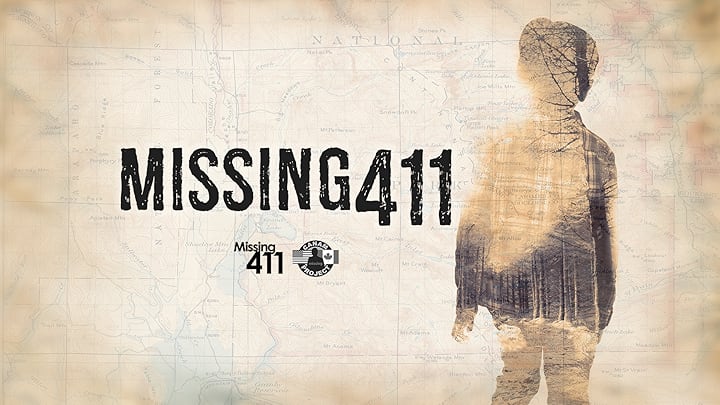
If you know, you know. And if you don’t, you can easily find out all about it. Therefore it doesn’t seem necessary to comment further on this aspect.
It makes perfect sense to have separate categories of these cases, because the majority of them — even though unsolved — point to mundane scenarios.
It’s always tragic, but it should be obvious some people get untenably lost or injured, or fall into a hole or crevice. There’s also animal attacks and (as true crime enthusiasts will point out immediately) foul play.
In fact, sometimes the only difference between this topic and true crime is that the victim’s case is unsolved. Or sometimes they completely overlap.
How, you might ask? Well it’s probably debatable.
There are some prominent recent cases, like those of Gabby Petito and Sebastian Rogers, where they are analyzed as “true crime” because there’s every reason to suspect someone and rule out accident or voluntary disappearance.
If you’re unfamiliar with those names, again, there’s a treasure trove on information already out there.
I hate to prolong arguments or burst bubbles, but by the best-fitting definition I would have to say those are still just missing person cases.
So, ironically, we can hope we can hope those cases turn into true crime. Because then when we’ll know for sure a crime happened.
But, going back to the question at hand… there’s also something very important, but rarely discussed in the general public. They fittingly call it “lost person behavior.”
This is a psychological profiling technique of sorts. It ties in geography and survival instincts to anticipate or predict how a lost person will react to their situation.
This is important because, while survival instincts are logical, behavior is less so.
Sometimes we find out the missing one went in the opposite direction of help when it wasn’t that difficult to determine. Or they refuse help when one of the last witnesses to their whereabouts offered it.
Or, perhaps strangest of all, they allowed something to happen that no one ever should in a survival situation. The main example of this is the cell phone battery dying.
They would have known there was no service anyway (in most of these circumstances) and airplane mode could potentially keep it active until rescue was possible.

Again, though… why? It seems it’s almost always mindless reaction, over-confidence, or panic. That must be tougher than anything for family and loved ones to accept. Of course no one wants to think that wonderful person they knew is dead because of deliberate irrational choices.
But, if we get down to it, that person that family and friends knew actually isn’t the same person as they were on the day of their disappearance. Psychologically speaking.
Maybe that’s the other answer… as to why this is unanswerable. We say people “go missing,” like it’s one moment. But it’s not just one moment, one day, even one week.
With most of these cases, it’s a process. It’s a series of steadily deteriorating events.
The person might be with someone suspect, like in the Gabby Petito case, therefore you have to look further back at everything unfolding before. Lost person behavior throws a monkey-wrench into the equation when applicable.
With missing person and/or true crime cold cases, the goal is to bring light to the situation. Keeping the victim/subject’s name out there is the best thing we can do. If not for justice or compensation, then for closure.
About the Creator
Gabriel Shames
I’m an east coast American, interested in writing poetry and fiction as long as I can remember. I took a test in 4th grade where they told me I wrote creatively at a college level!
Hope you enjoy reading as much I as I do creating ❣️
Keep reading
More stories from Gabriel Shames and writers in Humans and other communities.
With No Black Magic, I Can Tell You Where You’ll Find Your Ideal Romantic Partner
For years, I was single. Not casually single. Not “taking a break” single. I mean years of not dating, not finding someone I could truly get along with. It felt isolating. I started to believe maybe deep compatibility just wasn’t in the cards for me.
By Amira hossam7 days ago in Humans
The First Rainbow Baby
Pitter-patter, pitter-patter. The rain fell in rhythmic splatters, slowly slowing, but still constant. Mira rolled onto her side pulling the blanket tight against her ears, but still she could hear chitter-chatter and scurrying feet of the creatures that refused to sleep in the lower decks.
By A. J. Schoenfeld2 days ago in Fiction



Comments
There are no comments for this story
Be the first to respond and start the conversation.