
America Is the Oil King of the World — So Why Is the Iran War Sending Gas Prices Higher?
Global Oil Markets Tie U.S. Gas Prices to Middle East Turmoil Despite Record Domestic Production
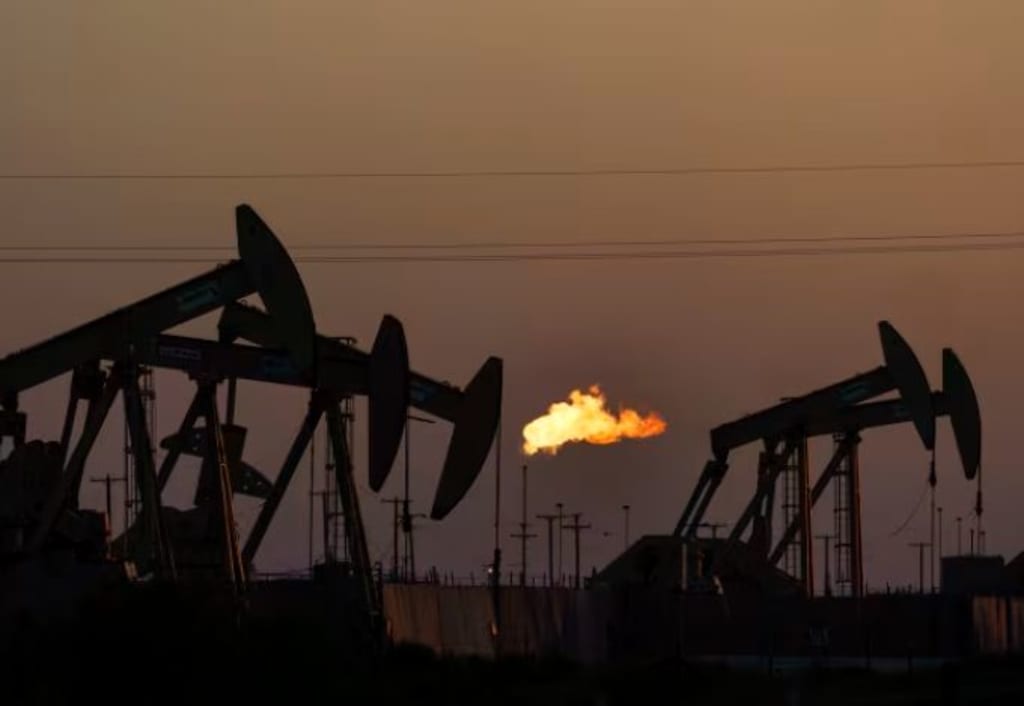
The United States has earned a powerful title in recent years: the world’s top oil producer. Thanks to booming shale production in states like Texas and North Dakota, America now pumps more crude oil than traditional energy giants such as Saudi Arabia and Russia. By many measures, the U.S. is the undisputed oil king.
So here’s the big question:
If America produces more oil than any other country, why is the Iran war pushing gas prices higher?
The answer lies in how global energy markets really work — and why oil dominance doesn’t mean price immunity.
Oil Is Global — Even If It’s Pumped Locally
It’s easy to assume that because the U.S. produces massive amounts of oil, Americans should be shielded from foreign conflicts. But oil isn’t priced locally. It’s traded on a global marketplace.
Crude oil prices are influenced by international benchmarks like Brent and West Texas Intermediate (WTI). When geopolitical tensions rise — especially in key producing regions — traders respond immediately by pushing prices higher.
The current conflict involving Iran has done exactly that.
Even though U.S. oil production remains strong, the fear of disrupted supply elsewhere tightens the overall global market — and that affects everyone.
The Strait of Hormuz: A Critical Chokepoint
One of the biggest concerns in the Iran conflict is the security of the Strait of Hormuz.
This narrow waterway is one of the most important oil transit routes on Earth. Roughly one-fifth of the world’s oil supply moves through it every day. Tankers carrying crude from countries across the Middle East rely on this passage to reach global buyers.
When tensions rise near the Strait of Hormuz:
Shipping slows or stops
Insurance premiums spike
Tankers reroute
Global supply fears increase
Even if oil keeps flowing, the risk of disruption is enough to push prices upward.
Gas Prices Follow Crude Prices — Not Politics
Gasoline prices in the U.S. are heavily influenced by crude oil costs. In fact, crude typically makes up the largest portion of what drivers pay at the pump.
When global oil prices climb because of war-related uncertainty, gasoline prices tend to follow within days or weeks.
That’s why drivers can see higher prices even if:
Domestic oil production remains high
U.S. refineries are operating normally
There’s no shortage of physical supply locally
Markets price in what could happen, not just what is happening.
America Produces a Lot — But Not in Isolation
Yes, the U.S. produces around 13 to 14 million barrels per day. That’s historic. But the world consumes nearly 100 million barrels daily.
America may lead in production, but it still participates in a tightly connected global system.
Here’s what that means:
U.S. oil companies export crude abroad
The U.S. also imports certain types of crude
Refiners depend on global pricing structures
International demand impacts domestic prices
Energy independence doesn’t mean complete insulation from global price swings. It simply means the U.S. is less vulnerable to supply shortages — not immune to price volatility.
The “Risk Premium” Effect
When war breaks out in a key energy region, oil traders add something called a risk premium to prices.
This premium reflects uncertainty. It’s essentially a financial cushion built into oil prices to account for:
Possible production cuts
Infrastructure damage
Shipping disruptions
Escalation into broader regional conflict
The Iran war has introduced exactly that kind of uncertainty.
Even if supply hasn’t collapsed, the potential for escalation keeps prices elevated.
Why U.S. Shale Can’t Instantly Fix It
Some might ask: Why don’t American producers just pump more oil to offset any global shortfall?
The answer is timing and logistics.
New drilling takes time
Infrastructure expansion isn’t immediate
Companies avoid overproducing in volatile markets
Investors often demand capital discipline
Oil production isn’t like flipping a switch. Even the world’s largest producer can’t instantly flood the market to neutralize geopolitical shocks.
The Consumer Impact
For everyday Americans, the effect is straightforward: higher oil prices usually mean higher gasoline prices.
Drivers may notice:
Rising prices at the pump
Increased airline ticket costs
Higher delivery and shipping fees
Broader inflation pressure
Energy costs ripple through nearly every sector of the economy.
That’s why even a modest oil price increase can feel significant at the household level.
Markets React to Fear as Much as Facts
Another important factor is psychology.
Oil markets are driven by expectations. If traders believe supply could tighten in the future, they buy contracts today — pushing prices up immediately.
The conflict involving Iran has created exactly that environment: uncertainty about how long tensions will last and whether the Strait of Hormuz will remain secure.
Even rumors or threats can move markets quickly.
So Is America Really the Oil King?
Yes — in terms of production, absolutely.
But being the oil king doesn’t mean ruling over price stability. Oil remains one of the most globally interconnected commodities in existence.
As long as:
Major supply routes run through geopolitical hotspots
Oil is traded on global exchanges
Energy markets are deeply interconnected
American consumers will continue to feel the effects of overseas instability.
Final Thoughts
The Iran war sending gas prices higher isn’t a contradiction of America’s energy dominance — it’s proof of how globalized oil markets truly are.
The United States may lead the world in production, but it operates within a shared global system where disruptions anywhere can influence prices everywhere.
Until oil markets become fully localized — which is unlikely — geopolitical tensions thousands of miles away will still shape what Americans pay at the pump.
Being the oil king provides strength and leverage.
But it doesn’t grant immunity from global turbulence.
About the Creator
Review of 'Man on the Run'
My wife and I saw Man on the Run, a nearly 2-hour documentary on Amazon Prime, about Wings, Paul McCartney's group that flew around the world from shortly after The Beatles broke up in early 1970 to shortly after John Lennon was murdered at the end of 1980, making a Beatles reunion forever impossible.
By Paul Levinson5 days ago in Beat



Comments
There are no comments for this story
Be the first to respond and start the conversation.