
What a Modern Auto Repair Shop Needs to Handle High Customer Volume
Handle High Customer Volume
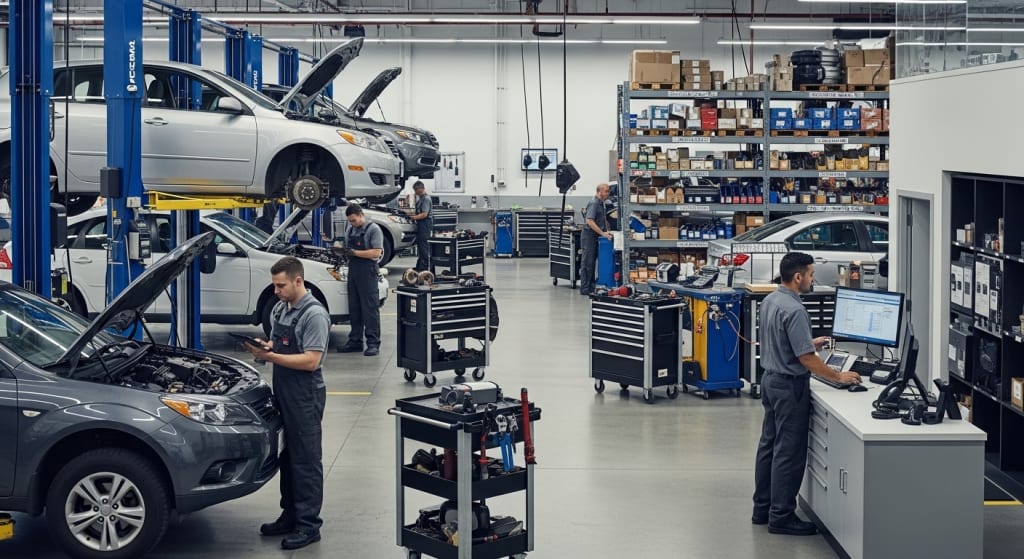
When your service bays are full and the phone keeps ringing, that is the moment you realize growth can feel just as stressful as struggle.
I have worked with garage owners who once dreamed of having a fully booked calendar. But when that dream became reality, they quickly discovered that high customer volume brings its own challenges. If you are not prepared, more cars can mean more chaos. Missed deadlines, overwhelmed technicians, and frustrated customers can damage your reputation faster than slow business ever could.
So the real question is not how to attract more clients. The real question is how you build a system strong enough to handle them efficiently.
Smart Workflow Management Is the Foundation
If you are still managing jobs with handwritten notes or scattered spreadsheets, you are limiting your own growth.
A modern auto repair shop needs a centralized workflow system that tracks every vehicle from the moment it enters your premises until the keys are handed back. When you can see job status in real time, you make faster decisions. You can spot delays early, adjust technician assignments, and prevent small issues from turning into major bottlenecks.
I have seen shops transform simply by gaining visibility over their operations. Instead of constantly reacting to problems, they begin managing proactively. That shift alone increases productivity without hiring additional staff.
When your workflow is organized, high volume feels controlled rather than overwhelming.
The Right Team Structure Makes All the Difference
Technology helps, but people make it work.
Handling high customer volume requires more than adding extra technicians. It requires clear role distribution. When everyone does a little bit of everything, confusion grows. When responsibilities are clearly defined, efficiency improves naturally.
You need a service advisor who focuses on customer communication, technicians who specialize in diagnostics or mechanical repairs, and someone who manages parts and inventory. Clarity reduces wasted time and prevents miscommunication.
I often remind shop owners of a powerful quote by Henry Ford: “Coming together is a beginning, staying together is progress, and working together is success.” That philosophy applies perfectly inside a busy repair facility.
When your team works like a coordinated unit, you move vehicles through service bays faster without sacrificing quality.
Advanced Shop Management Software Is No Longer Optional
If you want to seriously improve your operations, automation is essential.
Modern repair shop management software does much more than generate invoices. It integrates scheduling, technician allocation, parts tracking, reporting, and customer communication into one intelligent system. Without this integration, information gets lost between departments.
For shop owners who want to increase overall repair order tracking, adopting AI powered solutions like Addenda Repair can create a noticeable impact on daily operations. When your system intelligently distributes workload, tracks technician availability, and identifies potential delays before they turn into serious problems, your repair shop capacity improves naturally. Instead of operating in constant firefighting mode, your team works with structure, clarity, and confidence.
I have noticed that shops using advanced digital systems consistently handle higher daily vehicle counts compared to those relying on manual processes. The difference is not effort. It is structure.
Efficient Scheduling Protects Your Reputation
Overbooking might seem profitable in the short term, but it often creates long term damage.
A modern repair shop must implement structured appointment management. When you assign realistic time slots and avoid stacking complex jobs on the same day, your workflow remains balanced. Customers appreciate accurate timelines more than unrealistic promises.
Predictability builds trust. When you tell a customer their vehicle will be ready by a certain time and you deliver on that promise, they remember it. When you fail repeatedly, they also remember that.
Digital appointment reminders and pre visit check in forms reduce front desk pressure and streamline intake. Small improvements in scheduling can significantly reduce daily stress.
Inventory Control Prevents Costly Delays
Few things disrupt high volume operations more than missing parts.
If your technicians are constantly waiting for components to arrive, your service bays become parking spaces instead of revenue generators. A modern shop needs real time inventory tracking that monitors stock levels and automates reordering for frequently used parts.
When I evaluate busy workshops, I often see lost revenue tied directly to poor inventory planning. Stocking commonly used items based on repair history is not an expense. It is an investment in efficiency.
Strong supplier relationships and transparent pricing comparisons also help maintain profitability while managing higher demand.
Communication Builds Customer Loyalty
When your shop gets busy, communication becomes even more important.
Customers understand that quality repairs take time. What they dislike is silence. If you keep them informed at every stage of the repair process, their patience increases.
Automated updates through text or email can notify them when diagnostics are complete, when parts arrive, and when repairs are finished. This reduces incoming phone calls and allows your front desk team to focus on service rather than constant status checks.
Digital inspection reports with photos and videos add another layer of transparency. When customers see the actual condition of their vehicle, they feel confident approving necessary repairs.
Trust is not built during quiet days. It is built when you manage busy days professionally.
Data Driven Decisions Support Sustainable Growth
One of the biggest mistakes you can make during rapid growth is relying only on instinct.
A modern auto repair shop must analyze performance metrics regularly. Tracking average repair time, technician productivity, comeback rates, and revenue per bay allows you to identify inefficiencies early.
When you review your data weekly, patterns emerge. You might notice certain services take longer than expected. You might discover peak hours that require additional staffing. You might identify training gaps affecting productivity.
Without data, you are guessing. With data, you are scaling strategically.
Continuous Training Keeps You Competitive
Vehicle technology evolves rapidly. Electric vehicles, hybrid systems, and advanced safety features require updated skills.
If your technicians are not trained to handle modern systems, your effective service capacity shrinks. High volume only benefits you when your team can confidently diagnose and repair a wide range of vehicles.
Investing in ongoing education shortens diagnostic time and increases repair accuracy. It also strengthens your reputation as a forward thinking service provider.
A modern repair shop is not just a mechanical workspace. It is a dynamic business that adapts to industry changes.
Final Thoughts
Handling high customer volume is not about working longer hours or pushing your team to exhaustion. It is about building systems that support growth.
When you combine organized workflow management, advanced digital tools, clear communication, strong inventory control, and continuous training, your shop becomes scalable. Instead of feeling overwhelmed by demand, you feel prepared for it.
I encourage you to evaluate your current operations honestly. Are your systems ready for growth, or are they barely supporting your current workload?
Growth should feel exciting. With the right structure in place, it will.
About the Creator
Keep reading
More stories from Jordyn Mastrodomenico and writers in Journal and other communities.
How Garage Owners Can Manage Workload Better During Peak Seasons
Peak season does not overwhelm garages because of too much work, it overwhelms them because of how that work is managed. If you own or run a garage, you already know the feeling. Bookings pile up, phones keep ringing, technicians are stretched thin, and customers want everything done yesterday. I have seen garage owners brace themselves for peak seasons like winter checks or summer travel prep, knowing revenue will rise but stress will rise even faster. The truth is, busy seasons do not have to feel chaotic. With the right approach, they can become your most profitable and well controlled periods of the year.
By Jordyn Mastrodomenico9 days ago in Journal



Comments
There are no comments for this story
Be the first to respond and start the conversation.