
Your Cells Are Talking! Are You Listening?
How breakthroughs in preventive diagnostics are driving the rapid growth of the Cellular Health Screening Market
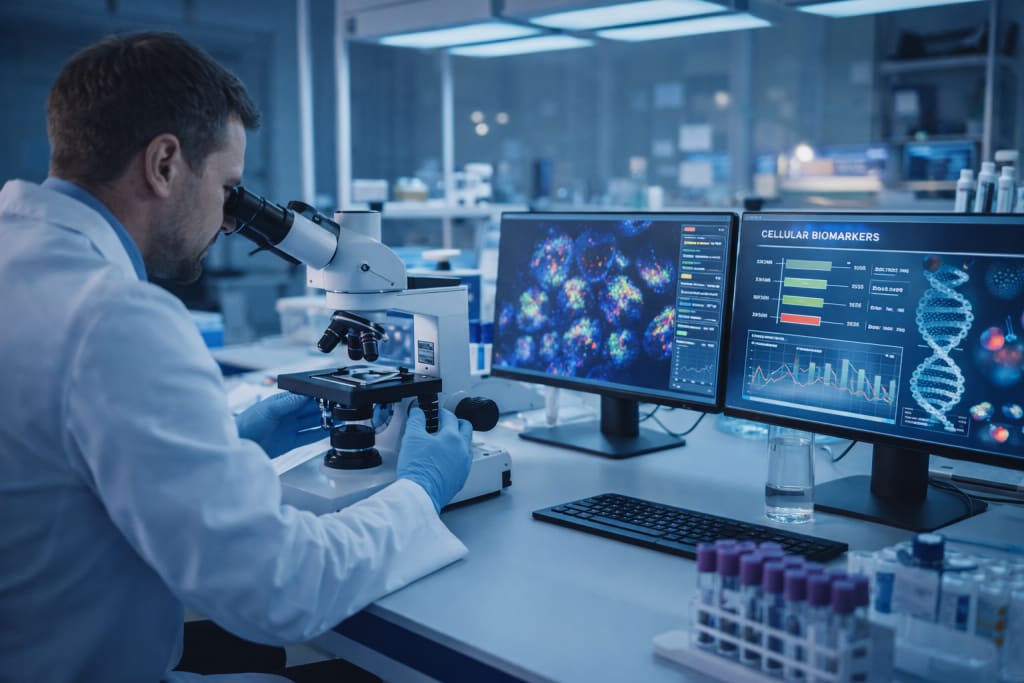
The first sign that something might be wrong inside the body rarely appears in a dramatic way. It’s often subtle—a little fatigue that lingers, a slower recovery after exercise, or unexplained changes in energy levels.
For decades, medicine has focused on diagnosing diseases only after symptoms appear. But what if the body could reveal early warning signals years before illness develops?
That’s exactly what cellular health screening aims to do.
Deep within the trillions of cells that power the human body lies a complex network of biological signals. These microscopic indicators can reveal early shifts in metabolism, inflammation, oxidative stress, and cellular aging—long before traditional medical tests detect a problem.
Today, advances in diagnostics are making it possible to monitor health at the cellular level. As a result, preventive healthcare is entering a new era.
This shift is fueling rapid growth in the Cellular Health Screening Market, as healthcare providers, wellness companies, and individuals increasingly seek deeper insights into long-term health.
According to Mordor Intelligence, the market is projected to grow at a compound annual growth rate (CAGR) of 8.35% during the forecast period (2026–2031).
Behind that growth lies a powerful idea: understanding health before disease begins.
The Invisible Clues Hidden in Every Cell
Imagine visiting a doctor not because you feel sick—but because you want to understand how your body is aging at the cellular level.
Instead of waiting for illness, the focus shifts to prevention.
Cellular health screening is built on this philosophy. It analyzes biomarkers that reflect how well cells are functioning, repairing themselves, and responding to environmental stress.
These screenings may evaluate indicators such as:
- Oxidative stress levels
- Mitochondrial function
- Cellular inflammation markers
- Nutritional deficiencies affecting cellular performance
- DNA damage and repair activity
While these measurements may sound highly technical, their purpose is surprisingly simple: identifying subtle imbalances before they turn into serious health issues.
This approach has gained enormous attention as global healthcare systems increasingly emphasize preventive medicine.
Patients today want more than reactive healthcare. They want predictive insights—tools that allow them to make lifestyle adjustments before diseases take hold.
That growing demand is one of the key drivers behind the expanding Cellular Health Screening Market.
Healthcare providers are recognizing that early detection can dramatically reduce long-term treatment costs and improve patient outcomes.
And as diagnostic technologies become more sophisticated, the ability to monitor cellular health is becoming more accessible.
Why Preventive Medicine Is Transforming Healthcare
For much of modern medical history, treatment has focused on managing disease rather than preventing it.
But rising healthcare costs and the global burden of chronic conditions are forcing a shift in thinking.
Conditions like cardiovascular disease, diabetes, and neurodegenerative disorders often develop gradually over many years. Long before symptoms appear, cellular dysfunction may already be underway.
That’s where cellular diagnostics come into play.
By detecting early biological changes, healthcare professionals can guide patients toward preventive strategies such as:
- Personalized nutrition programs
- Targeted supplementation
- Lifestyle modifications
- Stress management techniques
- Early medical interventions
This proactive model of care aligns closely with the broader movement toward precision medicine, where treatments and prevention strategies are tailored to individual biology.
Technology is making this possible.
Advanced laboratory tools now allow scientists to analyze cellular biomarkers with unprecedented accuracy. Digital health platforms can track these markers over time, helping individuals understand how diet, exercise, sleep, and stress influence their cellular health.
The result is a more personalized and data-driven approach to wellness.
These innovations are contributing significantly to the rising demand reflected in the Cellular Health Screening Market, which Mordor Intelligence reports is expected to grow at a CAGR of 8.35% from 2026 to 2031.
But the transformation isn’t happening only in laboratories.
It’s also taking place in everyday healthcare settings.
From Elite Testing to Everyday Health Insights
Just a decade ago, detailed cellular diagnostics were largely confined to research institutions and specialized medical centers.
Today, they are slowly moving into mainstream healthcare.
Preventive health clinics, wellness centers, and advanced diagnostic laboratories are integrating cellular screening into broader health assessments.
This shift reflects changing patient expectations.
People are no longer satisfied with basic annual health checkups that measure only blood pressure, cholesterol, and blood sugar levels. They want deeper insights into how their bodies function at the biological level.
Technology companies are also playing a role in expanding access.
Digital health platforms now allow patients to:
- Track biomarker trends over time
- Receive personalized health recommendations
- Monitor the impact of lifestyle changes
- Share data with healthcare professionals remotely
These developments are helping bring cellular diagnostics closer to everyday healthcare.
The trend is especially visible among individuals focused on longevity, preventive wellness, and bio-optimization—communities that prioritize proactive health monitoring.
As awareness grows, the demand for early detection tools continues to rise, supporting expansion within the Cellular Health Screening Market.
But perhaps the most powerful aspect of this shift is psychological.
When people gain insight into their cellular health, they often feel more empowered to take control of their wellbeing.
Information becomes motivation.
A Future Where Disease Is Detected Before It Begins
The next decade could fundamentally reshape how we think about healthcare.
Imagine a world where doctors routinely monitor cellular health markers alongside traditional vital signs.
Instead of waiting for symptoms to appear, physicians could detect early biological warning signals and intervene before illness develops.
Such a future may sound futuristic—but many experts believe it is already beginning.
Advances in artificial intelligence, biomarker discovery, and diagnostic technologies are accelerating the evolution of preventive medicine.
Researchers are exploring new cellular indicators that could help predict a wide range of conditions, including:
- Neurodegenerative diseases
- Metabolic disorders
- Cardiovascular complications
- Age-related cellular decline
Each discovery expands the possibilities for early intervention.
And as healthcare systems increasingly prioritize prevention, technologies that provide deeper biological insights will become even more valuable.
This momentum is expected to continue driving expansion in the Cellular Health Screening Market, which Mordor Intelligence projects to grow at a 8.35% CAGR between 2026 and 2031.
But the real significance of this transformation goes far beyond market statistics.
It represents a shift in the philosophy of healthcare—from reactive treatment to proactive wellness.
Instead of asking, “How do we cure disease?” the question becomes:
“How do we prevent it from happening at all?”
And perhaps the most fascinating part of this journey is that the answers may already be hidden within the smallest building blocks of life—our cells.
As technology continues to unlock deeper biological insights, cellular health screening could redefine how individuals understand their bodies and their future health.
About the Creator
Flower Bloom 369
FLOWER Bloom 2/25/26 Wednesday By Mariann Carroll Karen had been with Tony for 7 years. Tony started acting strangely after her surgery. He would mow the lawn in the rain and be on his cellphone. He started pushing Karen away. Tony came clean about seeing someone. Karen moved out two months later. Karen moved in with a friend. She felt betrayed.
By Mariann Carroll7 days ago in Fiction



Comments
There are no comments for this story
Be the first to respond and start the conversation.