
DIY Herbal Remedies Anyone Can Make
Turn your backyard into a natural medicine cabinet

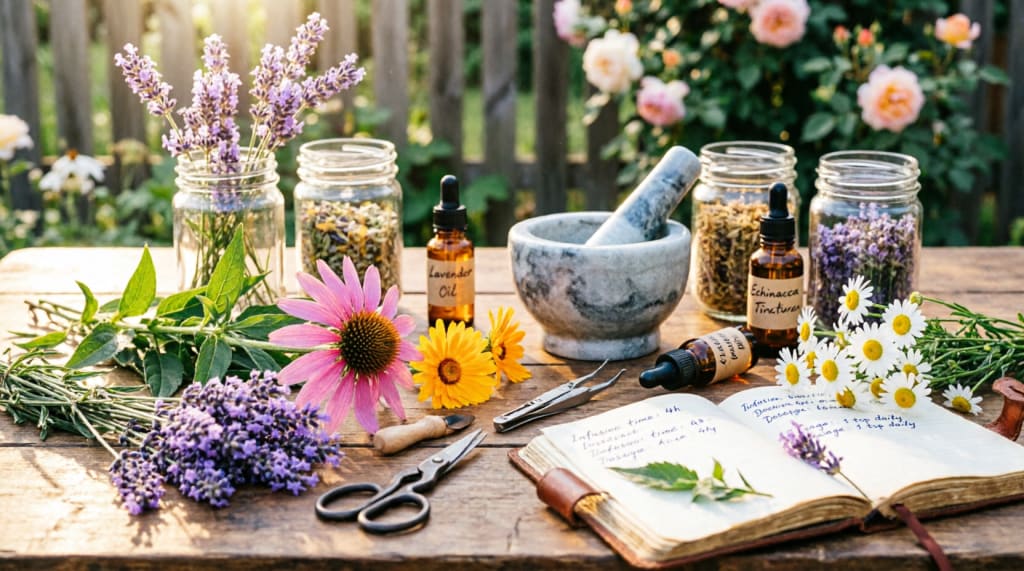
There's something deeply satisfying about growing your own medicinal herbs. For centuries, our ancestors relied on backyard gardens not just for food, but for natural remedies that supported their health and well-being.
The best part? You don't need a green thumb or expensive equipment. Many of these plants thrive with minimal care, and the remedies are surprisingly simple to make.
Important: This article is for educational purposes only. Always consult with a healthcare provider before using herbs medicinally, especially if you're taking prescription medications, pregnant, or nursing.
1. Lavender — The Calming Herb
Best For: Relaxation, sleep support, minor skin irritations
You probably know lavender keeps moths away from your clothes. But this aromatic powerhouse does much more.
Easy Remedies:
Sleep Pillow: Fill a small cloth bag with dried lavender flowers and place it under your pillow
Calming Tea: Steep 1 tsp dried flowers in hot water for 10 minutes
Skin Soother: Mix a few drops of lavender oil with coconut oil for minor burns or bites
Garden Bonus: Attracts butterflies including painted ladies and tiger swallowtails while repelling garden pests.
2. Echinacea — The Immune Support Plant
Best For: Cold season wellness, immune support
Echinacea has been a go-to herb for immune support throughout cold and flu season for generations.
Easy Remedies:
Immune Tea: Steep fresh or dried flowers and leaves for 15 minutes at first sign of feeling under the weather
Tincture: Soak chopped roots in vodka for 6 weeks, strain, and store in dropper bottles
Garden Bonus: Helps maintain soil moisture and suppresses weed growth.
Note: Commercial echinacea supplements vary widely in quality. Growing your own ensures you know exactly what you're getting.
3. Calendula — The Wound Healer
Best For: Cuts, scrapes, burns, skin irritation
Before I discovered calendula in my herbal practice, I learned about it from my grandfather. He accidentally cut his leg deeply one day while working on a project. Stubborn as he was, he refused to see a doctor.
He dressed the wound with cloth and applied my grandmother's calendula extract each time. Remarkably, it healed within weeks.
Easy Remedies:
Healing Salve: Infuse dried flowers in olive oil for 4 weeks, then mix with beeswax
Soothing Tea: Steep flowers for lymphatic support
First Aid Compress: Apply cooled tea directly to minor wounds
Historical Note: During the Civil War, surgeons packed calendula flowers directly into open wounds to promote healing.
Garden Bonus: Repels insect pests and forms beneficial relationships with soil fungi.
4. Feverfew — The Headache Helper
Best For: Occasional headaches, tension, joint discomfort
Key Compound: Parthenolide, found primarily in flower heads and leaves.
Easy Remedies:
Fresh Leaves: Chew 1-2 fresh leaves for occasional headache support (may taste bitter)
Headache Tea: Steep dried leaves and flowers for 10 minutes
Tincture: More concentrated option for frequent use
Garden Bonus: Repels pests while attracting beneficial insects like hoverflies.
Note: Not recommended for pregnant women or those on blood-thinning medications.
5. Chicory — The Joint Comfort Root
Best For: Joint discomfort, digestive support
Chicory was one of the wild plants Native Americans sought for traditional remedies. The root contains chicoric acid, studied for its anti-inflammatory properties.
Easy Remedies:
Root Tea: Roast and grind dried roots, then steep like coffee
Tincture: Soak chopped fresh roots in alcohol for 6 weeks
Garden Bonus: Deep taproot breaks up compacted soil and brings nutrients to the surface.
6. Yarrow — The Emergency Wound Herb
Best For: Cuts, bleeding, minor wounds, insect bites
I remember the day I accidentally cut my hand while cleaning fish. The wound was deep and could have become infected if not treated quickly. I found some yarrow nearby, crushed the leaves, and wrapped them around the wound. The bleeding stopped within minutes, and the wound healed with minimal scarring.
Since then, I always carry dried yarrow in my first aid kit.
Easy Remedies:
Emergency Powder: Dry and grind leaves into powder for cuts
Bite Relief: Crush fresh leaves and apply directly to insect bites
Toothache Helper: Chew fresh leaf for temporary numbing relief
Garden Bonus: Attracts bees, ladybugs, and other beneficial pollinators.
7. California Poppy — The Sleep Support Herb
Best For: Restless nights, relaxation, occasional sleeplessness
California poppy has been traditionally used to support restful sleep without the concerns associated with prescription sleep aids.
Easy Remedies:
Sleep Tea: Steep dried flowers and leaves 30 minutes before bed
Relaxation Tincture: More concentrated for occasional serious sleeplessness
Garden Bonus: High pollen production feeds beneficial insects. Drought-tolerant and needs minimal water.
Note: Do not combine with prescription sleep medications or alcohol.
8. Marshmallow Root — The Digestive Soother
Best For: Heartburn, indigestion, digestive discomfort
When most people hear "marshmallow," they picture the fluffy campfire treat. Traditionally, these were actually made from the root of the marshmallow plant.
Key Component: Mucilage, a sap-like substance that coats and soothes the digestive tract.
Easy Remedies:
Cold Infusion: Soak dried root in cold water overnight for maximum mucilage extraction
Digestive Tea: Steep leaves and root for 15 minutes after meals
Garden Bonus: Attracts painted lady butterflies and native pollinators all summer.
9. Chamomile — The Gentle All-Rounder
Best For: Digestive comfort, relaxation, skin care, eye irritation
My grandmother grew chamomile in her garden. She'd pick the flowers in early autumn, dry them on old newspapers, and store them in mason jars.
She considered it a versatile herb. If I got pinkeye, she'd apply a warm compress dipped in chamomile tea. If my stomach hurt, she'd make me drink the tea, and I'd soon feel better.
Easy Remedies:
Classic Tea: Steep fresh or dried flowers for 5-10 minutes
Eye Compress: Cool brewed tea and apply with clean cloth
Skin Oil: Infuse flowers in olive oil for 4 weeks for massage or skin care
Garden Bonus: Known as "The Gardener's Doctor" for enhancing neighboring plant growth.
10. Evening Primrose — The Skin & Nerve Support
Best For: Skin health, hormonal balance, nerve comfort
This plant is called evening primrose because its flowers open at sunset, with each bloom lasting only one night.
Key Compounds: Gamma-linolenic acid (GLA) and linolenic acid—substances our skin needs but cannot produce on its own.
Easy Remedies:
Seed Oil: Cold-press seeds for skin application (advanced)
Leaf Tea: Steep young leaves for internal support
Poultice: Apply crushed leaves to bruises or skin irritations
Garden Bonus: Attracts hawk moths, butterflies, and bumblebeys for pollination.
Getting Started: Your First Herbal Garden
Week 1-2: Choose 3 herbs that match your climate and space
Week 3-4: Plant seeds or starter plants in well-draining soil
Month 2: Begin harvesting leaves as plants establish
Month 3: Start making your first simple remedies (teas and infusions)
Pro Tips:
Start small—master 2-3 plants before expanding
Keep a garden journal tracking growth and harvests
Label everything clearly (dried herbs look similar)
Learn proper harvesting times for each plant
About the Creator
Edward Smith
I can write on ANYTHING & EVERYTHING from fictional stories,Health,Relationship etc. Need my service, email [email protected] to YOUTUBE Channels https://tinyurl.com/3xy9a7w3 and my Relationship https://tinyurl.com/28kpen3k
Reader insights
Outstanding
Excellent work. Looking forward to reading more!
Top insight
Excellent storytelling
Original narrative & well developed characters
Keep reading
More stories from Edward Smith and writers in Lifehack and other communities.
10 DIY Medicinal Herbs (Very Effective)
There's something deeply satisfying about growing your own medicinal herbs. For centuries, our ancestors relied on backyard gardens not just for food, but for natural remedies that supported their health and well-being.
By Edward Smithabout 2 hours ago in Longevity
5 Simple Lifehacks to Keep Your Teeth Healthy Every Day
Healthy teeth aren’t just about occasional dental visits—they’re shaped by the little choices you make every day. Simple habits, when done consistently, can prevent cavities, gum issues, sensitivity, and other oral concerns while keeping your smile bright and comfortable. These lifehacks are easy to integrate into your routine and don’t require drastic lifestyle changes.
By Smile Sydney3 days ago in Lifehack
Top Attractions of the Everest Region: Gokyo Lakes and Ama Dablam Peak
The Everest Region is famous for its majestic mountains, especially the highest peak in the world, but there is much more to explore beyond Everest. There lie pristine and lesser-known gems waiting to be explored with relatively fewer people around.
By Alex Winslow4 days ago in Lifehack
Review of 'Man on the Run'
My wife and I saw Man on the Run, a nearly 2-hour documentary on Amazon Prime, about Wings, Paul McCartney's group that flew around the world from shortly after The Beatles broke up in early 1970 to shortly after John Lennon was murdered at the end of 1980, making a Beatles reunion forever impossible.
By Paul Levinson7 days ago in Beat


Comments (1)
Beautiful!❤️❤️♥️🙂