
I Refused to Say "Help Me" for Years
Here's How That Almost Broke Me (And What Finally Changed)

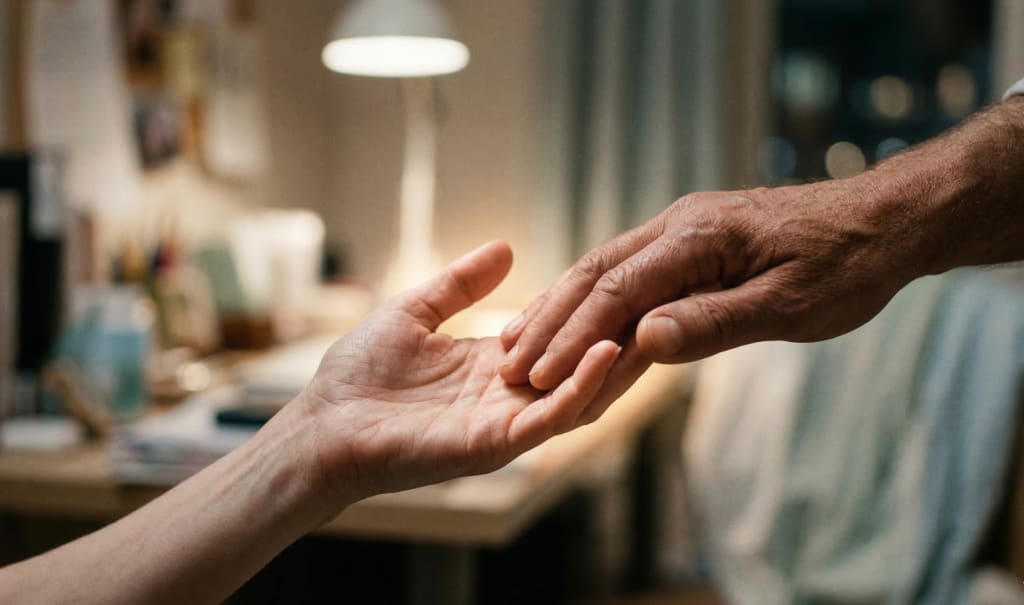
We’re Taught Independence Is Strength. I Learned It’s Often Our Biggest Weakness.
The moment it really hit me, I was staring at a grocery list. Not just any list, but the list. The one for my son’s birthday party.
Twenty-seven items for a cake, snacks, drinks, and decorations.
And I was supposed to bake the cake from scratch, after working a ten-hour day, while also fielding calls from my boss, who was, shall we say, demanding.
My wife was out of town, and I felt this crushing weight. Just a list. But it felt like the world.
My eyes blurred. The kitchen, usually a place of calm chaos, felt like a pressure cooker.
I remember gripping the counter, knuckles white, a silent scream building in my chest. I can’t do this.
But I couldn't say it. Not out loud. Definitely not to another living soul.
For years, I'd worn self-sufficiency like a badge of honor. It was my superpower. My identity.
I didn't need anyone; I was the guy people came to for help.
What surprised me, really surprised me, was how deeply ingrained that programming was.
How stubbornly it kept me isolated, even when I was drowning. And it nearly cost me everything.
The Myth of the Self-Made Hero
We’re spoon-fed this narrative from birth, aren't we? The lone wolf. The person who pulls themselves up by their bootstraps.
We see it in movies and hear it in motivational speeches. "If you want something done right, do it yourself."
I believed it with every fiber of my being.
And honestly, it worked for a while. It got me through college, pushed me up the ladder at work, and even helped me build a pretty decent life.
But then life got... complicated. The "pretty decent life" started to feel less like an achievement and more like an elaborate house of cards I was constantly trying to keep from collapsing.
I thought asking for help meant admitting failure. It felt like waving a white flag, exposing a gaping wound.
My biggest fear wasn't failing to achieve something; it was failing to appear capable while trying. So, I just kept trying harder, longer, by myself.
I'd sit at my desk until midnight, fueled by lukewarm coffee and pure stubbornness.
rather than delegate or admit I was overloaded. It's ridiculous when I look back.
What Actually Happens When You Say "Help Me"?
The grocery list incident wasn't the breaking point, but it was close. The actual breaking point came a few weeks later.
My son got sick, a nasty flu that meant sleepless nights. My work project was spiraling.
My carefully constructed facade of "having it all together" wasn't just cracking;
It was shattering into a million tiny pieces. I was sleep-deprived, irritable, and feeling utterly, terribly alone.
I was on the phone with my sister, talking about something totally mundane, and then, out of nowhere, it just spilled out.
"I... I'm not doing great," I choked out, my voice thick. "I feel like I'm drowning, and I don't know what to do."
There was a pause. A long, silent pause that felt like an eternity. I braced myself for judgment, for a lecture, for the "I told you so" I felt I deserved.
But that's not what happened.
"Oh, honey," she said, her voice soft. "It sounds like you're really struggling. What can I do?"
And then she offered to pick up my son from school that week, no questions asked.
She offered to drop off dinner. She even just offered to listen. I didn’t expect that. I really didn’t.
It felt like someone had thrown me a lifeline when I was convinced I was destined to sink.
It wasn't just the practical help, though that was a godsend.
It was the sheer, unexpected relief of being seen, of not having to pretend anymore. It was permission to be human.
Asking for help isn't about your weakness; it's about inviting connection into a lonely world.
The Unspoken Rules of Asking (and Receiving) Help
That first tiny crack in my armor led to a profound shift. I started experimenting, cautiously at first, with asking for help.
It wasn't always easy. Sometimes I still felt that old surge of shame, that whisper that I should just "handle it."
But I kept pushing through, and I learned some crucial things that nobody ever taught me in school or at work.
Here’s what I learned about actually getting the help you need:
Specificity is Your Superpower: Don’t just say "I need help." That's too vague, too overwhelming for the other person.
They don't know where to start. Instead, try:
"Could you pick up X from the store on your way home?" or "I'm really stuck on this part of the project; could you spare 15 minutes to brainstorm with me?"
Specific requests are easy to say yes or no to, and that respect for their time makes them more likely to help.
Start Small, Build Trust:
You don't ask a casual acquaintance to move your entire house. Start with low-stakes requests.
"Can you proofread this email for me?" or "Do you know a good plumber?"
These small acts of asking and receiving build confidence—both yours and theirs—that you can rely on each other.
And you know what? Most people want to help. It feels good.
Accept Imperfection (and Rejection):
Not everyone will say yes. Some people genuinely can't help, and some just aren't the right fit. Don't take it personally.
And when someone does help, it might not be exactly how you'd do it. That's okay.
The point isn't perfect execution; it's shared burden and connection. I used to be so controlling, thinking only I could do it right.
I was wrong. The joy of collaboration often outweighs the minor imperfections.
Reciprocity Isn't a Transaction, It's a Mindset: When you start letting people help you, you open yourself up to helping them in return.
Not immediately, not as a tit-for-tat, but as a natural flow. The more you connect, the more you support each other.
It creates a community, not a competition. And it makes you realize how many people are probably feeling just as overwhelmed as you are.
When you ask for help, you're not just solving your own problem; you're giving someone else the gift of being useful, of being needed. We all crave that, don't we?
The Uncomfortable Truth: Denying Others the Chance to Help
Here's a thought that might sting a little, because it certainly stung me: When we refuse to ask for help, even when we desperately need it, we're not just isolating ourselves.
We're also denying others the chance to be generous, to feel useful, to connect with us on a deeper level.
We're effectively saying, "I don't trust you enough to let you into my struggle," or "Your help isn't good enough."
Ouch. That was a hard pill for me to swallow. I thought I was protecting myself, being strong.
But I was actually building walls, pushing people away. My friends and family weren't looking at my struggle with judgment;
They were looking at it with concern, wondering why I never reached out. And my silence often made them feel helpless, which is a terrible feeling.
I didn't expect to learn that vulnerability could be a form of generosity. But it is. When you open up and say,
"I'm struggling." You're not just being weak.
You're being brave enough to trust another human being, and that act of trust can be incredibly powerful for both of you.
Self-reliance, past a certain point, isn't strength; it's a cage you built for yourself.
Beyond "Help Me": A New Way to Live
My life isn't perfect now.
I still have overwhelming days. I still sometimes catch myself trying to do everything alone.
But the difference is, now I have a choice.
I have a muscle that's been exercised, a pathway that's been forged.
I've learned to say "Help me." And sometimes, just as importantly, I've learned to say "yes" when someone offers.
It's a process. It takes courage.
And it often feels uncomfortable, especially at first. But the relief, the connection, the sheer lightness that comes from sharing the burden, even just a tiny bit, is immense.
It's like living in color after years of seeing the world in shades of gray.
So, if you're reading this and feeling that familiar knot of overwhelm, that silent scream building inside you—I get it. I’ve been there.
But what if, just what if, the biggest act of strength you could perform today isn't to push harder but to reach out?
What if "help me" isn't a plea for pity, but an invitation for connection? What if it's the most powerful phrase you could possibly utter?
About the Creator
abualyaanart
I write thoughtful, experience-driven stories about technology, digital life, and how modern tools quietly shape the way we think, work, and live.
I believe good technology should support life
Abualyaanart
Keep reading
More stories from abualyaanart and writers in Motivation and other communities.
Alfa Ambir Bagwan: Leading Teams with Technical Expertise and Strategic Vision
In today’s fast-paced professional world, leadership requires a combination of technical understanding, strategic thinking, and the ability to inspire teams to achieve collective goals. Alfa Ambir Bagwan exemplifies this balance, building a career that blends technical expertise with marketing knowledge and strong team leadership.
By Thetribunemedia6 days ago in Motivation
Beyond the Profile: How Influential Women Are Redefining Leadership on Their Own Terms?
Beyond the Profile: How Influential Women Are Redefining Leadership on Their Own Terms The definition of influence is changing. It’s no longer just about a title, a corner office, or a mention in a traditional power list. Today, Influential Women are shaping industries, redefining success, and building communities on their own terms. They are founders, executives, and thought leaders who understand that true leadership isn’t about being covered—it’s about having the authority to share their own narrative.
By influentialwomenmagazine2 days ago in Motivation



Comments
There are no comments for this story
Be the first to respond and start the conversation.