

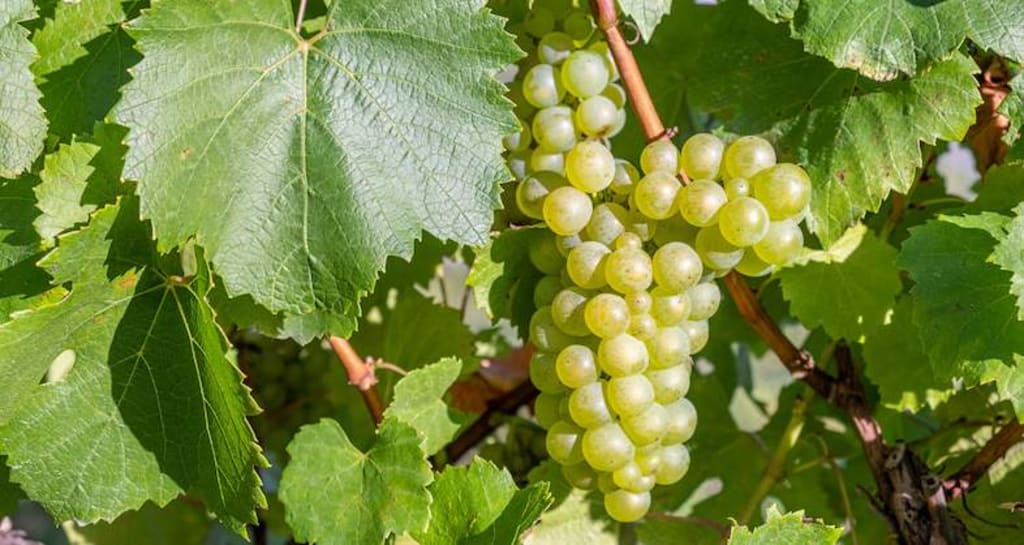
Grapple with a lil grape amidst the thistle. Peas in a pod not far from the backyard pepper-patches, prickly pompoms along the side-paths of a city park. This vivid color is a good omen if untouched, fertility is their needled warning.
Out for a walk, and I can't help but think of chardonnay when I see a common thistle plant of whatever size. What the hell.
Common thistle and its trippy purple flowers. Photo by Author.
If you grab it foolhardily, it will sting you, though not in the way of nettle, bearing no venom or irritant. It's a thick crunchy weed with a bite. Many species are edible if you can get at it. Do not touch without protection, no matter how purplish and feathery soft the flowerlets fixate you. A beautifully sobering experience.
Photo by Author
The French word for thistle is chardon. This variety of grape originated in Burgundy, France; legend says it was cultivated there by the Gauls and the Romans, and to this day it is the only white wine grape permitted by law to be planted as Bourgogne Blanc.
The Roman word for thistle was carduus, which is now part of its scientific name. Old wisdom about viticulture says that those places where thistle grows in profusion and remains green through the summer are good places for grape-vines. They are known to often share the same ecosystem.
Winery known more for their malbec grapes, but thistle doesn't discriminate.
"The thistle (from Spanish: "cardo") is a flower of amazing colors and an incomparable beauty, also the unequivocal symbol of the presence of a good terroir. These wines are elaborated with 100% grapes coming from our own vineyards - located at more than 1,000 meters above sea level at the foot of the Andes. They are fresh and very fruity wines."
Vineyard's Website: donapaula.com/wines/
Thistle may love chardonnay, but never discriminates against red wine.
The thistle and wine-grape (vitis vinifera) out-planting the table-grape (vitis labrusca); are all three cherished invasive species and creepy creepers apt to escape in great festoons from suburban backyards and grillzones. Invading the city park with its welcome lushful green.
Photo by Author
They have inter-twined their root-stock and traveling brachlets bearing leaves for wrapping dolma, limber as whips, into the structure of the box-elder trees of the city park spaces.
Photo by Author. Grapevine in loving embrace with a box-elder tree.
Parasitic. Paradise is a garden enclosed, even more delicate in the light rain. Fostering the creepy creepers and a greener thistle showing off its violet pompoms. Just a few paces away from these gnarly vines.
Photo by Author.
They say that Bacchus, god of wine, must be dismembered in order to be reborn each season. The reason?
'Cause otherwise you get scraggly proto-grapes like these,
Photo by Author
He must be cut down to stubs via wisdom of age-old principles of viticulture, knowing that when he is cut limb from limb, never crying out once, the ligneous stumps weep a pearly goo that resembles fresh semen.
2nd Century Roman sculpture of Bacchus, God of Wine, Tragedy and Comedy: Louvre
Pruning is necessary, for grapes in vine-land that grow plumper and more concentrated in flavor, fit for the chemistry of fermentation and reserved for future consumption on special occasions. If its vines are trimmed and its fruit-yield curbed. It will sprout fresh from the wood, year after year.
By Flash Dantz on Unsplash
All wines, then, could rightly be called Chardonnay, sharing such intimate vows with the thistle-plant. Where it kept its green, they knew it was a sign they could find that ancient vine first sought for its fruit, wild, by sweet-and-sour mouthfuls.
Little berry among the prehistoric spike-plants, sign of bounty/
Before the secrets of bread and the biology of fermentation were first harnessed for human ends.
Yet, this root-stock will grow into us,
Persistent as a dandelion, symbiotic pest
Disrupting the structure of the sidewalks.
Once found only in Burgundy,
Chardonnay has taken over the world,
And is grown in all places where vitis vinifera
Can grow
Along with the ivy and the elms
Which cling for dear life to the sewer lines, cracking
Them, leaving room through the rift for more and more root,
Encircling our garden enclosed.
And of course this is the thistle's prick. These are
Grapes gone wild, intrusive, penetrative
Parasites of Paradise which would cling
To our very skyscrapers, providing
Berries to eat
Buried in the prickle where
That lil grape among the thistles belies its
own tribute: whom we [aptly] name
CHARDONNAY
About the Creator
Sudais Zakwan
Sudais Zakwan – Storyteller of Emotions
Sudais Zakwan is a passionate story writer known for crafting emotionally rich and thought-provoking stories that resonate with readers of all ages. With a unique voice and creative flair.
Keep reading
More stories from Sudais Zakwan and writers in Proof and other communities.
"What Furnace Was Thy Brain?"*
*From "The Tyger" by William Blake Most amino acids build proteins. Undeniably important, they are the basis of the body's structure. Nevertheless, some amino acids have other roles, roles that help sew together the vast complex of protein structures into a seamlessly moving, thinking creature.
By Sudais Zakwanabout 2 hours ago in Proof
At Will
Section 1 Pollen and the bright sun anesthetized color - muting almost every color to its equivalent shade in pastels. James stood by the window of his apartment at Bayside Village, adjusting his tie and checking the time - it was 8:30 AM. On his phone, a message from the Recruiting Agency, Eastridge. Cassie assured him that the partners at Sidley Austin, a corporate law firm, had asked for him by name - which never happened so he should be excited. It was a request that had never occurred in his ten years as a paralegal, a sudden, specific gravity pulling him into their orbit.
By James L. Royer7 days ago in Proof
Cryptocurrency Explained: Pros and Cons of Investing – A Guide by Topwaynews
Cryptocurrency has become one of the most talked-about financial innovations of the modern era. Over the past decade, digital currencies have transformed the way people think about money, online transactions, and investments. From individual investors to major financial institutions, interest in cryptocurrency continues to grow worldwide. However, before investing in digital assets, it is important to understand how cryptocurrencies work and what benefits and risks they carry. This guide by Topwaynews explains the basics of cryptocurrency along with its major advantages and disadvantages for investors.
By Pink salt wall2 days ago in Proof


Comments (1)
This was quite trippy and revealing...but where are those photos?