
The Surprising Psychology Behind People Who Love Staying at Home
Why home-loving individuals often prefer meaningful relationships rather than large social circles.

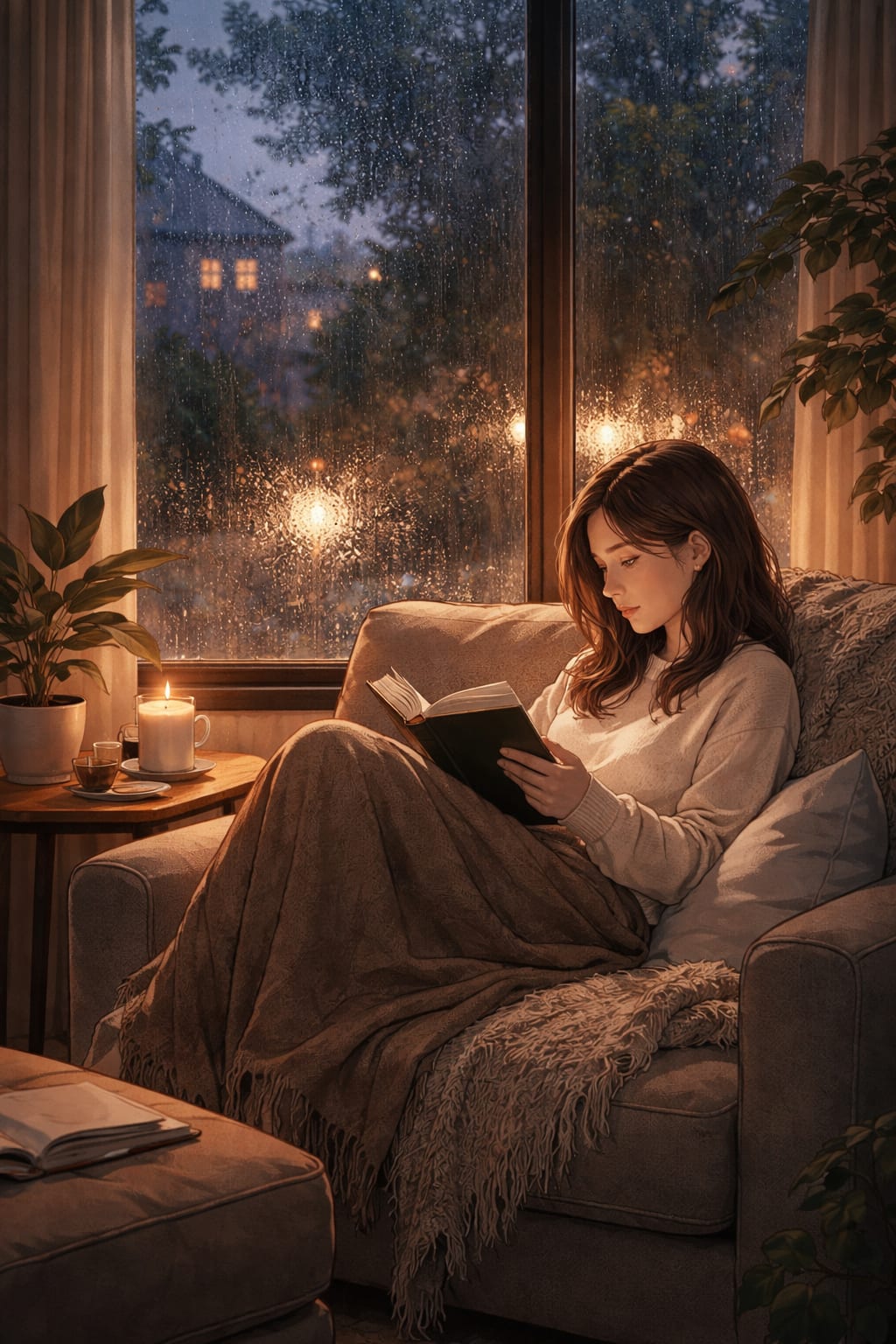
In a world that constantly celebrates travel, parties, social gatherings, and busy lifestyles, people who prefer staying at home are often misunderstood. Many assume they are lazy, antisocial, or missing out on life. However, psychology tells a very different story. Loving to stay at home can reveal deep aspects of personality, mental wellbeing, and emotional intelligence.
Interestingly, psychologists have found that people who enjoy their own company often possess unique psychological strengths. Their preference for quiet environments is not necessarily about avoiding the world — sometimes it is about understanding themselves better.
Let’s explore the surprising psychology behind people who genuinely love staying at home.
1. They Are Often Highly Self-Aware :
People who enjoy spending time at home usually spend more time reflecting on their thoughts, emotions, and life decisions. This reflective time increases self-awareness, which psychologists consider a key component of emotional intelligence.
When someone is constantly surrounded by noise, social interactions, and external stimulation, it becomes harder to listen to their inner voice. Home provides a safe and quiet environment where people can think clearly.
Self-aware individuals tend to:
Understand their emotions better
Make thoughtful decisions
Recognize their strengths and weaknesses
Staying at home allows them the mental space to process experiences and grow psychologically.
2. They Value Deep Relationships Over Many Relationships :
People who prefer staying at home often choose quality over quantity in relationships. Instead of attending many social gatherings or meeting large groups of people, they invest their time in a few meaningful connections.
Psychologists sometimes associate this behavior with introverted personality traits, but it is more complex than simple introversion. These individuals may enjoy socializing, but only when it feels genuine and emotionally rewarding.
Rather than superficial conversations, they prefer:
Deep discussions
Meaningful friendships
Emotional authenticity
Their social energy is selective, not absent.
3. Home Provides Psychological Safety :
Home represents control, comfort, and predictability. In psychology, environments where people feel safe and in control reduce stress levels and improve emotional stability.
For many individuals, the outside world can feel overwhelming. Crowds, constant social expectations, and fast-paced environments can increase mental fatigue.
At home, people can:
Control their surroundings
Choose how they spend their time
Relax without social pressure
This sense of safety helps the brain recover from daily stress.
4. They Are Often More Creative :
Surprisingly, many creative thinkers enjoy spending long periods alone. Writers, artists, programmers, and researchers often require quiet environments to produce their best work.
Solitude allows the brain to enter what psychologists call the default mode network, a mental state where creativity, imagination, and problem-solving become stronger.
At home, people can explore creative activities such as:
Writing
Drawing
Reading
Learning new skills
Developing ideas
Without constant interruptions, the mind can wander freely and generate original thoughts.
5. They Are Comfortable With Themselves :
One of the strongest psychological indicators of emotional maturity is the ability to enjoy one’s own company.
Many people constantly seek social environments because silence makes them uncomfortable. However, individuals who enjoy staying home usually have a healthy relationship with themselves.
They do not rely on external validation or constant entertainment to feel fulfilled.
Being comfortable alone often means:
Higher emotional independence
Stronger identity
Greater mental resilience
This independence allows them to make decisions based on personal values rather than social pressure.
6. They Protect Their Mental Energy :
Psychologists describe social interaction as something that consumes mental energy, especially for people who are sensitive to social cues and emotions.
For these individuals, crowded environments, loud spaces, and constant communication can quickly drain their psychological resources.
Staying home acts like a mental recharge station.
Activities such as reading, watching movies, cooking, or simply relaxing allow their brain to restore energy and return to a balanced state.
This is not isolation — it is intentional recovery.
7. They Often Have Rich Inner Worlds :
People who enjoy staying home frequently possess vivid imaginations and deep inner experiences. Their minds are often full of ideas, reflections, memories, and curiosity.
Instead of seeking stimulation outside, they find stimulation within their thoughts.
This inner richness can lead to:
Intellectual curiosity
Philosophical thinking
Creative storytelling
Personal growth
For them, solitude is not boring — it is intellectually exciting.
8. They May Be More Observant:
Because they spend more time observing rather than constantly participating in social activities, home-loving individuals often develop strong observation skills.
They notice:
Subtle human behaviors
Emotional signals
Patterns in conversations
This awareness can make them thoughtful friends, insightful writers, and excellent problem solvers.
Final Reflection:
Loving to stay at home is not a weakness or a sign of antisocial behavior. In many cases, it reflects psychological strengths such as self-awareness, creativity, emotional independence, and deep thinking.
The modern world often celebrates constant activity, but mental wellbeing sometimes requires quiet moments and personal space.
For people who enjoy staying at home, their house is not just a building — it is a place of restoration, creativity, and inner exploration.
And sometimes, the most powerful journeys happen not across countries, but within the mind itself.
About the Creator
Keep reading
More stories from Shahid Zaman and writers in Psyche and other communities.
8 Subtle Signs You’re Dissociated, According to Therapists
Have you ever driven somewhere and suddenly realized you don’t remember the last few minutes of the journey? Or maybe you were in a conversation but felt mentally “far away.” These experiences might seem normal, but therapists say they can sometimes be signs of dissociation.
By Shahid Zamana day ago in Psyche




Comments
There are no comments for this story
Be the first to respond and start the conversation.