
Interior Design Market Size and Forecast 2025–2033
Transforming Spaces: Global Interior Design Market Set to Reach USD 208.16 Billion by 2033

Introduction
Interior design has evolved far beyond simple decoration. Today, it represents a strategic blend of creativity, functionality, technology, and sustainability. As lifestyles change and urban living becomes more sophisticated, people are increasingly prioritizing well-designed spaces that reflect personality, comfort, and productivity.
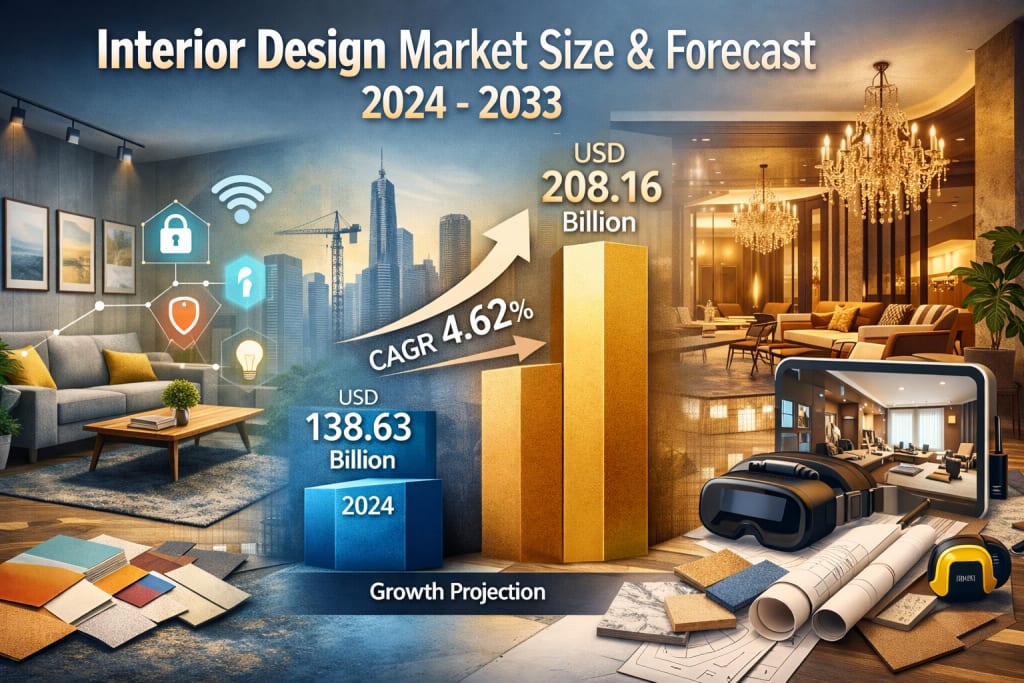
According to Renub Research, the global interior design market was valued at USD 138.63 billion in 2024. The industry is projected to expand significantly, reaching USD 208.16 billion by 2033, growing at a compound annual growth rate (CAGR) of 4.62% during 2025–2033.
This growth is driven by rapid urbanization, rising disposable income, technological innovations, and increasing demand for aesthetically pleasing residential and commercial environments. As more individuals and businesses recognize the importance of interior spaces in influencing lifestyle, productivity, and brand identity, the global interior design industry continues to flourish.
Interior Design Market Overview
Interior design is both an art and a science focused on enhancing interior spaces to achieve a healthier, more aesthetically pleasing environment. Professional designers combine creative vision with technical knowledge to transform interiors using layout planning, lighting, color palettes, materials, furniture, and architectural elements.
A successful interior design project balances visual beauty with practical functionality. Designers must understand client preferences, spatial requirements, ergonomics, and technological integrations to create environments that align with both lifestyle and purpose.
In recent years, interior design has gained global popularity due to several factors:
Rising urban populations
Growth in residential and commercial construction
Increased exposure to design trends through digital media
Expanding interest in personalized living spaces
Social media platforms and home improvement shows have further fueled interest in interior design. Millions of people now look to digital inspiration before redesigning their homes or offices. At the same time, businesses increasingly invest in professional interior design to enhance customer experience, employee productivity, and brand perception.
Additionally, the integration of smart home technology, sustainable materials, and wellness-focused environments is transforming how modern interiors are conceptualized and executed.
Opportunities in the Global Interior Design Market
Incorporation of Smart Technologies
The growing popularity of smart homes has created new opportunities for interior designers to integrate advanced technology into living spaces. Consumers increasingly prefer homes equipped with voice-controlled lighting, intelligent climate control systems, smart security solutions, and connected entertainment systems.
Interior designers must now work closely with technology providers, architects, and builders to ensure these digital elements blend seamlessly with the overall design aesthetic.
In commercial environments, automation systems for lighting, temperature regulation, and workspace management are becoming standard. As Internet of Things (IoT) and artificial intelligence technologies continue to advance, demand for technologically integrated interiors will grow significantly.
Design professionals who can combine technology with elegance and functionality will have a strong competitive advantage.
Rising Demand for Sustainable Interior Design
Environmental awareness has significantly reshaped the interior design industry. Many clients now prioritize eco-friendly materials, energy-efficient lighting systems, and sustainable construction practices.
Green certifications such as LEED (Leadership in Energy and Environmental Design) and WELL Building Standard are gaining popularity among residential developers, corporate offices, and hospitality properties.
Common sustainable materials used in modern interior design include:
Bamboo flooring
Reclaimed wood
Low-VOC paints
Recycled textiles
Natural stone
Sustainable design also emphasizes long-lasting furniture, responsible sourcing, and reduced environmental impact during construction.
Designers who specialize in sustainable solutions can attract environmentally conscious consumers while supporting global sustainability goals.
Hybrid Work and Home Office Design
The COVID-19 pandemic permanently changed workplace culture. Remote and hybrid work models have become a normal part of professional life, creating demand for well-designed home offices and flexible workspaces.
Interior designers are now responsible for creating environments that support productivity, comfort, and technological connectivity.
Important elements of modern home office design include:
Ergonomic furniture
Soundproofing solutions
Natural lighting optimization
Smart storage systems
Technology integration
Commercial offices are also undergoing transformation. Companies are redesigning workspaces to include collaborative areas, quiet zones, and flexible layouts that support hybrid work environments.
This evolving work culture is expected to continue shaping interior design trends for years to come.
Customization and Personalization Trends
Consumers increasingly want interiors that reflect their personality, lifestyle, and cultural identity. As a result, demand for personalized design solutions is growing rapidly.
Interior designers are moving away from standardized design approaches and offering customized elements such as:
Tailor-made furniture
Custom cabinetry
Personalized artwork
Modular furniture systems
Unique material combinations
Technologies like 3D visualization and digital modeling allow designers to present customized concepts before implementation, helping clients visualize their dream spaces.
Personalized design is becoming a key differentiator in both luxury and mid-range housing markets.
Cultural and Global Design Fusion
Globalization has introduced new design influences across international markets. Many homeowners and businesses now prefer interiors that combine multiple cultural aesthetics.
Examples include:
Scandinavian minimalism combined with Indian color palettes
Japanese Zen design blended with Mediterranean textures
Moroccan patterns integrated with modern architecture
This cultural fusion allows designers to create unique, globally inspired interiors that appeal to diverse audiences. Multinational corporations, luxury hotels, and international homeowners often seek design concepts that reflect a blend of global influences.
Designers who understand cross-cultural design principles can unlock opportunities in international markets.
Recent Developments in Interior Design
Biophilic Design Integration
Biophilic design is becoming a central trend in modern interior architecture. This concept focuses on connecting humans with nature by incorporating natural elements into indoor spaces.
Common biophilic design features include:
Indoor gardens
Green walls
Natural ventilation systems
Large windows for natural lighting
Water features
Research suggests that nature-inspired environments improve mental well-being, reduce stress, and increase productivity.
Many offices, hospitals, and residential projects are now incorporating these features to promote healthier living environments.
Virtual Reality and Augmented Reality in Design
Technological advancements such as Virtual Reality (VR) and Augmented Reality (AR) are revolutionizing the interior design process.
These technologies allow clients to explore virtual versions of their redesigned spaces before construction begins.
Benefits include:
Accurate visualization of layouts and furniture placement
Faster decision-making
Reduced project revisions
Improved client satisfaction
Designers can also conduct remote consultations and present design proposals through immersive digital experiences.
Modular and Multifunctional Furniture
Urban living spaces are becoming smaller, particularly in densely populated cities. This has increased demand for modular and multifunctional furniture.
Innovative solutions include:
Foldable beds
Convertible sofas
Expandable dining tables
Stackable storage units
Space-saving furniture systems
These products allow homeowners to maximize space efficiency while maintaining a modern aesthetic.
Interior designers increasingly incorporate modular solutions to accommodate dynamic lifestyles.
Acoustic Interior Solutions
With the growing popularity of open-plan layouts and remote work, managing sound within indoor environments has become crucial.
Modern acoustic design solutions include:
Sound-absorbing wall panels
Acoustic ceiling systems
Noise-reducing fabrics
Sound-dampening furniture
These features improve focus, productivity, and comfort in both residential and commercial settings.
Digital Fabrication and 3D Printing
Digital fabrication technologies such as 3D printing are transforming interior design manufacturing processes.
Designers can now produce complex architectural components, lighting fixtures, and furniture using digital fabrication techniques.
Advantages include:
Faster prototyping
Custom product creation
Reduced material waste
Greater design flexibility
As technology becomes more accessible, digital fabrication is expected to reshape the future of interior design production.
Growth Drivers in the Interior Design Market
Rapid Urbanization and Real Estate Development
Urbanization is one of the strongest drivers of the interior design industry. Growing cities require residential complexes, offices, retail spaces, and hospitality establishments.
According to industry data, retail real estate alone is expected to add approximately 41 million square feet of new development across major cities between 2024 and 2028.
Each new construction project creates demand for interior designers who can transform empty structures into functional and attractive spaces.
Rising Disposable Income and Lifestyle Upgrades
Higher disposable incomes have enabled consumers to invest more in lifestyle improvements. Homeowners now prioritize comfort, aesthetics, and personalization when designing living spaces.
Countries with high disposable income levels, such as the United States, Luxembourg, Switzerland, Australia, and Germany, continue to drive premium interior design demand.
Consumers increasingly prefer luxury furniture, smart home technologies, and personalized décor solutions that enhance their living environment.
Influence of Social Media and Digital Inspiration
Social media platforms have dramatically influenced design trends worldwide.
Platforms such as Instagram, Pinterest, and YouTube showcase home décor ideas, renovation projects, and lifestyle inspiration. These platforms encourage homeowners to experiment with new interior concepts.
As of October 2024, there were approximately 5.22 billion social media users globally, representing nearly 63.8% of the world’s population.
The accessibility of digital design inspiration has increased consumer interest in professional interior design services.
Challenges in the Interior Design Market
High Cost of Professional Design Services
One major barrier to market expansion is the high cost associated with professional interior design services.
Premium design projects often involve expensive materials, skilled professionals, and high-end furnishings. As a result, some consumers prefer do-it-yourself solutions or budget alternatives.
Fluctuating raw material prices and inflation further increase project costs, limiting access for middle-income households.
Sustainability and Environmental Concerns
Although sustainable design is gaining popularity, implementing eco-friendly solutions can be challenging.
Environmentally responsible materials are often more expensive and difficult to source. Designers must balance sustainability goals with affordability and aesthetic appeal.
Meeting environmental standards while maintaining design quality remains an ongoing challenge for the industry.
Market Segmentation
By Type
New Construction
New construction projects offer interior designers the opportunity to develop innovative layouts and design concepts from scratch. Developers increasingly invest in high-quality interior design to improve property value and attract buyers.
Smart home technologies and eco-friendly building materials are commonly integrated into modern new construction projects.
Remodeling
Remodeling is becoming increasingly popular as homeowners choose to upgrade existing properties rather than move to new ones.
Renovation projects typically involve improving layouts, optimizing space usage, and incorporating modern design elements. The influence of home renovation media and DIY culture continues to drive remodeling demand.
By End Use
Residential Interior Design
Residential projects represent a major portion of the interior design market. Homeowners seek comfort, style, and functionality in living spaces.
The growth of remote work has also increased demand for home offices and flexible interior layouts.
Commercial Interior Design
Commercial interior design includes offices, retail stores, restaurants, hotels, and entertainment venues.
Businesses invest in professional interior design to improve customer experience, enhance brand identity, and increase employee productivity.
Regional Insights
The interior design market is expanding across multiple global regions.
The United States remains one of the largest markets due to strong consumer spending and real estate activity. High demand for smart homes, sustainable materials, and luxury interiors continues to drive growth.
France maintains a strong design culture rooted in art and architecture. Sustainable housing initiatives and renovation projects are supporting market expansion.
In India, the interior design industry is experiencing rapid growth due to urbanization, rising middle-class income, and real estate development. Digital platforms have made design services more accessible to consumers.
Meanwhile, Saudi Arabia is witnessing increased demand for interior design services due to major infrastructure projects and the country’s Vision 2030 initiative. Luxury hospitality and residential developments are major contributors to market growth.
Key Companies in the Interior Design Market
Major industry players continue to expand their service portfolios and global presence. Leading companies include:
Aecom
Jacobs Solutions
Stantec Inc.
Cannon Design
Perkins and Will
Areen Design Services Ltd
IA Interior Architects
These organizations focus on innovation, sustainability, and integrated architectural solutions to strengthen their market positions.
Final Thoughts
Interior design is no longer just about aesthetics—it has become a powerful tool for shaping how people live, work, and interact with their surroundings.
With the global market projected to grow from USD 138.63 billion in 2024 to USD 208.16 billion by 2033, the industry is entering a new era defined by smart technology, sustainability, personalization, and digital innovation.
As urban populations expand and consumer lifestyles evolve, the demand for creative, functional, and technologically advanced interior spaces will continue to rise.
Interior designers who embrace innovation, sustainability, and cultural diversity will be best positioned to lead the next chapter of this dynamic global industry.
About the Creator
Philippines Jewellery Market 2026: Rising Luxury Demand, E-Commerce Growth & Cultural Significance
Philippines Jewellery Market Overview The Philippines jewellery market is an important segment of the country’s fashion and luxury goods industry, encompassing a wide range of products such as gold jewellery, silver jewellery, diamond jewellery and fashion accessories. Jewellery holds significant cultural and emotional value in the Philippines, commonly used for personal adornment, gifting and ceremonial occasions such as weddings and celebrations. With increasing consumer spending and evolving fashion preferences, the demand for both fine jewellery and affordable fashion jewellery continues to grow.
By Manisha Dixita day ago in Trader


Comments
There are no comments for this story
Be the first to respond and start the conversation.