
Most traders stare at the wrong screen.
After 7 years of trading btc perps, i realized everything i was thaught about reading markets was wrong.

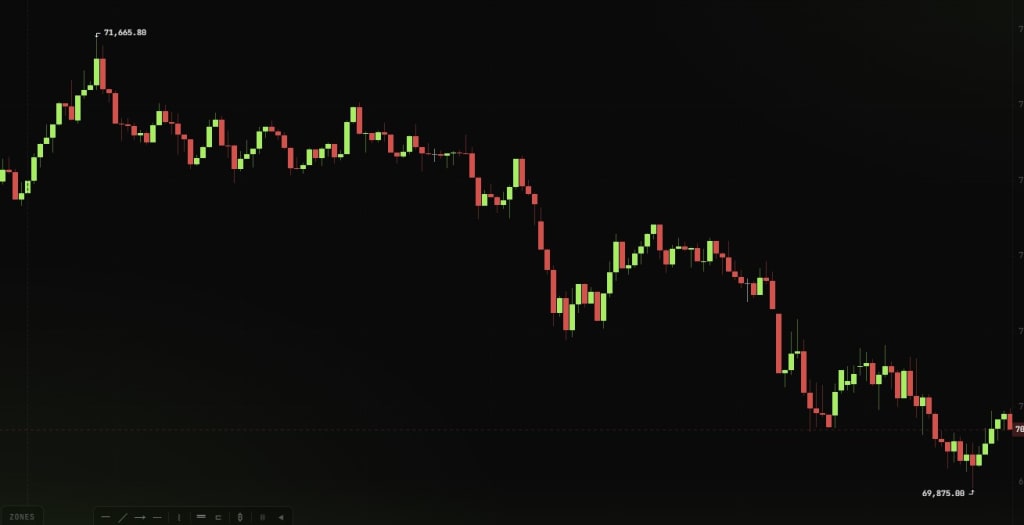
There's a moment every perpetual futures trader knows. You've done your analysis. The RSI is screaming oversold. The moving average crossover just printed. You enter the trade with confidence, set your stop loss like a responsible adult, and within forty-five seconds you're watching your position get liquidated while the price reverses in the exact direction you predicted — just not before sweeping your stop first.
I've been trading Bitcoin perpetual futures since 2017. Not spot. Not options. Perps. The instruments that never expire, that trade twenty-four hours a day, and that have created more millionaires and more blown accounts than any other financial product in the history of crypto.
In 2017, the game was simpler. You could draw a few support and resistance lines, watch the volume, and make a living. The markets were driven by retail sentiment and basic supply and demand. Then the institutions arrived.
The Indicator Graveyard
Here's what nobody tells you when you start learning technical analysis: the indicators everyone teaches you were designed for a different market. RSI was developed in 1978 for stocks that traded six hours a day with predictable patterns. MACD was invented the following year for the same environment. Moving averages are just smoothed historical prices — they can only tell you what already happened.
These tools aren't useless. But in a market where billions of dollars in leveraged positions can be liquidated in seconds, where funding rates shift every eight hours, where market makers algorithmically hunt stop-loss clusters, and where a single whale's spot sell can cascade into a hundred million dollars of liquidations — lagging indicators are like driving a car by only looking in the rearview mirror.
I spent years trying to make them work. Adding more indicators. Combining oscillators. Layering Fibonacci levels on Elliott Wave counts on Ichimoku clouds. My charts looked like abstract art, and my PnL looked like a downward staircase.
The turning point came during the March 2020 crash. Bitcoin dropped from nine thousand to under four thousand in a single day. I watched my positions vaporize. But what bothered me wasn't the loss — it was that the data to predict it was there. Liquidation levels were stacked. Open interest was at extreme highs. Funding was wildly positive. The setup was obvious in hindsight, but none of my lagging indicators flagged it. The signals were in the order flow, the positioning data, the derivatives microstructure — not in the RSI.
The Data Nobody Looks At
Perpetual futures have a hidden layer of information that most retail traders completely ignore. It's not on your candlestick chart. It's not in your moving average. It lives in the derivatives infrastructure itself.
Funding rates tell you who's paying whom to hold their position. When longs are paying shorts a premium, the market is leveraged long — and vulnerable. Liquidation heatmaps show you exactly where clusters of leveraged positions will be forced to close, creating cascading price moves. Open interest changes reveal whether money is flowing in or out. Order book depth and whale transaction tracking show what the largest players are actually doing, not what retail Twitter thinks they're doing.
Then there's gamma exposure from Bitcoin ETF options, which creates predictable zones where market makers need to hedge. There's the basis between spot and futures prices. There's long-short ratios, taker buy-sell volume, exchange reserve flows, and dozens of other data points that paint a picture of what's happening right now — not what happened an hour ago.
The problem is that each of these signals alone tells an incomplete story. Funding can be positive for weeks without a correction. A liquidation cluster can exist without ever being triggered. One whale transaction doesn't make a trend.
The edge isn't in any single data point. It's in the confluence — when multiple independent signals align and point in the same direction.
Building What Didn't Exist
After years of trying to manually track all of this across eight different tabs, three data providers, and a spreadsheet that was becoming sentient, a few of us decided to build the tool we wished existed. We wanted something that would process all of these signals simultaneously and tell us not just what the data looked like, but what it meant.
That project eventually became Blackperp. It monitors over 170 real-time signals across categories like liquidation analysis, order flow, whale tracking, funding dynamics, options exposure, and volatility modeling. It fuses them through an AI engine that weights each signal based on current market conditions and produces scored trade setups with specific entries, stops, and targets.
It's not a crystal ball. Nothing is. Crypto markets are still chaotic, still manipulated, and still capable of doing the one thing nobody expected. But there's a meaningful difference between entering a trade because an oscillator from 1978 looks oversold and entering because liquidation clusters, whale accumulation, funding resets, and order flow divergence are all converging at the same price level.
What Seven Years Taught Me
If I could go back and tell my 2017 self one thing, it would be this: the chart is the last thing you should look at.
The candlestick chart is just the output — the shadow on the wall. The real market lives in the plumbing: who's leveraged, where they'll break, who's accumulating, who's distributing, and what the smart money is positioned for. By the time a pattern prints on your chart and your indicator confirms it, the move has already been priced in by players who had access to that information before you did.
This doesn't mean retail traders can't compete. It means they need to stop fighting with outdated weapons. The data is out there. Liquidation maps, funding rates, order flow, whale movements — all of it is accessible. The question is whether you're going to keep staring at lagging lines on a chart or start paying attention to the signals that actually move price.
Seven years of blown stops, liquidation cascades, and hard lessons taught me that the edge in perpetual futures isn't in better indicators. It's in better information — processed faster, weighted smarter, and acted on before the chart tells everyone else what already happened.
The rearview mirror won't save you. Look through the windshield.
About the Creator
Mike
Mike is a perpetual futures trader based in Europe, and the founder of Blackperp, a crypto derivatives intelligence platform that processes 173 real-time signals
Keep reading
More stories from writers in Trader and other communities.
Australia Energy Management Software Market Growth, Forecast, and Strategic Insights
Energy efficiency has become a strategic priority for organizations across Australia as businesses seek to reduce operational costs while meeting sustainability goals. Energy management software (EMS) plays a crucial role in helping companies monitor, analyze, and optimize their energy usage in real time. These solutions enable organizations to identify inefficiencies, automate energy control, and generate data-driven insights that support smarter energy decisions.
By Rashi Sharma2 days ago in Trader
China In Vitro Fertilization Market Forecast 2026–2034: Rising Infertility Rates and Policy Support Accelerate Industry Growth
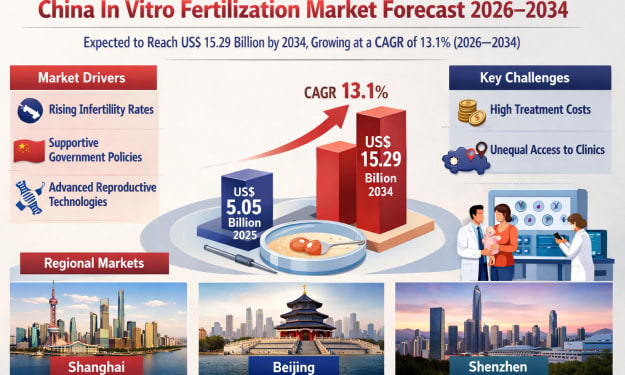
China In Vitro Fertilization Market Size and Forecast 2026–2034 The China In Vitro Fertilization (IVF) Market is entering a transformative growth phase, driven by demographic shifts, evolving social norms, and major technological advancements in reproductive medicine. According to industry analysis, the China IVF market is expected to reach US$ 15.29 billion by 2034, rising from US$ 5.05 billion in 2025, growing at a compound annual growth rate (CAGR) of 13.1% from 2026 to 2034.
By Sakshi Sharmaabout 18 hours ago in Trader
TUS NUA - ch 53
TUS NUA – ch 53 New Beginnings – Mia and Midnight (*)(*)(*) Finola knew Ali’s brother-in-law needed to put his mind at rest. She fed her arm through his and led him outside. “We’ll sit here. If you like, I can put a block around us so our conversation will be private.”
By Margaret Brennan4 days ago in Fiction



Comments
There are no comments for this story
Be the first to respond and start the conversation.