
Sports Medicine Market Size and Forecast 2026–2034
Rising Global Sports Participation and Technological Innovation to Drive Market Toward US$ 11.51 Billion by 2034

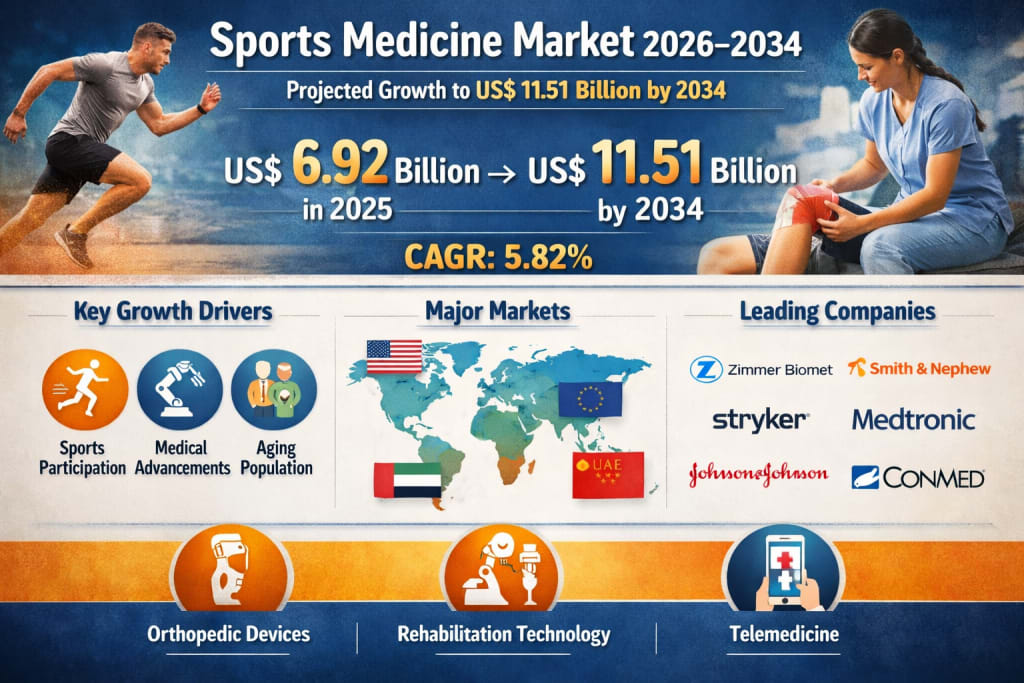
The global sports medicine market is entering a transformative decade, driven by expanding athletic participation, preventive healthcare awareness, and technological innovation. According to Renub Research, the Sports Medicine Market is expected to reach US$ 11.51 billion by 2034, up from US$ 6.92 billion in 2025, growing at a CAGR of 5.82% between 2026 and 2034.
This steady upward trajectory reflects more than just rising sports injuries—it signals a structural shift toward proactive health management, personalized rehabilitation, and performance optimization. As professional athletes, recreational sports enthusiasts, and aging populations alike prioritize mobility and recovery, sports medicine is becoming a cornerstone of modern healthcare systems.
Sports Medicine Industry Overview
Sports medicine focuses on the prevention, diagnosis, treatment, and rehabilitation of injuries associated with athletic activity and physical exercise. The industry encompasses orthopedic implants, braces and supports, compression garments, rehabilitation equipment, wearable performance monitors, regenerative medicine products, and physiotherapy services.
Its reach extends far beyond professional athletes. Today’s market serves school-level athletes, gym-goers, marathon runners, senior citizens practicing yoga, and even corporate wellness participants. The rise of fitness culture—amplified by social media, wearable devices, and digital coaching platforms—has expanded the addressable consumer base significantly.
Orthopedic and rehabilitation products represent a substantial portion of market revenue. Braces, joint supports, prosthetic devices, arthroscopic tools, and post-surgical rehabilitation systems are widely adopted in hospitals, ambulatory surgery centers, sports clinics, and physiotherapy centers. Additionally, therapeutic solutions such as anti-inflammatory medications, protein supplements, and nutraceuticals contribute to faster recovery and enhanced performance.
Advanced technologies such as biomechanical assessment systems, tele-rehabilitation platforms, and AI-powered motion tracking tools are reshaping injury management. These innovations enable early detection of musculoskeletal strain, reduce recovery time, and minimize recurrence risk.
Geographically, North America and Europe remain mature markets due to strong healthcare infrastructure and sports culture. However, Asia-Pacific and the Middle East are rapidly emerging as high-growth regions, supported by rising disposable incomes, sports infrastructure investment, and expanding healthcare access.
Key Growth Drivers
1. Increasing Sports Participation and Fitness Awareness
One of the most significant drivers of the sports medicine market is the surge in global sports participation. Governments, educational institutions, and corporate organizations are promoting physical activity as part of public health initiatives.
The popularity of marathons, CrossFit, cycling clubs, football leagues, and adventure sports has increased exposure to musculoskeletal injuries. Even high-intensity interval training (HIIT) and home workout routines have contributed to strains and ligament injuries, boosting demand for preventive and therapeutic solutions.
Social media has also played a pivotal role. Fitness influencers and online communities promote active lifestyles, indirectly increasing awareness of injury management and rehabilitation tools. As more individuals adopt proactive health strategies, preventive sports medicine products—such as knee braces, ankle supports, and muscle recovery systems—are witnessing steady demand.
2. Advancements in Medical Devices and Rehabilitation Technology
Technological innovation is reshaping sports medicine at every level. Smart braces embedded with sensors, wearable devices that monitor joint stress, and AI-based movement analysis systems allow athletes to track performance and prevent injury.
Robotic-assisted rehabilitation systems and minimally invasive arthroscopic tools are improving surgical outcomes and reducing recovery times. Tele-rehabilitation platforms enable patients to access physiotherapy remotely, expanding service reach beyond urban centers.
Research in biomaterials and regenerative medicine is opening new possibilities in cartilage repair, tendon regeneration, and soft tissue healing. These advancements not only improve patient outcomes but also enhance confidence among healthcare providers, accelerating adoption.
Continuous R&D investments from medical device manufacturers are ensuring a steady pipeline of innovative solutions, reinforcing the market’s growth momentum.
3. Growing Geriatric Population and Active Aging Trend
The concept of “active aging” is becoming increasingly prominent worldwide. Older adults are engaging in low-impact exercises, swimming, cycling, and yoga to maintain mobility and cardiovascular health.
However, aging muscles and joints are more susceptible to injuries, arthritis, and chronic pain conditions. Sports medicine solutions—such as orthopedic supports, rehabilitation equipment, and joint therapies—play a crucial role in managing these conditions.
With global life expectancy rising, healthcare systems are focusing on mobility preservation. Long-term rehabilitation services and injury prevention strategies are becoming integral components of elderly healthcare programs, creating sustained demand for sports medicine products.
Market Challenges
High Cost of Advanced Devices
Despite strong growth prospects, the sports medicine market faces affordability challenges. Robotic-assisted therapy systems, smart wearables, and regenerative implants often come with high price points.
In developing regions, limited insurance coverage and budget constraints can restrict access to advanced treatment options. Even in developed economies, reimbursement policies may not fully support innovative therapies, leading to out-of-pocket expenses for patients.
Balancing innovation with cost-effectiveness remains a pressing challenge for manufacturers and healthcare providers alike.
Regulatory Complexity
Stringent regulatory frameworks across major markets add another layer of complexity. Medical devices must comply with rigorous safety, efficacy, and quality standards, which can delay product launches and increase operational costs.
Differing regulatory requirements across regions further complicate global expansion strategies. For companies entering emerging markets, navigating compliance procedures requires significant expertise and financial investment.
Regional Insights
United States
The United States represents one of the largest sports medicine markets globally. High participation in organized sports, advanced healthcare infrastructure, and widespread insurance coverage support strong adoption of orthopedic devices and rehabilitation technologies.
The market is characterized by robust demand for minimally invasive surgical procedures, wearable performance trackers, and tele-rehabilitation platforms. Continuous innovation and well-established reimbursement systems further strengthen the country’s leadership position.
United Kingdom
The United Kingdom market benefits from a strong sports culture and increasing investment in athletic infrastructure. Rising awareness of preventive care and expanding physiotherapy services are driving demand.
Technological adoption—particularly in robotic-assisted rehabilitation and wearable monitoring—continues to enhance treatment precision and patient engagement.
China
China is emerging as one of the fastest-growing sports medicine markets. Government initiatives promoting sports participation and physical fitness are fueling demand.
Rapid urbanization, rising disposable income, and healthcare infrastructure development support market expansion. While awareness remains limited in rural areas, ongoing public health campaigns are gradually improving accessibility.
United Arab Emirates
The UAE market is expanding steadily, driven by strong government investment in sports infrastructure and international sporting events.
High disposable income levels and a focus on wellness have increased adoption of advanced rehabilitation technologies. However, reliance on imported devices and high treatment costs remain key constraints.
Recent Industry Developments
Innovation and strategic acquisitions continue to reshape competitive dynamics:
November 2024: RTI Surgical finalized its acquisition of Collagen Solutions, strengthening its biomaterials portfolio in sports medicine and regenerative therapies.
February 2024: Smith & Nephew expanded its sports medicine portfolio at the AAOS Annual Meeting, highlighting advanced cartilage and soft tissue repair solutions.
January 2024: Arthrex introduced a patient-focused platform promoting Nano arthroscopy, emphasizing minimally invasive surgical advancements.
These developments underscore the industry’s focus on regenerative medicine, minimally invasive procedures, and enhanced biological healing.
Market Segmentation
By Product:
Body Reconstruction & Repair
Accessories
Body Monitoring & Evaluation
Body Support & Recovery
By Application:
Knee Injuries
Shoulder Injuries
Foot & Ankle Injuries
Hip & Groin Injuries
Elbow & Wrist Injuries
Back & Spine Injuries
Others
By End-User:
Hospitals
Ambulatory Surgery Centers
Physiotherapy Centers
Clinics
Competitive Landscape
The global sports medicine market is highly competitive, with leading companies focusing on innovation, acquisitions, and strategic partnerships.
Key players include:
Zimmer Biomet Holdings, Inc.
Medtronic Plc.
Smith & Nephew Plc.
Stryker
Novartis AG
Johnson & Johnson Services, Inc.
CONMED Corporation
Surgalign Holdings
These companies are analyzed across five key viewpoints: company overview, key personnel, recent developments, SWOT analysis, and revenue analysis.
Outlook: A Decade of Preventive and Personalized Care
The next decade will likely witness a shift from reactive injury treatment to preventive performance management. Wearable technology, AI-driven diagnostics, and telemedicine integration will redefine how athletes and active individuals approach musculoskeletal health.
With the market projected to grow from US$ 6.92 billion in 2025 to US$ 11.51 billion by 2034, sustained by a CAGR of 5.82%, sports medicine stands at the intersection of healthcare innovation and global fitness transformation.
As physical activity becomes a universal priority, injury prevention, rehabilitation, and recovery solutions will remain essential pillars of modern healthcare systems.
Final Thoughts
The sports medicine market reflects a broader global shift toward proactive health, mobility preservation, and performance optimization. From elite athletes to aging fitness enthusiasts, demand for effective injury management solutions is expanding steadily.
Technological advancements, rising healthcare expenditure, and increased sports participation are aligning to create a resilient growth environment. While cost barriers and regulatory challenges persist, innovation and expanding awareness are expected to sustain long-term market momentum.
About the Creator
Australia Online Grocery Market: Convenience and Digital Growth Driving Retail Transformation
The Australia Online Grocery Market is among the fastest-growing segments in the country’s retail landscape. According to the latest IMARC Group analysis, the market reached USD 17,215.1 million in 2025 and is projected to reach USD 89,865.4 million by 2034, registering a compound annual growth rate (CAGR) of 19.55% during 2026–2034.
By Rashi Sharma7 days ago in Trader



Comments
There are no comments for this story
Be the first to respond and start the conversation.