
Warren Sapp Said What About Myles Garret?
Warren Sapp had a few thoughts on likely No. 1 NFL draft pick Myles Garret. In the future, he should probably think a little more to himself. Find out why
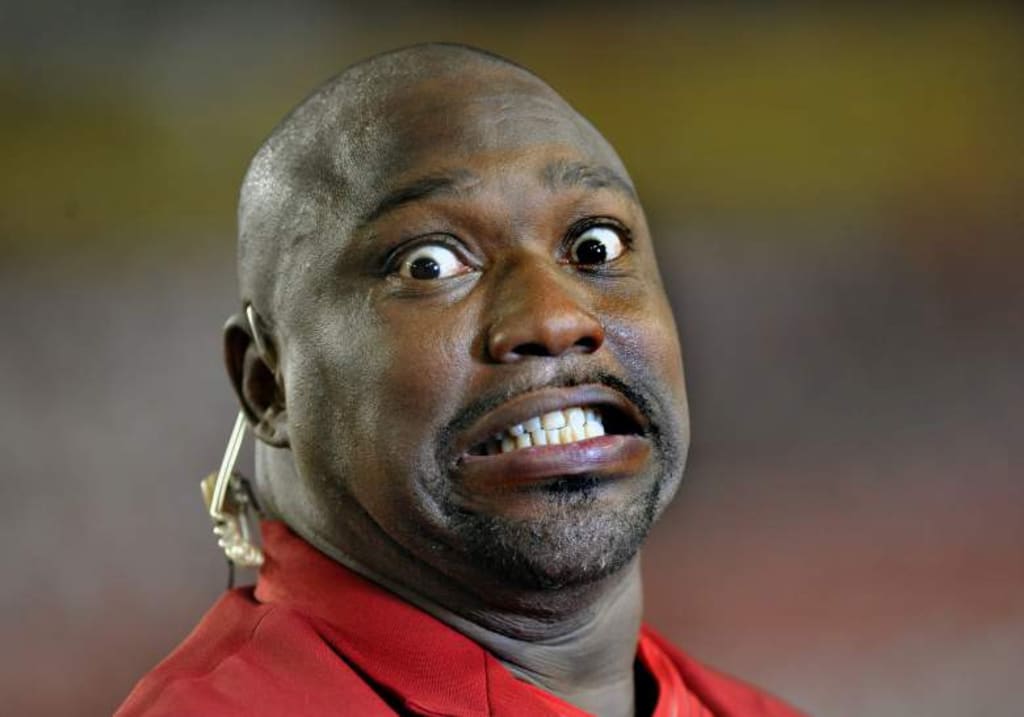
NFL HOF’er Warren Sapp has been all over the headlines on this football-less Sunday, but the story actually has little to do with him. As you may have heard by now, he said that he doesn’t think that the likely No. 1 overall pick Myles Garrett is worthy of going first overall. He stated that he thinks the former Texas A&M standout is “lazy” and only makes “4 plays a game.” Whether or not these claims can be substantiated or whether you and I believe them are one thing, but the source of the claims are another.

Good Bull Hunting
It wasn’t that awful long ago, the great year of 1995 to be exact, that a young and primed Warren Sapp was coming out of college at Miami. Just like Garrett, Sapp too was primed to be one of the very top picks, although maybe not first overall. What saw Sapp fall was a slew of issues that came across the desks of General Managers and decision makers leading into the draft. These issues range from your run of the mill “character flaws” to drug concerns, and oh yea — even some being concerned about his motor and work ethic. In other words, some people may have felt Sapp was a bit “lazy.”
When thinking about Garrett, he appears to be a dedicated worker. This is indicative in his production despite being double and triple teamed most of the time. He has consistently illustrated the skills and production that makes him the potential No. 1 overall pick, even when everyone knew he was set to do so before the 2016 season. Don’t take my word for it, see for yourself:
There are actually two morals to this story. The first is that Warren Sapp should probably go hide for a little while until this whole draft thing blows over. The second is that if people took his advice, he may not be a HOF’er today. The irony is real, folks. Whether Myles Garrett is successful in the NFL or not is a completely different story. However, being the first overall pick in the NFL draft is an accolade that is earned. And Garrett has done more than enough to earn it.
About the Creator
Kenneth Wilson
SPORTS...food...culture...music! VA raised me. Can't handle the real..........you might want to make like a tree....10-4?!
Follow me on twitter @Ksaidwhat
Keep reading
More stories from Kenneth Wilson and writers in Unbalanced and other communities.
Chucking Russ’ & Why You Really Can’t Blame Em’
The Oklahoma City Thunder squeaked one out in Game 3, after allowing the Rockets to close the gap on a large lead they had for much of the game. There was something interesting about Game 3 though, and that was that it looked pretty similar to their losses in this series, and the rest of the games for the Thunder this season. After Game 2’s loss that saw Russell take an inordinate amount of shots in the fourth quarter, after dominating the first three, the critics came out hawking him for his shot selection and amount taken. Game 3 should puzzle the hell out of them then, because he approached it the same way he has been which is indicated by the second triple double he achieved in a row, although slightly toned down. The point here is that he has to do what he does on a regular basis, let us take a look at why.
By Kenneth Wilson8 years ago in Unbalanced
Sweden’s Lindström to Remain Hospitalized After Big Crash at Milan Cortina Paralympics
CORTINA D’AMPEZZO, Italy — A major crash during a competitive event at the 2026 Winter Paralympics has left Swedish para‑alpine skier Aaron Lindström hospitalized and under close medical observation, officials confirmed Tuesday. The 25‑year‑old, one of Sweden’s top medal hopes, will remain in hospital for at least two days after suffering a severe concussion and a minor collapsed lung following his fall in the standing Super‑G race. The incident occurred on Monday during the Super‑G event, a high‑speed alpine skiing discipline that challenges athletes to navigate a course with fewer, more widely spaced gates than in giant slalom, demanding precision and courage at breakneck speeds. Lindström, who had shown promising form at the Games, was pushing for a top finish when disaster struck. Television replays and eyewitness accounts describe how Lindström lost control after a jump on the course. He became unbalanced in the air and landed heavily, tumbling before coming to a stop. The impact was strong enough that he lay on the slope for several minutes as medical personnel rushed to attend to him. The organizers temporarily halted the race while Lindström was treated on the scene. After initial on‑course care, he was transported down the mountain on a stretcher and taken directly to a hospital in Cortina d’Ampezzo. Swedish Paralympic officials later posted an image on social media showing Lindström in his hospital bed, smiling alongside his parents, suggesting his spirits remained resilient despite his injuries. According to the Swedish Paralympic Committee and team medical staff, Lindström’s primary injuries include a significant concussion — typically caused by a violent blow to the head — and evidence of a minor collapsed lung, a condition that can accompany chest trauma and warrants careful observation. Doctors have decided to keep him in hospital for at least 48 hours to monitor both conditions and ensure no further complications arise. Lindström’s crash shocked spectators and competitors alike, as he had been coming off a strong performance earlier in the Games. Just days before the Super‑G, he placed fourth in the downhill standing event — narrowly missing a medal and demonstrating competitive form among the world’s best para‑alpine skiers. Para‑alpine skiing is known for its speed and intensity, making it one of the most dramatic and risk‑laden sports at the Winter Paralympics. Athletes race down steep, icy slopes at high velocities, using adapted equipment based on their classification. Standing skiers like Lindström rely on balance and precision — a slight misstep can lead to serious consequences. Coach Joel Åkerström described the moment of the crash as frightening. According to Swedish media reports, Lindström initially appeared disoriented immediately after hitting the slope, a common sign of concussion. Yet despite the severity of the tumble, the young athlete was able to lift himself and wave to the crowd before being removed from the course. “This was a very tough moment for us all,” Åkerström said. “He was so close to a medal here, and to see him go down like that was distressing. But Aaron is a fighter, and his positive attitude is clear.” He emphasized that the priority now is Lindström’s recovery and long‑term health. The interruption of the race attributed to Lindström’s accident also reflected the high‑stakes nature of Paralympic competition. Super‑G events draw a deep field of talented athletes from multiple nations, and a crash at such speeds can quickly become a focal point for safety discussions and strategy adjustments for teams competing later in the Games. Despite this setback, Sweden’s Paralympic team remains active in competition. Team members and officials have reiterated their support for Lindström and their commitment to the rest of the Nordic squad’s performance goals at the 2026 Games. The Paralympics, which bring together athletes from around the world with varying physical challenges, emphasize resilience and the spirit of competition — qualities Lindström has already exemplified in his career. Aaron Lindström’s journey to elite para‑alpine skiing began early in life. Born in Sweden with an upper‑limb difference, he embraced skiing as a child and steadily progressed through international competition ranks. He has represented his nation in multiple events, including the 2018 and 2022 Winter Paralympics, showcasing both skill and tenacity. As the Winter Paralympics continue, medical updates on Lindström’s condition are expected from team officials. While the road to recovery can vary for concussions and lung injuries, the extended hospitalization suggests caution and thorough care by the medical staff — both crucial for an athlete whose future competitions hinge on full physical recuperation. Spectators and fellow competitors alike are wishing Lindström well as the Games progress, hoping that this terrifying moment can become a chapter in a comeback story rather than a career‑ending incident. For now, attention remains on his recovery and on the thrilling yet unpredictable drama of Paralympic competition.
By Fiaz Ahmed about an hour ago in Unbalanced
Somers Hits Wall in 50-39 Defeat to Pleasantville
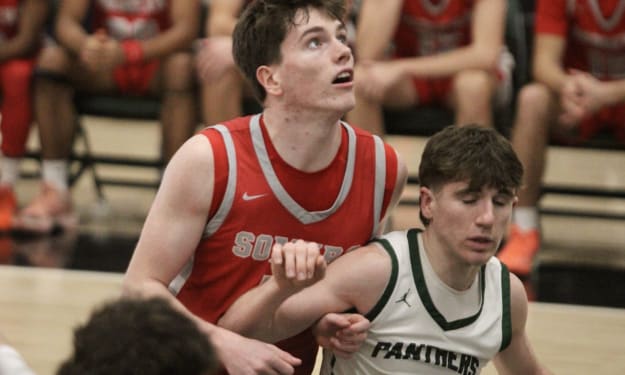
Scroll down for crowd shots and photos versus Pleasantville On Thursday February 12, Somers traveled to Pleasantville High School and battled back and forth with the Panthers for two and half periods. A 32-30 score resulting, the game changed on one very hot hand.
By Rich Monetti7 days ago in Unbalanced



Comments
There are no comments for this story
Be the first to respond and start the conversation.