
Watching The Total Lunar Eclipse and Blood Moon...March 3rd 2026.
Mike's March $ prompt.

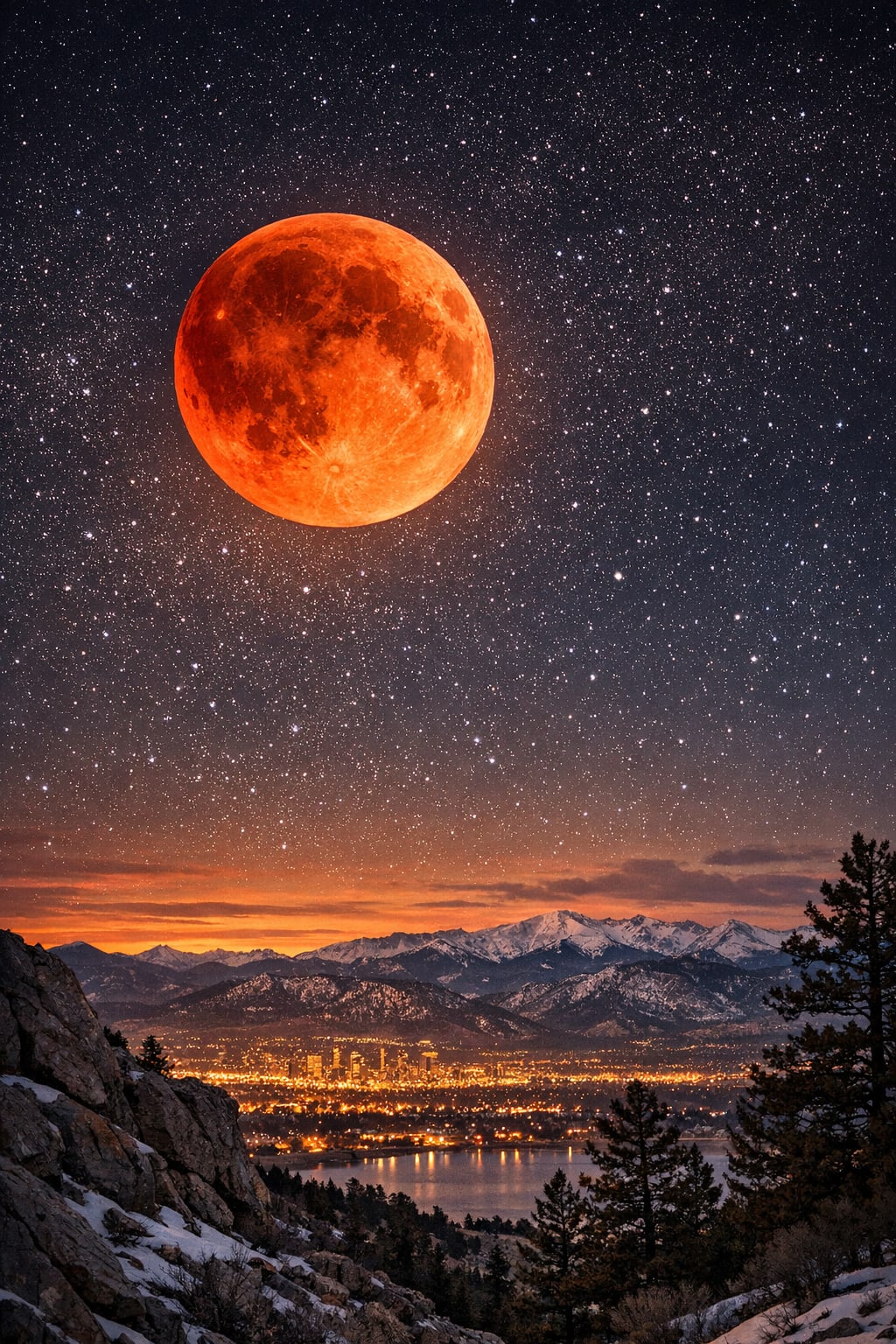
By a stroke of good luck - I just happened to be in Colorado to watch (or squint) at the 2026 Lunar Eclipse in the wee hours of the morning. It was freezing cold, but who can resist the beautiful Rocky Mountain peaks as the antics in the sky compete with dawn. The advent of morning grudgingly pausing in its beginning of yawning awake.
"A total lunar eclipse on March 3, 2026 produced a striking blood moon visible across Colorado, including the Denver metro area. The event combined predictable celestial mechanics with atmospheric drama, creating a copper‑red moon that early risers across the state could watch without any special equipment".
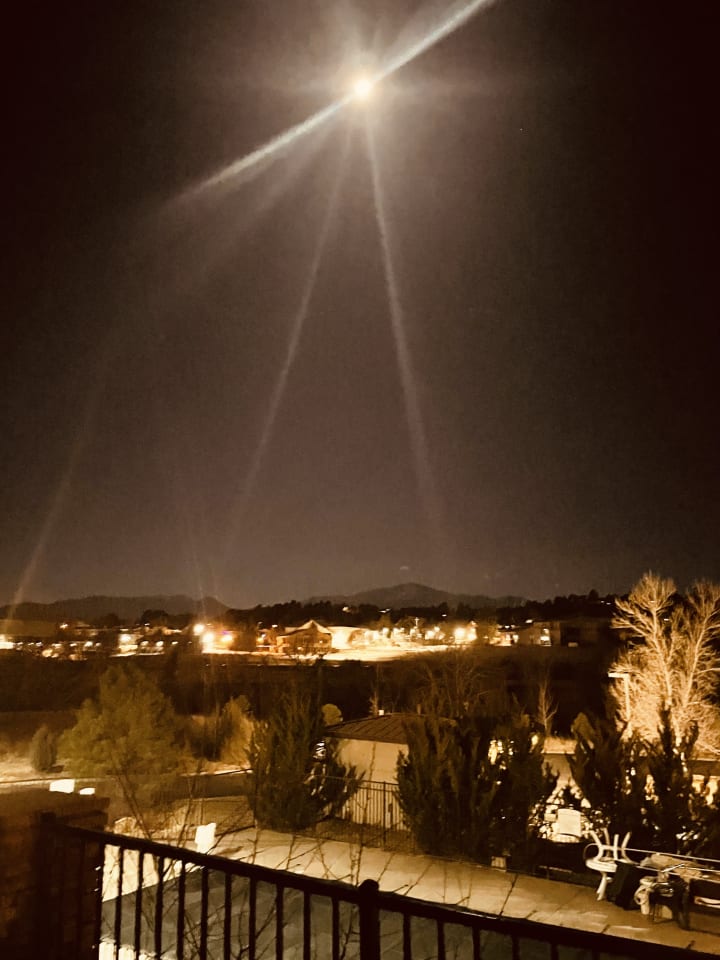
🌑 The Sky Explained.
A total lunar eclipse occurs when Earth moves directly between the Sun and the Moon, casting its shadow across the lunar surface. As sunlight filters through Earth’s atmosphere, blue wavelengths scatter, while red and orange light bend inward, painting the Moon in warm hues. This is what creates the “blood moon” effect.
On March 3, the eclipse coincided with the March full “worm” moon, named for the seasonal reappearance of earthworms as the ground thaws.
🕓 Timing Over Colorado
In Colorado, we had an excellent vantage point for the event, with the eclipse unfolding in the early morning hours:
- Penumbral phase began: 1:44 a.m. MST
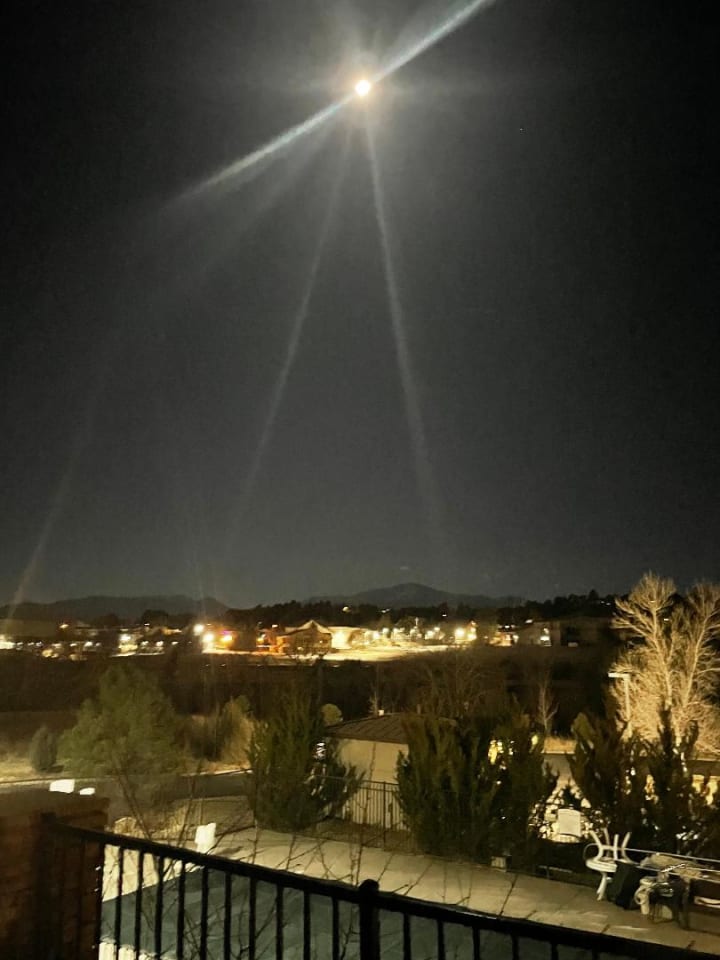
Partial Blood Moon.
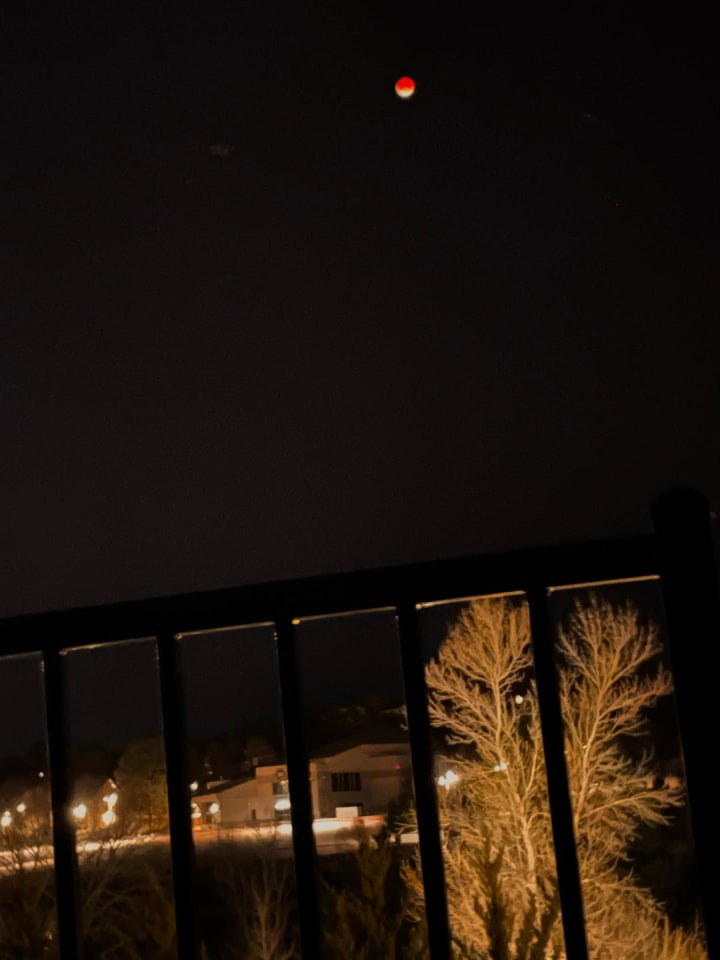
- Maximum eclipse: 4:33 a.m. MST
- Totality lasted roughly an hour, during which the Moon glowed red over the Front Range.
- Eclipse ended: 6:33 a.m. MST
We stood sleepy and bleary-eyed, but watched until the end.
Local meteorologists noted that if storm clouds held off, viewers across the Denver metro area would see the Moon turn red to copper for at least an hour.
It did. We did...with our avid teen Astronomer-to-be, explaining the event step by step and insisting that we watch and listen keenly.
🌄 Why Colorado’s View Was Special
Colorado’s high elevation and typically clear pre‑dawn skies often make it a prime location for lunar events. For this eclipse:
- The Moon was high enough above the horizon during totality for unobstructed viewing.
- The reddish coloration was especially vivid due to the dry mountain air, which scatters less light.
- This was the last total lunar eclipse visible from the Americas until 2029, making it a rare treat for local stargazers and Skywatchers.
🌍 On a Broader world view.
This eclipse was visible across North America, Australia, New Zealand, and parts of Asia, but Colorado’s timing aligned perfectly with the peak of totality. It was also the first total lunar eclipse of 2026 and the last one visible anywhere on Earth until late 2028.
............................
About the Creator
Novel Allen
You can only become truly accomplished at something you love. (Maya Angelou). Genuine accomplishment is not about financial gain, but about dedicating oneself to activities that bring joy and fulfillment.
Keep reading
More stories from Novel Allen and writers in Wander and other communities.
Worth the Wait: Puerto Viejo, Costa Rica
Beach bumming in a small Caribbean beach town sounded like a perfect way to end our 6-month trip through Mexico and Central America. Or so we thought. The foul, fishy stench of rotten seaweed hit our nostrils as we stepped from the cramped bus and looked out at a rather depressing, empty, and underwhelming black sand beach. It was pouring with rain, and we had to quickly fish out our ponchos. We thought, this couldn’t be it, could it?
By Sh*t Happens - Lost Girl Travel3 days ago in Wander
How To Find the Most Scenic Places to Photograph Around Dambulla
Sri Lanka is a great country to visit, filled with history, scenery as well as a plethora of fun activities. Among the cities of interest is Dambulla, a place where scenery, historic landmarks and travel come together for photographers. The area is known for its cave temples, rock formations as well as nature-filled surroundings, giving travellers many places to capture. This guide breaksdown practical and straightforward ways to plan your photography journey in Dambulla.
By Daphne Olga5 days ago in Wander




Comments (3)
COOL LOVE IT
🌔Magnificent! 🌒
I admire you guys for being able to sacrifice sleep for this. I could never hehehe. Thank you for sharing the photos!