
In Defense of Philosophy
Why I Will Always Return to It

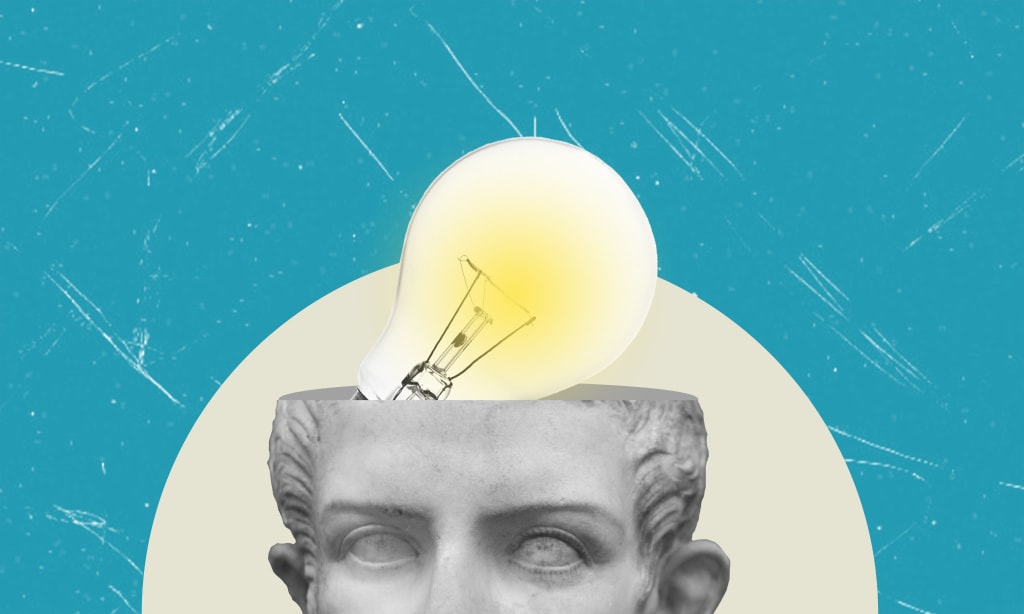
Everyone needs a motto in life, but I myself yearn to find even more. Philosophy, which I cherish most, is something I always believe in; studying it is like exploring a treasure trove of profound wisdom. Why? Because, first and foremost, the name philosophy says it all: philosophy means wisdom (in Chinese), meaning love of intelligence (philosophy). What could be more joyful than having all the difficulties and obstacles in life resolved by a wise and intelligent "scholar"? Is that perhaps overestimating philosophy? I don't think so, because no one would name something without first defining it in their mind. And even if it were called "philosophy" when it was born, if it had been truly useless, lacking wisdom and intelligence throughout a long period of history, no one would be foolish enough not to rename such a multifaceted field of study.
Philosophy is very close to me, as close as a philosophical saying that slips through my ears, but I would never dare to disrespect it, because I know there will come a time when I will have to seek it out.
Many people deny the role of philosophy, yet in reality, they rely on and cling to it. They think of philosophy as something lofty, distant, and unattainable, and that philosophers are nothing more than fools. Perhaps they forget that during a devastating failure in life, a casual remark from someone saved their soul, paving the way to overcome crisis. Perhaps they forget that when they fell, were utterly disappointed, and resented their fate, philosophy appeared to encourage, comfort, and help them regain their spirit, will, and motivation for life. And while they were basking in fame and power, a philosophy awakened them, bringing them peace of mind. Sadly, few accepted it; they rejected philosophy with their own arrogance, and suffered when they made avoidable mistakes. And once they tasted the bitterness, they began to talk about philosophy.
But philosophy doesn't stop there; it offers countless other benefits that those who apply it to their lives will reap. The most prominent function of philosophy is its role in providing worldview and methodology. It would be chaotic if someone lived their life without defining their purpose, whether long-term or short-term. Everyone sets a goal for themselves, but first, to achieve that goal, they must know who they are—that is, they must be aware of their existence in this world and what they must do to survive. A purpose in life probably originates from them. Furthermore, humans also need to understand the nature of the world, because if you don't know what the things around you are and how they exist, can you use them in life? Probably not. Why? Because fear of things you don't understand is a survival instinct. Philosophy itself revealed such worldviews to them. At this point, their purpose in life became clearer than ever: I live for the purpose of accumulating material wealth or a minimalist life of spiritual happiness—these are just two of the countless purposes of human life. And in that way of life, countless words of joy are uttered upon achieving success, like the famous saying: "Money can't buy everything, but everything can be bought with money."
In the course of philosophical history, materialism has gradually driven idealism out of the real world. Without materialism, no one could distinguish between the visible and the invisible (because they haven't fully explored them). Without materialism, this world would conceal countless crimes and criminals, justice and righteousness would be suppressed, and those with sophisticated and sharp minds would blame nature or the intervention of some divine being. Thanks to materialism, human life is prolonged through correct and effective medical methods. This is because fate, in spiritual philosophy, is not real. And punishment from divine beings fails in the face of medical knowledge and experience. On another note, I don't have much sympathy for some spiritualists; how can they be so audacious and disrespectful to the very deities they have tried to create? They erected a supernatural being and used its hand to express their own desires, which were driven by greed for offerings and money. Could it be that a materialistic worldview has permeated the idealistic worldview, or is it simply the moral decay of some believers? I often question my supernatural beings, asking if the pandemic is a punishment from them. Why do good people contract the disease and die? O supreme deity, why do you punish them?
Furthermore, countless other scientific disciplines based on materialist philosophy are also developing rapidly. The world is being explored more concretely by humanity, with specialized fields such as earth science, ocean science, and health science emerging. Philosophy is no longer the science of sciences, but research fields that branched off from philosophy still rely on philosophical foundations and continue to thrive to this day; these include several specialized fields of social sciences and humanities. Thus, human knowledge is expanding, and human life is improving. Philosophy is not just for the ruling class, as not all doctrines are accepted by that class, and the leaders of that class are not necessarily philosophers.
I love materialist philosophy because it accurately reflects the nature of the world and offers a logical way of reasoning. Seeing life constantly moving and developing, and the material comforts of my friends, I can't help but believe in the materialist worldview: that effort leads to success, and I'm willing to accept the results when I can't progress any further.
However, I'm not a complete materialist. I believe that there needs to be some kind of spiritual world, a religious worldview, where one can find solace and support when the soul is weary and exhausted from the pursuit of material things. Sometimes, one turns to it like an opiate for the soul, soothing the injustice and wrongdoing of work. Or perhaps the illusory resurgence of "idealism creates everything" with the frenzied shout of "heroes create the times"—a few bold thoughts fleeting through the mind. It might be good in some cases. However, I must truly break free from this illusion quickly, because that world is like opium smoke—only an illusory compensation. Immersing oneself in it will lead to discouragement and despair. And that despair is not as beautiful as a flower, because it will destroy one's own will to strive and rise above. In any case, as Rousseau said, even without a God, I still need one, to guide me towards goodness, to live beautifully, and to believe in cause and effect in the future, which first and foremost means receiving trust, love, and support from my colleagues. Approaching idealist philosophy to a moderate degree helps me avoid falling into superstition.
Philosophy, ultimately, is a form of social consciousness; it arises from a specific social existence. Therefore, while some ideas may be outdated and backward, others are timeless and hold profound value today. As someone who studies philosophy, I believe in making rational choices, and more importantly, philosophy needs practical application. Without practical application, philosophy can remain mere empty truths buried deep in memory. By correctly applying philosophical principles to oneself and life, those principles cease to be mere formalities and become a tangible force supporting oneself. Therefore, I would never dare to underestimate philosophy, because one day I will have to seek it out.
In short, philosophy, whether idealistic or materialistic, doesn't reject anyone, yet few are aware of its tangible nature. There's a great saying: no saying is truly yours alone; a thought you utter unintentionally could be the saying of a philosopher or someone else. Therefore, philosophy—a simple thing amidst everyday life, seemingly distant yet so close—is manifested in every aspect of daily life.
About the Creator
Tomas Bucek
I’m a tech CEO who loves philosophy. My walls at work are lined with Seneca and Marcus Aurelius, and their ideas guide how I think about business and life.
Keep reading
More stories from writers in Writers and other communities.
Unofficial Challenge: Black History Celebration
Forward: February 28th, 10:53 PM, EST... The final hour of Black History Month, 2026. Hello fellow writers. I've had this challenge waiting in my drafts for most of the month. But I held off on publishing it, until now.
By Sam Spinelli5 days ago in Writers
Writing About Writing: The End
A lot of people say that the hardest thing about writing a book (or script, or comic) is starting it. Choosing where to begin, not to mention how the story should start, picking a good opening line to hook the readers, and of course the process of writing an entire story from start to finish. It's a daunting challenge. However, in my opinion there is something even more important: How to end it.
By Natasja Rose2 days ago in Writers
The Piggy Project
I’ve had so many names in this life I lose track of which ones were ever really mine and which ones I wore because someone needed me to. Some were handed to me before I had words to refuse them, before I knew what they meant, before I knew I could say no. Most weren’t meant to hurt. That doesn’t mean they didn’t leave marks. Marks that told me who I belong to, who I am by way of who claims me, recognizes me in the good and bad, who walks beside me.
By Fatal Serendipityabout 21 hours ago in Confessions


Comments
There are no comments for this story
Be the first to respond and start the conversation.