
Top On-Site Challenges That Disrupt Line Pump Machine Performance
Challenges That Disrupt Line Pump Machine Performance

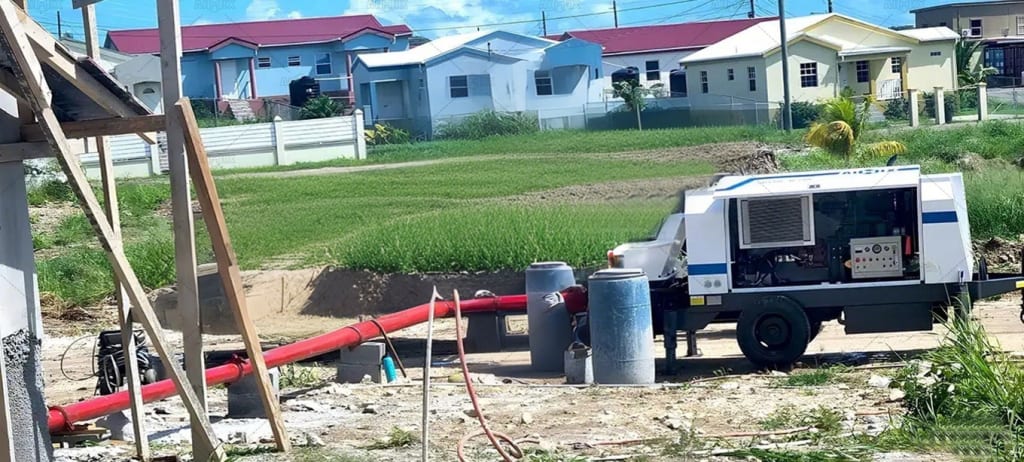
The line pump, a stalwart of the construction site, is trusted with the vital task of moving liquid concrete from the delivery truck to the far reaches of the formwork. Its operation, however, is perpetually at the mercy of a volatile on-site environment. Unlike the controlled conditions of a stationary batching plant, the concrete line pump operates in a theatre of mud, steel, and frantic activity, where performance can be degraded in moments by factors both foreseeable and sudden. For the pump operator and the project manager, understanding these disruptive forces is the first step in mitigating downtime and ensuring a successful pour. The challenges are rarely singular; they are a confluence of material inconsistencies, logistical bottlenecks, and environmental pressures that test the limits of both the machine and the crew.
Material Inconsistencies and Mix Design Problems
The single greatest variable affecting a line pump's performance is the very substance it is designed to transport: the concrete itself. A mix design that looks perfect on paper can become a source of profound operational frustration once it enters the hopper. The pump relies on a delicate balance of lubrication and fluidity, a quality often quantified by its slump. When a mix arrives with a slump lower than specified, due to in-transit hydration or an error at the plant, the pump's engine must work exponentially harder to push the stiff, high-yield stress material through the pipeline. This increased resistance places immense strain on the hydraulic system and can lead to excessive wear on the pumping cylinder and the S-valve.
Conversely, a mix that is too wet, exhibiting segregation, presents its own set of perils. As the pump operates, the pressure can force the water content ahead of the aggregate, effectively squeezing the heavier solids out of the suspension. This phenomenon, known as "slurry loss" or "dewatering," leaves a dry, interlocking plug of rock inside the pipeline, which can bring a pour to a catastrophic halt. The situation is exacerbated by poorly graded aggregates. An excess of flat or elongated particles increases internal friction and creates a "log-jam" effect within the hose, while a lack of fines, or proper sand content, robs the mix of the necessary paste to lubricate the pipe walls. The pump, therefore, is not just moving concrete; it is being asked to compensate for the shortcomings of the mix design, a task at which it can rarely succeed indefinitely.
Logistical Bottlenecks and Supply Chain Syncopation
The rhythmic dance of a continuous concrete pour is entirely dependent on the flawless synchronization of the supply chain. When this rhythm is broken, the line pump is left in a precarious state of limbo. A common and highly disruptive challenge is the intermittent delivery of concrete trucks. If the gap between mixer trucks is too long, the pump is forced into a state of waiting, which, while giving the crew a rest, can be detrimental to the concrete already in the line. In hot or windy conditions, the static concrete in the hose begins its initial set, losing slump and becoming increasingly difficult to move. When the next truck finally arrives, the pump must overcome the "starting pressure" required to break this resting column of material free, a moment of immense mechanical stress that can blow hoses or damage couplings.
Furthermore, the placement of the concrete trailer pump itself is a logistical decision fraught with consequence. Often, site constraints force the pump to be positioned a considerable distance from the pour location, requiring hundreds of feet of pipeline to be laid. Every coupling, every bend, and every foot of hose adds frictional resistance. Long runs, particularly those involving vertical lifts, exponentially increase the required pumping pressure. A poorly planned layout with an excess of 90-degree elbows can turn a manageable pour into a high-pressure struggle, pushing the equipment to its operational limits and increasing the risk of a line burst. The pump's performance is thus intrinsically tied to the choreography of truck movements and the geometry of the pipeline, factors that are determined long before the first cubic meter is pumped.
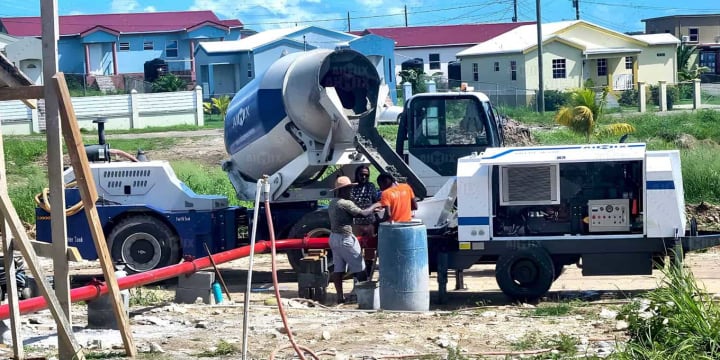
Environmental Conditions and Site Logistics
The construction site is an uncontrolled laboratory of environmental extremes, each posing a unique threat to the line pumping operation. Temperature is a silent and powerful adversary. In the scorching heat of a summer pour, the hydration rate of the cement is accelerated, rapidly robbing the mix of its workability. This increases friction within the line and narrows the window of time in which the concrete can be effectively placed. Conversely, in cold weather, the concrete stiffens, and the risk of ice crystal formation within the mix can damage the developing structure. Pumping chilled concrete requires higher pressures and can lead to condensation within the pipeline, further altering the lubrication layer at the crucial interface between the pipe wall and the moving slurry.
Beyond the weather, the very ground upon which the operation is staged presents daily hurdles. Muddy, uneven terrain makes it difficult to position the stationary concrete pump on a stable, level plane, which is essential for the hydraulic system to function correctly and for the hopper to receive material cleanly from the mixer trucks. Congested sites, cluttered with rebar, formwork, and other trades, restrict the movement of both the pump and the delivery vehicles. The need to navigate hoses around obstacles creates unnecessary bends and kinks, accelerating wear and increasing pressure demands. The line pump, a marvel of mechanical engineering, is ultimately a guest on a chaotic jobsite, and its performance is a direct reflection of how well that site is managed, the ground prepared, and the weather respected.
About the Creator
AIMIX
Construction Machine Manufacturer in China. Find Machines here: https://aimixconcretesolution.com/
March 15, 2026
Merriam Webster - Word of the day: Tranche refers to a division or portion of a whole. World Contact Day is commemorated every year on March 15. It is a unique observance held globally to focus on communicating with extraterrestrial life and exploring the possibility that intelligent beings may exist beyond Earth. World Contact Day inspires people to invoke their curiosity and spend time thinking about the universe and the mysteries surrounding it. What is the “Ides of March”? According to the Roman calendar, the Ides are a monthly occurrence. In March and other months with 31 days, the Ides always falls on the 15th; it falls on the 13th in months with 30 days. The Ides traditionally marked the arrival of the new Moon and was cause for celebration. The word “Ides” is derived from Latin, meaning “to divide.” Mothering Sunday in 2026 falls on Sunday, March 15. Mothering Sunday, celebrated in the United Kingdom and Ireland, occurs on the fourth Sunday of Lent, which is exactly three weeks before Easter. Unlike the fixed-date Mother's Day in countries like the United States, Canada, and Australia, Mothering Sunday’s date changes each year according to the Christian liturgical calendar. On March 15, 2026, several notable observances and events are celebrated: Dumbstruck Day: A day to express frustration. Everything You Think is Wrong Day: A day to challenge and celebrate wrong beliefs. International Day Against Police Brutality: A day to raise awareness and advocate against police violence. My look at today, March 15, 2026 below:
By Denise E Lindquistabout 20 hours ago in Writers
The Post-Heat Murderer Imprisoned by the Shackles of Love
Prologue It was a dense, dark night. The street lamps on the deserted, cobblestone paths flickered dimly. From a distance, the sounds of the factories that were still awake moaned like a low wail. The wind, arriving in waves like a screaming army, swallowed that moaning sound entirely.
By Chanaka Praveen7 days ago in Writers


Comments