
How to Convert RS232 to RS485
Convert RS232 to RS485
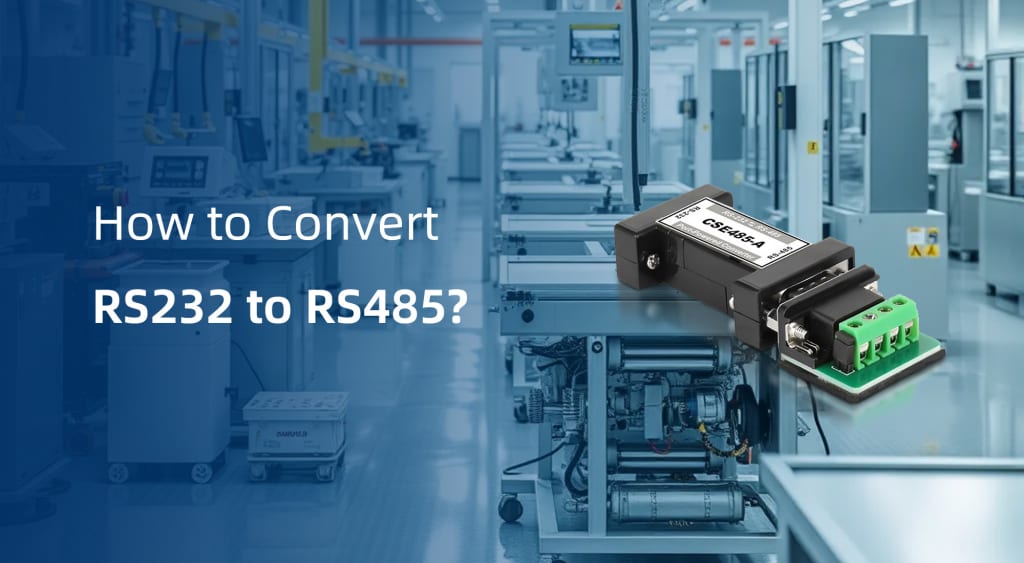
Have you ever tried connecting two industrial devices only to discover that one communicates through RS232 while the other uses RS485? This situation is extremely common when integrating legacy equipment with modern industrial networks.
Because RS232 and RS485 use completely different electrical signaling standards, they cannot be connected directly. Attempting to wire them together without proper conversion will result in failed communication or even potential hardware damage.
The solution is simple: use an RS232 to RS485 converter to translate the signal levels between the two interfaces.
In this guide, you’ll learn:
Why RS232 and RS485 are incompatible
How to convert RS232 to RS485 step by step
How to choose the right converter for industrial environments
Common questions about serial communication conversion
Before explaining the conversion process, it helps to first understand how these two standards differ.
Understanding RS232 and RS485 — Why Conversion Is Necessary
Both RS232 and RS485 are widely used serial communication standards, especially in industrial automation, instrumentation, and control systems. However, they are fundamentally different in how signals are transmitted.
RS232 uses single-ended signaling referenced to ground.
The voltage levels typically range from +12V to –12V, where the polarity of the voltage represents logical data.
RS485, in contrast, uses differential signaling between two wires commonly labeled A and B. Instead of referencing ground, the system measures the voltage difference between these two lines, typically within ±5V.
Because of these differences:
RS232 devices cannot correctly interpret RS485 differential signals
RS485 networks cannot recognize RS232 voltage levels
There is also a topology difference:
RS232 supports only one transmitter and one receiver
RS485 supports multiple devices sharing the same bus
For these reasons, a serial converter is required to translate the electrical signals and ensure reliable communication between devices.
How to Convert RS232 to RS485
Converting RS232 to RS485 is straightforward when using a dedicated RS232-to-RS485 converter. Most converters are bidirectional, meaning they can automatically convert signals in both directions.
Follow these steps for a typical installation.
1. Connect the RS232 Interface
Use a standard RS232 cable to connect the RS232 port of your device to the RS232 side of the converter.
Make sure the key pins are correctly connected:
TX (Transmit)
RX (Receive)
GND (Ground)
Incorrect pin wiring is one of the most common causes of communication failure.
2. Connect the RS485 Network
Next, connect the RS485 terminals of the converter to the RS485 bus using a twisted-pair cable.
Typical wiring includes:
A (Data+)
B (Data–)
In multi-device RS485 networks, proper bus topology and termination resistors may also be required.
3. Configure the Converter
Some converters include DIP switches or configuration software for adjusting communication modes. Others work automatically without configuration.
Check the device manual to confirm whether configuration is required.
4. Set Matching Communication Parameters
Both connected devices must share identical communication settings:
Baud rate
Data bits
Parity
Stop bits
If these parameters do not match, the devices will not communicate correctly.
5. Test the Communication
After wiring and configuration are complete, test the connection using tools such as:
Serial port debugging software
PLC configuration tools
Data logging software
Successful data transmission confirms that the conversion is functioning correctly.
Choosing the Right RS232 to RS485 Converter
Not all serial converters are designed for demanding industrial environments. When selecting a converter, several factors should be considered to ensure reliable operation.
Industrial Reliability
Industrial installations often involve electrical noise, temperature fluctuations, and unstable power environments. A high-quality converter should be designed for stable operation in harsh conditions.
Long-Distance Transmission
RS232 communication is usually limited to about 15 meters, while RS485 can reach up to 1,200 meters at typical industrial baud rates. A proper converter allows legacy RS232 devices to take advantage of RS485’s long-distance capability.
Electrical Isolation
Electrical isolation protects equipment from:
Ground loops
Voltage surges
Electromagnetic interference
Isolation is particularly important in factories, power systems, and transportation infrastructure.
Plug-and-Play Operation
Many modern converters support transparent conversion, meaning no drivers or programming are required. This makes integration with PLCs, sensors, meters, and controllers fast and simple.
Come-Star designs its RS232 to RS485 converters specifically for industrial environments, supporting long-distance communication, electrical isolation, and plug-and-play installation.
FAQ
Can one RS232 device communicate with multiple RS485 devices?
Yes. A single RS232 device can communicate with multiple RS485 devices by using a multi-port RS232 to RS485 hub converter.
These devices expand one serial interface into multiple RS485 channels, allowing a single controller to connect with several field devices. This architecture is often used in industrial monitoring systems and distributed control networks.
Do serial converters only support RS232 to RS485?
No. Many industrial serial converters support multiple protocol conversions, including:
RS232 to RS485
RS232 to RS422
RS422 to RS485
This flexibility makes them useful when integrating equipment from different manufacturers.
Can the same converter work in both directions?
Yes. Most modern converters are bidirectional, meaning they automatically convert signals from RS232 to RS485 and RS485 to RS232 without manual switching.
This simplifies installation and reduces configuration errors.
Conclusion
RS232 and RS485 are two of the most widely used communication standards in industrial and automation systems, but their electrical characteristics and network architectures are fundamentally different.
Because of these differences, direct wiring between the two interfaces is not possible. A dedicated RS232 to RS485 converter is required to translate signal levels and ensure stable communication.
By selecting a reliable converter and following proper wiring and configuration procedures, engineers can easily integrate legacy RS232 devices into modern RS485 networks — enabling long-distance, noise-resistant communication in demanding industrial environments.
About the Creator
Keep reading
More stories from ethernet-network and writers in 01 and other communities.
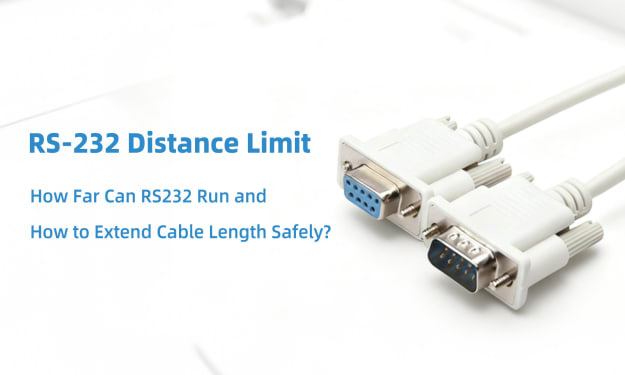
How Far Can RS232 Run and How to Extend It Safely?
If you’ve ever tried to connect RS-232 devices over a long distance and encountered data errors, intermittent communication, or unexplained signal noise, you’re not alone. One of the most frequently asked questions in industrial communication is: “What is the maximum distance RS-232 can reliably support?”
By ethernet-network2 months ago in 01
How to Build a Fitness App That Keeps Users Coming Back
The fitness app market in 2026 is no longer a battle of content. It is no longer about who has the most workout videos. It is now a battle of who can sustain user motivation. Data from the 2025 Global Digital Health Report is clear. Initial downloads for health apps remain high. However, nearly 60% of users drop off within thirty days. This happens if the experience feels generic.
By Del Rosarioabout 8 hours ago in 01
Top 10 Medication Management App Development Companies in 2026
In recent years, mobile health technology has fundamentally reshaped how patients engage with their treatments. One of the most promising developments in this space has been medication management applications — digital tools that help individuals track prescriptions, set reminders, manage dosages, and reduce the risk of medication errors. What was once a simple alarm clock for pills has evolved into a suite of features that support people living with chronic conditions, caregivers juggling complex regimens, and healthcare professionals seeking adherence insights.
By Olivia Carter3 days ago in 01
Tatt~Master
— Assembly Line Tatt Machine ~ Impressions to Impress — As I begin to understand more about the Tattoo Phenomenon. I've written silly, yet verbatim, dating site anecdotes in 'Frazzled.' So let me ask you: Would you be More attracted to someone slathered with tattoos, or Less?
By Jay Kantor5 days ago in Humor



Comments
There are no comments for this story
Be the first to respond and start the conversation.