Dr. Mozelle Martin
Bio
Behavioral analyst and investigative writer examining how people, institutions, and narratives behave under pressure—and what remains when systems fail.
Stories (123)
Filter by community
Good Samaritan Laws, Plainly
Most people have heard the phrase “Good Samaritan law” and treat it as a vague safety net. They assume there is some invisible legal blanket that protects anyone who steps in to help a stranger in trouble. The reality is less cinematic. In the United States, there is no single federal Good Samaritan law that covers every scenario. There is a patchwork system of state statutes, case law, and narrow federal rules. Each piece aims at the same goal: convince ordinary people they can try to help without getting dragged into court for making an honest mistake.
By Dr. Mozelle Martin3 months ago in Humans
For No Reason
I wrote this as a teenager and forgot it existed until I found it again in old files. I’m putting it here because the core point is still true, and still denied. It’s told in the voice of a dog, but it’s not a breed or pet-specific statement. It’s a sequence statement. Same logic applies to any animal living under chronic neglect or abuse.
By Dr. Mozelle Martin3 months ago in Petlife
Who Gets Stopped
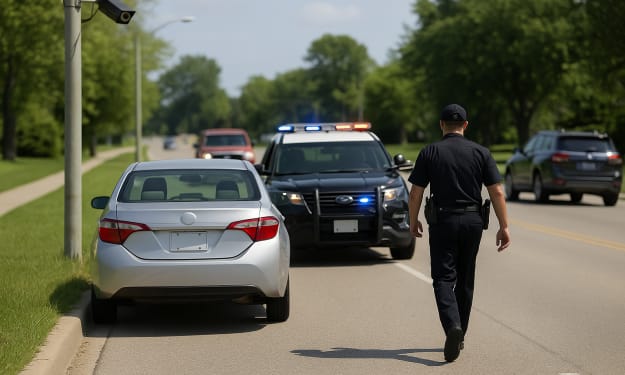
If you read my license plate article, you know plates are not dossiers. They are keys that open records. The question drivers actually want answered is simpler and more uncomfortable: who gets stopped, and why did that officer pick their car. The honest answer lives where law, discretion, and technology meet. It is not conspiracy. It is a system with plenty of legal cover and even more room for human habit.
By Dr. Mozelle Martin3 months ago in Criminal
Your Dog Is Not Truck Cargo
In much of the country, dogs standing loose in the back of a pickup have been treated as part of the scenery for decades. People point at it, smile, say the dog “loves it” and keep driving. The scene looks normal because the community has rehearsed it for years. From a forensic and trauma standpoint, it is anything but normal. It is a low-speed, high-frequency mechanism of serious injury and death that we keep pretending is harmless.
By Dr. Mozelle Martin3 months ago in Petlife
The False Safety of FDIC Insurance
I was 17 when I first noticed the gap between what banking customers believe and what a financial institution can actually promise. It was 1981. I had a summer job in a regional bank that felt serious and orderly. The brochures around the lobby promised safety through a familiar phrase: “the security of FDIC insurance.” Customers repeated that line when they opened accounts. They treated it as a guarantee. Inside the employee lounge, the conversations carried a different tone. FDIC insurance was protection with limits, shaped by statutes, not a full shield.
By Dr. Mozelle Martin3 months ago in Trader
The Identifiable Victim Effect:
Most people think their compassion scales with the size of a tragedy. In practice, the opposite shows up again and again. One injured dog will pull more donations than a barn full of starving animals. One missing child will draw more public outrage than a report about hundreds of children living in the same conditions.
By Dr. Mozelle Martin3 months ago in Humans
Why Yellowstone Hits Me Wrong
I have spent most of my adult life inside work that does not leave much room for shock. Forensics, behavioral analysis, trauma therapy, law-enforcement training, criminal psychology, and animal-cruelty investigations expose you to the kind of decisions people make when they believe they are cornered, justified, or invisible. You see what violence looks like without lighting or sound design. You also learn that real danger does not need theatrics. It announces itself in quieter ways. That background shapes how I respond to media. It also explains why I cannot sit through “Yellowstone,” even though many people assume I would be the perfect audience for it.
By Dr. Mozelle Martin3 months ago in Critique
Why Dogs Target Certain Cars
Dogs have a way of noticing things humans have conditioned themselves to overlook. People hear an engine and register transportation. A dog hears the same engine and registers information. Not a brand, not a make or model, but a sensory fingerprint that gets filed in the oldest part of the nervous system. The part that never stops scanning, never clocks out, and never cares that humans prefer to interpret the world through language instead of instinct. When a dog barks at one specific car or truck yet ignores the rest of the traffic, the dog isn’t malfunctioning. The dog is retrieving a stored pattern and responding to it with the same precision it uses when assessing footsteps, body weight shifts, or the emotional temperature of a room.
By Dr. Mozelle Martin3 months ago in Petlife
The Winter Creature People Misjudge
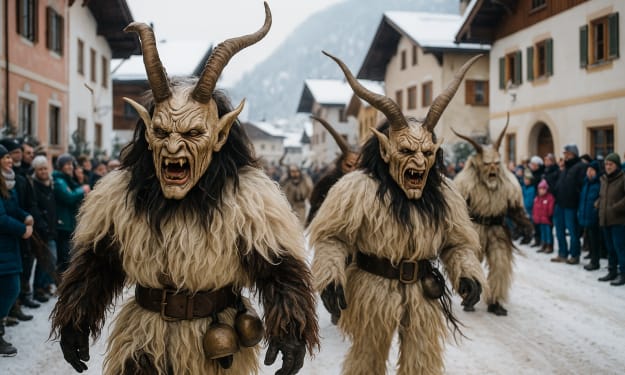
There is a predictable pattern that shows up whenever old cultural traditions resurface in modern conversation. If the costumes are loud, or the symbols unfamiliar, someone will insist it carries a demonic core. The Alpine Krampuslauf festival is a perfect example of this kind of misplaced certainty.
By Dr. Mozelle Martin3 months ago in History
When Shelter Dogs Choose You
If you watch this video, you will noticed that it's likely AI. The lighting is too perfect, the timing too cinematic. It does not feel like a normal shelter afternoon. The scenario, however, is real. It has happened in kennels and adoption rooms for years. It just does not trend very often.
By Dr. Mozelle Martin3 months ago in Petlife
My Senior Dog Who Came Back
Zeus will be 12 years old in two weeks, a large American Pitbull Staffordshire Terrier ("pit mix") with the kind of gentle loyalty that caused me to underestimate his pain for far too long. For 9 months, he was quietly falling apart. The changes crept in so slowly that each one looked like simple aging, and the pattern only started to make sense when viewed in hindsight.
By Dr. Mozelle Martin3 months ago in Petlife