Ruth Elizabeth Stiff
Bio
History and knowledge, especially about the Earth, are my passions. I enjoy putting my thoughts to paper and I always try to encourage self-motivation and love for life. LIVE AND LOVE LIFE!
Stories (958)
Filter by community
Victorian Prisons
The truth about Victorian prisons was that to many (especially those of the poorer classes), life in prison was better than life in their own homes. Many ‘broke the law’ deliberately to go back into prison, for a roof over their heads and ‘decent food’. Even those in the Workhouses did this — because prison was better than the Workhouse!
By Ruth Elizabeth Stiff3 years ago in Criminal
Street Life in Victorian London
Six years after Charles Dickens died (1876), the streets of London were ‘recorded’ by Adolphe Smith, who was a journalist, and John Thomson, who was a photographer. The result shocked the middle classes when they read the book “Street Life of London”. Luckily for us today, this book is still available. To us this is history but when the book was first published in 1876 — it really was how people lived every day of their lives. The book was firstly put into articles which were full of facts and which the black and white photographs only added to. The book is regarded as “a key work in the history of documentary photography”.
By Ruth Elizabeth Stiff4 years ago in FYI
Today's Lesson Is The Housekeeper
They belonged in another time period and were at the top of their careers. Most learnt their trade by ‘working up the ladder’. Very few of the upper-class, who lived in the magnificent “Houses” and who had an army of domestic servants, could manage without them = the Butler and the Housekeeper.
By Ruth Elizabeth Stiff4 years ago in FYI
Today's Lesson Is The Tudor Kings And Queens
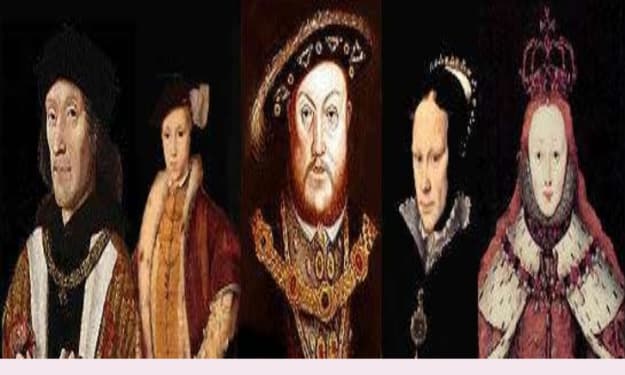
The years 1485 to 1603 are called “The Tudor Era”. This is because the House of Tudor ruled England England and Wales at this time. According to the historian John Guy (1988): “England was economically healthier, more expansive, and more optimistic under the Tudors” than at any time since the Roman Occupation.
By Ruth Elizabeth Stiff4 years ago in FYI
The Fashion Of Elizabeth I
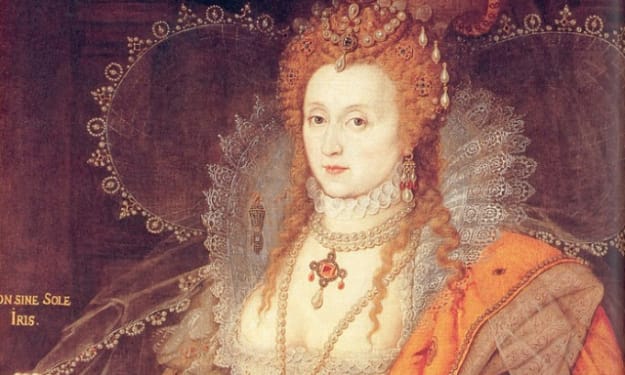
When she was a child, after her mother had been beheaded and the little Princess declared illegitimate, Lady Margaret Bryan (who was looking after Elizabeth) wrote to Thomas Cromwell: “Would the King deign to send his daughter new clothes? She had outgrown everything in the closets. She has neither gown nor kirtle nor petticoat nor linen for smock”. When Elizabeth I was Queen, she had over 2,000 gowns in her Royal Wardrobe. It is no wonder that “Fashion” became important to “Good Queen Bess”!
By Ruth Elizabeth Stiff4 years ago in FYI
Georgian fashion
The Georgian Era had one of the most beautiful “fashions” of any Era, but it was also a very ‘impractical’ fashion. For the rich, upper-classes, the materials were lavish and the colours were ‘rich’, but women could only (just about) sit down in these exquisite dresses. This Century was known for its “Opulence”, with elaborate wigs, rich embroidery and (very) full skirts. The rich showed off their wealth through their clothes, and this applied to men as much as it did to women. The working-classes wore similar clothes, but they were not so rich in colour or material, and they owned fewer clothes, wearing more ‘practical’ clothes for working in.
By Ruth Elizabeth Stiff4 years ago in FYI
The Original Gentleman Jack. Top Story - July 2022.
The series “Gentleman Jack” is actually based on a true story. The drama is based in 1832 in West Yorkshire, England, (the cradle of the evolving Industrial Revolution). It is here that landowner Anne Lister is determined to save her ancestral home, Shibden Hall. Bucking against society’s expectations, “Gentleman Jack” refused to marry, dressed in black from head to toe and ‘charmed’ polite society. She was called “Gentleman” because she wore a top hat (as well as being in business), and”Jack” because — it was the Victorian nickname for lesbian.
By Ruth Elizabeth Stiff4 years ago in FYI
Today's Lesson is Life in the Tudor Era
Good morning, today we will be looking at life in the Tudor Era. The Tudor Dynasty was in power from 1485 Henry VII) to 1603 (Elizabeth I) and it followed the Wars of the Roses. The National Religion was ‘changed’ and some of the literature is still read today, hundreds of years later. The diaries of those who could read and write have been handed down to us in today’s Century, so that we can learn about the daily lives of the Tudors.
By Ruth Elizabeth Stiff4 years ago in FYI
Do You Believe In Dragons?
If, like me, you are obsessed with Game of Thrones, then dragons play a large part in your life. From the first time I saw Daenerys with her 3 dragon eggs (a wedding gift when she married Khal Drogo), to when we see the dragons fully grown, I have almost dreamt and ‘lived’ “Dragons”. Drogon is the black and red dragon and the one Deanerys rides. Rhaegal is green and bronze and he was named after her eldest brother. Viserion is cream and gold, and was named after her other brother, who met his death at the hands of Khal Drogo. The CGI in Game of Thrones just made these 3 dragons “come alive” and are a real spectacle to behold!
By Ruth Elizabeth Stiff4 years ago in Fiction
The Diary of Mishelle Gold
WOW — the fashion show went really well and we have so many bookings, which will take us through to next Summer!!! Julie made me proud, she really surprised me, she has definitely been doing her homework. All in all, the show was a mega success and I am so pleased. No more worrying — the Fashion House is looking after Itself.
By Ruth Elizabeth Stiff4 years ago in Fiction
What Do You Dream?
Do you believe that dreams mean anything? We all dream, even if we don’t remember our dreams, it is a normal part of our lives. We drift off to sleep and, in our minds, we go into another world — hopefully a nice world. I’ve had many dreams of my mum (she died of breast cancer), and I feel indescribable joy — we are both smiling, happy, cuddling — and it seems so real! I like to ‘believe’ that mum visits me from the other side. We were close when she was alive, more like a sister than a mum, and yes, I do miss her even after 20 years!
By Ruth Elizabeth Stiff4 years ago in Humans