Shoaib Afridi
Stories (45)
Filter by community
Guard Your Battery, Lose Your Humanity
I used to think my phone was my lifeline. In Amsterdam, where rain slicks the cobblestones and bikes fly by like they're late for something important, my screen was the one constant: notifications buzzing through tram rides, endless scrolls while waiting for koffie at a brown café, quick checks at red lights on the Keizersgracht. It felt safe. Controlled. Connected. Until it didn't. By early 2026, I was exhausted in a way sleep couldn't fix. My anxiety had crept up quietly — heart racing in crowds, that low hum of dread when the battery dipped below 20%. I blamed the city, the weather, work. But deep down, I knew the truth: I'd outsourced my presence to a rectangle in my pocket. I was here, but never really here. So on a drizzly February morning, I made a rule that felt ridiculous: no phone in public for 30 days. Pocket, bag, or leave it at home — but never in hand when outside my apartment. If I needed directions or music, tough. The goal wasn't total detox; it was forcing myself to look up, be bored, and — if the moment felt right — talk to someone. One stranger conversation a day if it happened naturally. No forcing, just availability. What broke first was the fidgeting. Days 1–10: The Withdrawal Hits Hard The first week was brutal. At the Albert Cuyp Market, my hand kept reaching for my pocket like a phantom limb. Without the screen to hide behind, every line felt exposed. I noticed things I'd ignored for years: the way an old man feeds pigeons near the Nieuwmarkt, the precise rhythm of bike bells, the smell of fresh stroopwafels mixing with canal water. I also noticed people. Everyone else was doing what I'd been doing — heads down, thumbs moving. On the 2 tram toward Centraal, a carriage full of silent faces lit by blue light. No one spoke. No one looked up. It hit me: we're all in our own little bubbles, floating through the same beautiful city. By day 5, boredom turned into restlessness. Waiting for coffee at a spot on the Prinsengracht, I had nothing to do but watch. A woman in a red coat struggled with her umbrella in the wind. Our eyes met. She laughed first. "This weather," she said. I replied, "It builds character, right?" We chatted for two minutes about nothing — the rain, the best waterproof jackets. It felt awkward, electric, alive. That tiny exchange cracked something open. My anxiety didn't vanish, but it lost its grip for a moment. Days 11–20: The City Starts Talking Back Halfway through, the experiment shifted from punishment to curiosity.
By Shoaib Afridiabout 3 hours ago in Fiction
30 Days Talking to Strangers in Amsterdam — Day 17 Ended My Panic Attacks
The Stranger Who Answered Back How talking to one stranger every single day for 30 days in Amsterdam quietly ended my panic attacks I used to think Amsterdam was the loneliest city on earth. You know the feeling — you’re surrounded by 900,000 people, bikes whizzing past, trams dinging, canal water lapping at your feet… and still feel completely invisible. My panic attacks had gotten so bad by January 2026 that I’d started avoiding the tram altogether. Heart racing at red lights, palms sweating in the rain, convinced everyone could see I was one deep breath away from falling apart. So on February 1st I made a stupid promise to myself: talk to one stranger every single day for 30 days. No small talk rules. No “nice weather” cop-outs. One real sentence. One genuine question. Nothing more. I had no idea that promise would save my life. The Awkward First Ten Days Day 1 was humiliating. I stood at the Albert Cuyp Market like a statue until a woman in a bright yellow raincoat picked up the last bunch of tulips. “Those are beautiful,” I blurted. She smiled, said “They’re for my mother’s grave,” and walked away. I wanted to disappear into the cobblestones. Day 3: A guy locking his bike near the Rijksmuseum. I asked how his day was going. He answered in perfect English, “Tired, man. My wife left yesterday.” I froze. He laughed at my face and said, “Relax, it’s been two years. You’re the first person who’s asked in months.” By day 8 I was getting braver. A barista at my usual spot on De Pijp told me her dream of opening a cat café in Portugal. On day 10 an old lady on the 12 tram scolded me for not offering my seat — then spent the next six stops telling me about her husband who died in 1998 and how she still sets the table for two. Every conversation felt like jumping off a cliff. My chest still tightened. My voice still shook. But something tiny was shifting. I was no longer invisible to the city — and the city was no longer invisible to me. The Day Everything Changed Day 17. A grey Thursday. I was exhausted, rain pouring sideways, and seriously considering quitting the whole stupid experiment. I ducked into Vondelpark under a big oak tree near the rose garden. There he was — sitting on a wet bench in a wool coat that had seen better decades. Silver hair, bright blue eyes, holding a small thermos like it was the only warm thing left in the world. I sat. Heart hammering. Then I did what I’d been doing for seventeen days straight. “Excuse me… do you mind if I ask what you’re drinking?” He looked at me for a long moment, like he was deciding whether I was worth the words. Then he smiled — the kind of smile that reaches the eyes first. “Turkish coffee,” he said in a thick Dutch accent. “My wife taught me. She died eleven years ago today.” I swallowed. “I’m so sorry.” He waved it away gently. “Don’t be. She would have liked you. You’re the first person in months who’s looked me in the eye instead of at their phone.” We talked for forty-three minutes. His name was Hendrik. He’d been a ship captain on the IJ for thirty-seven years. Lost his wife to cancer. Raised two daughters who now live in Australia. And then he said the sentence that cracked my entire life open: “You know what I learned after she was gone? Panic is just the mind trying to live tomorrow today. The only thing you can control is this moment — and whether you’re brave enough to share it with someone.” He tapped my knee. “You’re scared right now. I can see it in your shoulders. But you still sat down and asked an old man about his coffee. That’s how you win against the fear, jongen. One small yes at a time.” I cried on the tram home. Not pretty tears — ugly, snotty, shoulder-shaking ones. For the first time in two years, the tightness in my chest wasn’t panic. It was relief. The Last Thirteen Days & What Actually Changed The rest of the month felt different. I stopped forcing conversations and started enjoying them. A Syrian refugee who bakes the best pistachio baklava near Nieuwmarkt. A teenage girl practicing guitar by the canals who let me record her song. A stressed-out delivery cyclist who ended up inviting me for a beer after his shift. My panic attacks didn’t vanish overnight — but they lost their power. When the racing heart came, I heard Hendrik’s voice: This moment. Share it. So I would turn to whoever was nearest and ask one small question. Every single time, the fear shrank. By day 30 I wasn’t the same person who started. I smiled at strangers without thinking. I slept through the night. I even took the tram during rush hour without counting exits. What I Wish I’d Known Sooner Talking to strangers didn’t fix me. It reminded me I was never broken — just disconnected. In a city as beautiful and busy as Amsterdam, it’s ridiculously easy to feel alone. We all walk around wearing invisible headphones. But when you take them off for thirty days and actually see people, something magical happens. You realise every single person is carrying their own quiet storm — and most of them are desperate for someone to notice. Hendrik was right. The panic wasn’t in my chest. It was in the story that I had to do life alone. Your Turn I’m not saying you have to talk to a stranger every day for a month (though… why not?). Start smaller. Next time you’re waiting for coffee, on the tram, or sitting on a bench in Vondelpark — look up. Smile. Ask one real question. You might just meet the stranger who answers back. And who knows? They might be carrying exactly the words you’ve been waiting your whole life to hear.
By Shoaib Afridiabout 14 hours ago in Motivation
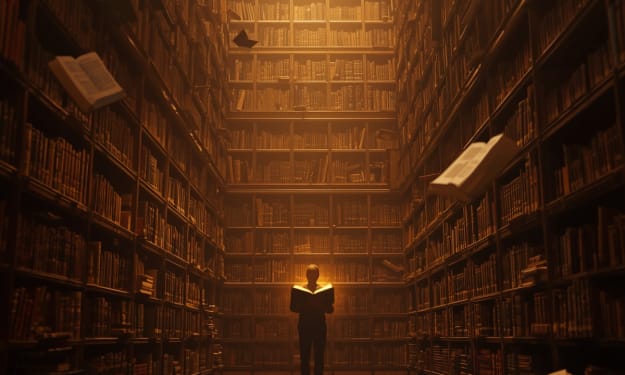
The Library of Lost Names
I keep a card catalog in my head — the names I can’t quite shelve. Some belong to the living, some to the long-gone, and some to those who only left in silence. Whenever I close my eyes, I can almost hear the soft rustle of pages turning — like whispers between memories trying to remember themselves.
By Shoaib Afridi4 months ago in Motivation
The Golden Quiet: How Autumn Teaches Us to Let Go
There comes a moment in the year when the world seems to take a slow, graceful breath — when summer’s laughter softens into a quiet sigh, and Autumn steps onto the stage like an old poet with a brush dipped in gold. The air itself changes — not just cooler, but gentler, scented with the faint sweetness of ripening apples and the earthy perfume of fallen leaves. It’s as if nature, weary from her summer dance, has decided to wrap herself in soft amber light and rest for a while.
By Shoaib Afridi5 months ago in Earth
The Things We Lose While Chasing What We Want
We are all running — some toward a dream, some away from the past, and some simply because standing still feels dangerous. The world applauds those who never stop, who chase their goals with unbroken fire. We post about the hustle, wear our exhaustion like armor, and call it “dedication.” But rarely do we pause to ask: What have we traded in return?
By Shoaib Afridi5 months ago in Motivation
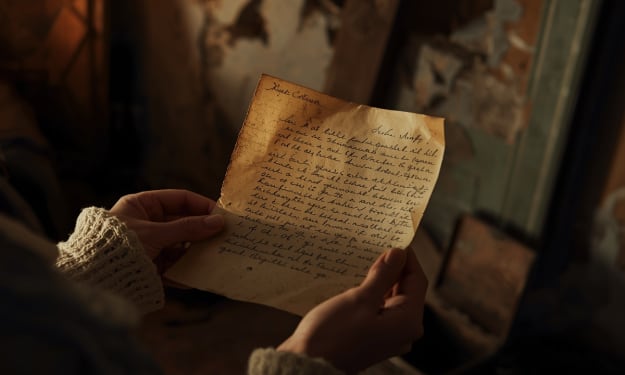
She Found a 100-Year-Old Letter in Her Wall—The Secret Inside Changed Everything”
When Sarah Thompson decided to renovate her century-old Victorian home, she expected to find dusty wires, creaky floorboards, and maybe a few forgotten coins. What she didn’t expect was a hidden letter that had been sealed away for more than 100 years—one that would change the way she looked at her home forever.
By Shoaib Afridi6 months ago in History
The Streetlight Problem
The first night I noticed it, I thought it was a man waiting for the bus — a vertical smudge of dark where the street swallowed the sidewalk. The streetlight poured its amber halo, and everything I loved about the city shrank into that ring: cracked concrete, a rusted bench, humming refrigerators. Outside the light, the world went flat and hungry, and the thing watched from the fringe like someone peeking through a curtain.
By Shoaib Afridi6 months ago in Horror
What I Learned From Failing (And How It Helped Me Succeed Later)
Introduction: The Fear of Failure Let’s be honest—no one likes failing. It stings, it bruises your confidence, and it makes you question whether you’re capable at all. For years, I used to avoid failure like the plague. I would stick to what felt “safe” and shy away from risks, because the thought of messing up terrified me. But ironically, it was failure itself that gave me some of the biggest lessons in growth, resilience, and eventually, success.
By Shoaib Afridi7 months ago in Motivation
Through the Digital Eye: Seeing the Universe as Code
Introduction: The Cosmic Eye Opens Imagine standing in the middle of a galaxy, stars swirling in spirals of light — but instead of dust and gas, the fabric of space is woven from circuitry and luminous data streams. At the heart of it all, a vast eye opens, gazing back. Is it the universe itself observing us, or are we witnessing reality through a new kind of lens: the digital eye?
By Shoaib Afridi7 months ago in Futurism
Why Your Anxiety Peaks at Night — and How to Break the Cycle
The Midnight Mind Trap It’s 2:14 a.m. The house is dark, your phone is charging, and you should be deep in a dream about a Tuscan villa and bottomless pasta bowls. Instead, you’re replaying a conversation from three weeks ago, questioning your career path, and remembering that embarrassing thing you did in eighth grade.
By Shoaib Afridi7 months ago in Psyche
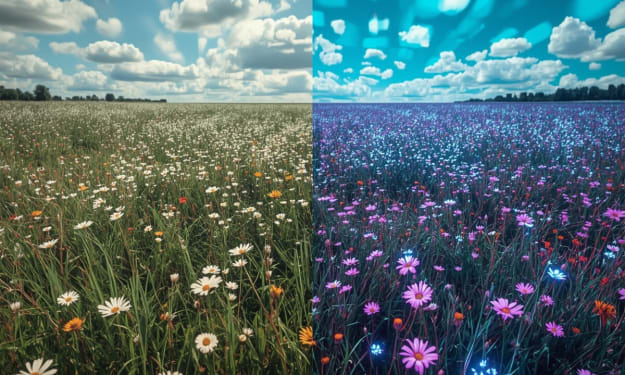
The Secret Colors You Can’t See (But Some Animals Can)
We like to think we see the world as it truly is—vivid, detailed, complete. But the truth is, our eyes only give us a small slice of reality. Hidden all around us are colors we’ll never experience without technology. For many animals, though, these “invisible” colors are part of daily life.
By Shoaib Afridi7 months ago in Earth
Woman Mistakenly Receives $2.3 Million Bank Transfer — Goes on Shopping Spree Before Arrest
In a story that sounds like the plot of a dark comedy, 34-year-old Rachel Porter of Tampa, Florida, woke up one morning to find her bank balance had skyrocketed by more than $2.3 million overnight.
By Shoaib Afridi7 months ago in Criminal