BookClub logo

The Rise of Safety: The Story of Alexander Miles and the Automatic Elevator Door

The Rise of Safety
By TREYTON SCOTTPublished 2 days ago 8 min read
Alexander miles

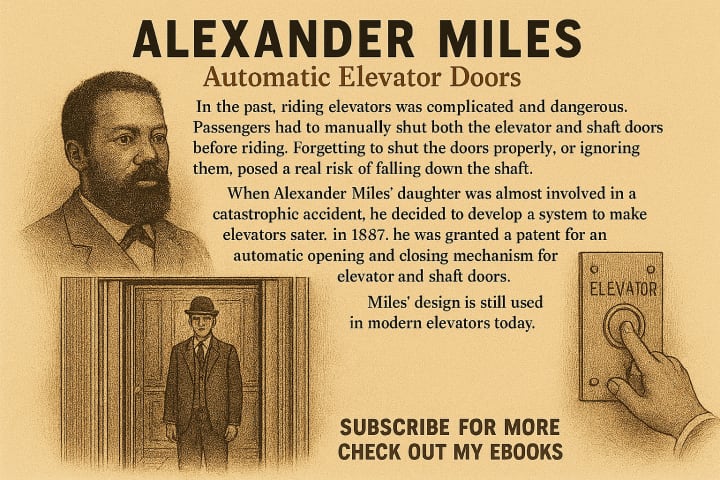
In the past, riding elevators was complicated and dangerous

The Rise of Safety: The Rise of Safety: The Story of and the Automatic Elevator Door

In the late 1800s, America was a place of transformation. Skyscrapers began piercing the skyline, industry was booming, and cities grew upward just as quickly as they grew outward. With every new building that stretched toward the clouds came the need for a reliable way to transport people from one floor to another. Elevators—still in their early stages of development—became a symbol of progress, convenience, and economic growth. Yet behind their usefulness lurked a dangerous flaw, one that too many people discovered only after a tragic accident.

In those early days, riding an elevator required more than simply stepping inside and pushing a button. Passengers had to manually close the elevator door behind them—and then close the shaft door, which opened into the vertical tunnel the elevator traveled through. These doors were separate, unconnected, and dangerously easy to forget. If the shaft door was left open, the result could be catastrophic. People could step into what they thought was a waiting elevator, only to fall into the open shaft.

This danger was not theoretical. It was real, constant, and deadly.

And it was this very danger that set one man on a mission to protect not only his family, but society as a whole.

Passengers had to manually shut both the elevator and shaft doors before riding.

A Father’s Fear Becomes a Turning Point

Alexander Miles was a businessman, inventor, and innovator living in Duluth, Minnesota. He had already established himself as a thinker who refused to accept the status quo. But it wasn’t until a personal scare that he discovered his most influential calling.

One day, as Miles and his young daughter were using an elevator in a multi‑story building, the doors failed to close fully. His daughter—curious, playful, and unaware of the deadly risk—wandered dangerously close to the open shaft. Miles reacted quickly, pulling her back from the brink. In that single moment, the elevator’s flaw became painfully, frighteningly clear.

Miles realized that the system needed more than warnings. It needed a redesign. It needed automation.

He began studying elevator mechanics, examining the frames, doors, and the manual routines required for each trip. He noted how easily a mistake could occur. Human error was at the center of every accident. People simply forgot to close doors, or—worse—failed to notice open shafts.

Miles knew that true safety would only come when elevators could protect passengers automatically.

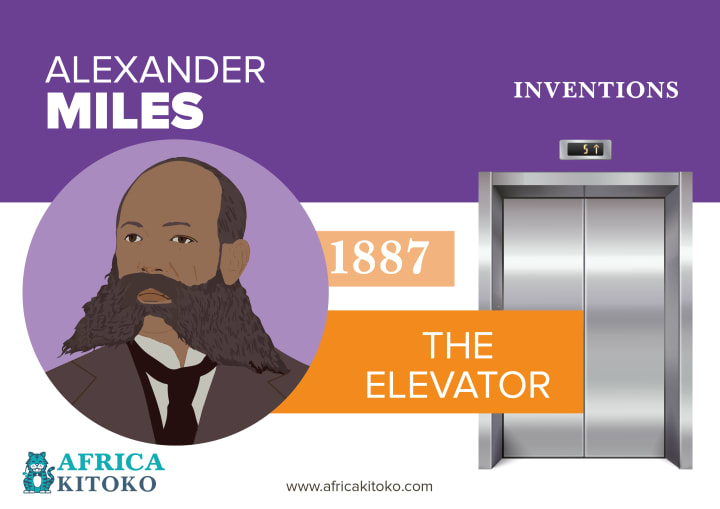
he decided to develop a system to make elevators safer.

Inventing a Safer Future

Driven by the memory of his daughter’s narrow escape, Miles started developing a mechanism that would revolutionize elevator design. His idea was built on a deceptively simple concept:

If the elevator could open and close its own doors—both the car door and the shaft door—accidents would drastically decrease.

Miles envisioned a system in which the doors moved in harmony. The elevator would rise or lower, and as it aligned with each floor, a series of levers, rollers, and flexible components would activate. These parts would cause both sets of doors—the elevator car door and the landing door—to open together. When the elevator moved away, the system would automatically close the doors, sealing off the shaft and removing human error from the equation entirely.

In 1887, he was granted a patent for an automatic opening

By 1887, the invention had taken shape. With the precision of an engineer and the determination of a protective parent, Miles completed his design. That same year, he secured a U.S. patent for his automatic opening and closing mechanism for elevator doors.

This was not just an improvement. It was a breakthrough.

Miles’ innovation transformed elevators from one of the riskiest forms of transportation to one of the safest. Over time, his mechanism became the standard on elevators across the country and eventually around the world. Even today, modern elevator systems still rely on the foundational principles of his invention.

Miles’ design is still used in modern elevators today

A Legacy Built on Ingenuity and Courage

Alexander Miles’ contribution stands as one of the most impactful safety innovations of the nineteenth century. Elevators became not just convenient, but secure. Buildings grew taller, cities expanded upward, and the fear that once accompanied elevator use slowly faded away.

His story also reflects something deeper about innovation: the greatest advances often come from personal experiences—moments that shake us, moments that force us to rethink the dangers we accept in everyday life. For Miles, the thought of losing his daughter lit a fire in him that would go on to protect millions of people long after his lifetime.

His determination highlights a powerful truth: people with vision change the world not because they expect recognition, but because they refuse to accept preventable harm.

Though the world of 1887 is long gone, the system he designed remains alive in every elevator passengers step into today. Every time doors slide open smoothly and close with precise coordination, the legacy of Alexander Miles lives on.

In the 1800s, elevator doors were often left open to chance

A Story of Progress and Protection

In many ways, the story of Alexander Miles mirrors the story of progress itself. Humanity reaches upward—building higher, dreaming bigger. But with ambition comes responsibility. Someone must ensure that progress does not put people in harm’s way.

Miles answered that call.

His invention allowed architects to envision taller buildings, allowed businesses to expand, allowed families to move freely in multi‑story structures without fear. He created a future where convenience didn’t need to sacrifice safety.

And his work continues to remind us that one person’s idea can protect countless others.

The last person to use those doors might remember to close them

Your Invitation

If stories like this inspire you—stories of inventors, innovators, and everyday heroes who changed the world—make sure to subscribe for more.

And be sure to check out my ebooks, where you’ll find powerful narratives, deeper explorations, and uplifting content designed to inform, inspire, and energize your journey.

Your support helps these stories continue.

If you’d like a matching image‑story for another inventor, more illustrations, or if you want these stories formatted into a polished ebook or video script, just tell me!

In the late 1800s, America was a place of transformation. Skyscrapers began piercing the skyline, industry was booming, and cities grew upward just as quickly as they grew outward. With every new building that stretched toward the clouds came the need for a reliable way to transport people from one floor to another. Elevators—still in their early stages of development—became a symbol of progress, convenience, and economic growth. Yet behind their usefulness lurked a dangerous flaw, one that too many people discovered only after a tragic accident.

In those early days, riding an elevator required more than simply stepping inside and pushing a button. Passengers had to manually close the elevator door behind them—and then close the shaft door, which opened into the vertical tunnel the elevator traveled through. These doors were separate, unconnected, and dangerously easy to forget. If the shaft door was left open, the result could be catastrophic. People could step into what they thought was a waiting elevator, only to fall into the open shaft.

This danger was not theoretical. It was real, constant, and deadly.

And it was this very danger that set one man on a mission to protect not only his family, but society as a whole.

day in the incredible life of the richest black man in the Midwest, Alexander Miles.

A Father’s Fear Becomes a Turning Point

Alexander Miles was a businessman, inventor, and innovator living in Duluth, Minnesota. He had already established himself as a thinker who refused to accept the status quo. But it wasn’t until a personal scare that he discovered his most influential calling.

One day, as Miles and his young daughter were using an elevator in a multi‑story building, the doors failed to close fully. His daughter—curious, playful, and unaware of the deadly risk—wandered dangerously close to the open shaft. Miles reacted quickly, pulling her back from the brink. In that single moment, the elevator’s flaw became painfully, frighteningly clear.

Miles realized that the system needed more than warnings. It needed a redesign. It needed automation.

He began studying elevator mechanics, examining the frames, doors, and the manual routines required for each trip. He noted how easily a mistake could occur. Human error was at the center of every accident. People simply forgot to close doors, or—worse—failed to notice open shafts.

Miles knew that true safety would only come when elevators could protect passengers automatically.
Minnesota Historia: Alexander Miles, Elevator Action Man

Inventing a Safer Future

Driven by the memory of his daughter’s narrow escape, Miles started developing a mechanism that would revolutionize elevator design. His idea was built on a deceptively simple concept:

If the elevator could open and close its own doors—both the car door and the shaft door—accidents would drastically decrease.

Miles envisioned a system in which the doors moved in harmony. The elevator would rise or lower, and as it aligned with each floor, a series of levers, rollers, and flexible components would activate. These parts would cause both sets of doors—the elevator car door and the landing door—to open together. When the elevator moved away, the system would automatically close the doors, sealing off the shaft and removing human error from the equation entirely.

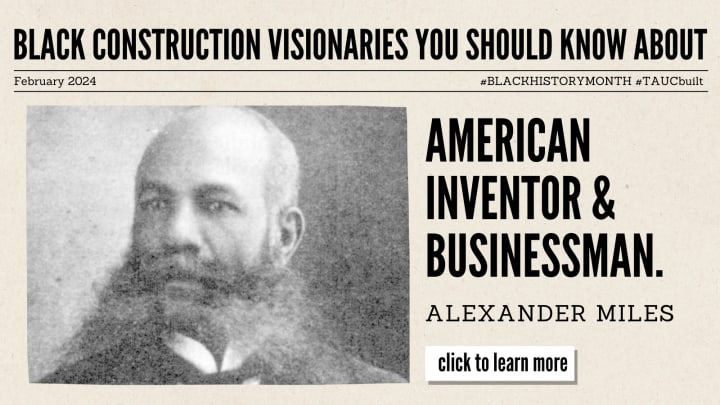
Alexander Miles (1838 - 1918)

By 1887, the invention had taken shape. With the precision of an engineer and the determination of a protective parent, Miles completed his design. That same year, he secured a U.S. patent for his automatic opening and closing mechanism for elevator doors.

This was not just an improvement. It was a breakthrough.
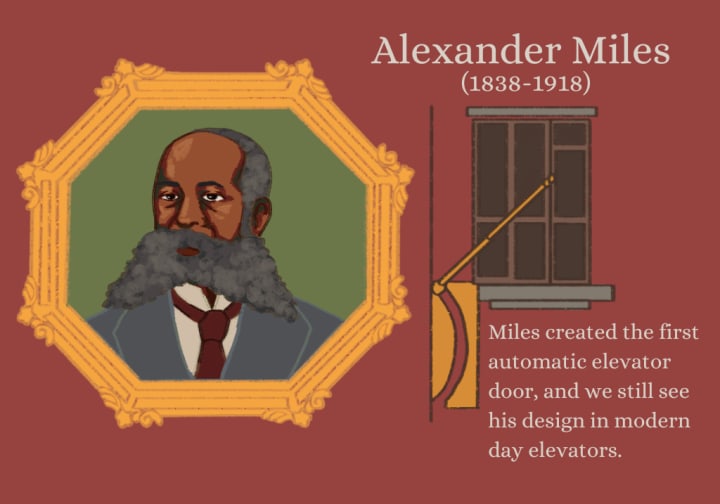
Miles’ innovation transformed elevators from one of the riskiest forms of transportation to one of the safest. Over time, his mechanism became the standard on elevators across the country and eventually around the world. Even today, modern elevator systems still rely on the foundational principles of his invention.

Born 18 May 1838 in Ohio, United States

A Legacy Built on Ingenuity and Courage
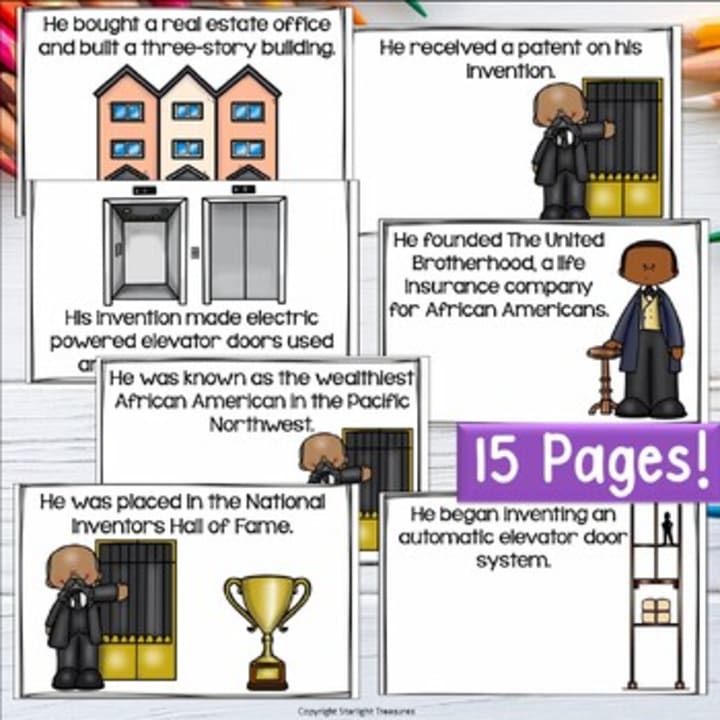
Alexander Miles’ contribution stands as one of the most impactful safety innovations of the nineteenth century. Elevators became not just convenient, but secure. Buildings grew taller, cities expanded upward, and the fear that once accompanied elevator use slowly faded away.

His story also reflects something deeper about innovation: the greatest advances often come from personal experiences—moments that shake us, moments that force us to rethink the dangers we accept in everyday life. For Miles, the thought of losing his daughter lit a fire in him that would go on to protect millions of people long after his lifetime.

His determination highlights a powerful truth: people with vision change the world not because they expect recognition, but because they refuse to accept preventable harm.

Though the world of 1887 is long gone, the system he designed remains alive in every elevator passengers step into today. Every time doors slide open smoothly and close with precise coordination, the legacy of Alexander Miles lives on.

Miles may have resided in the nearby town of Chillicothe, Ohio

A Story of Progress and Protection

In many ways, the story of Alexander Miles mirrors the story of progress itself. Humanity reaches upward—building higher, dreaming bigger. But with ambition comes responsibility. Someone must ensure that progress does not put people in harm’s way.

Miles answered that call.

His invention allowed architects to envision taller buildings, allowed businesses to expand, allowed families to move freely in multi‑story structures without fear. He created a future where convenience didn’t need to sacrifice safety.

And his work continues to remind us that one person’s idea can protect countless others.

CLICK HERE FOR MORE INFORMATION

Your Invitation

If stories like this inspire you—stories of inventors, innovators, and everyday heroes who changed the world—make sure to subscribe for more.

And be sure to check out my ebooks, where you’ll find powerful narratives, deeper explorations, and uplifting content designed to inform, inspire, and energize your journey.

Your support helps these stories continue.

AuthorBook of the DayBook of the MonthBook of the WeekBook of the YearVocal Book ClubDiscussion

About the Creator

TREYTON SCOTT

Top 101 Black Inventors & African American’s Best Invention Ideas that Changed The World. This post lists the top 101 black inventors and African Americans’ best invention ideas that changed the world. Despite racial prejudice.

Reader insights

Be the first to share your insights about this piece.

How does it work?

Add your insights

Comments

There are no comments for this story

Be the first to respond and start the conversation.

Sign in to comment

    Find us on social media

    Miscellaneous links

    • Explore
    • Contact
    • Privacy Policy
    • Terms of Use
    • Support

    © 2026 Creatd, Inc. All Rights Reserved.