
Dox Thrash (1896–1965)
The Carborundum Visionary
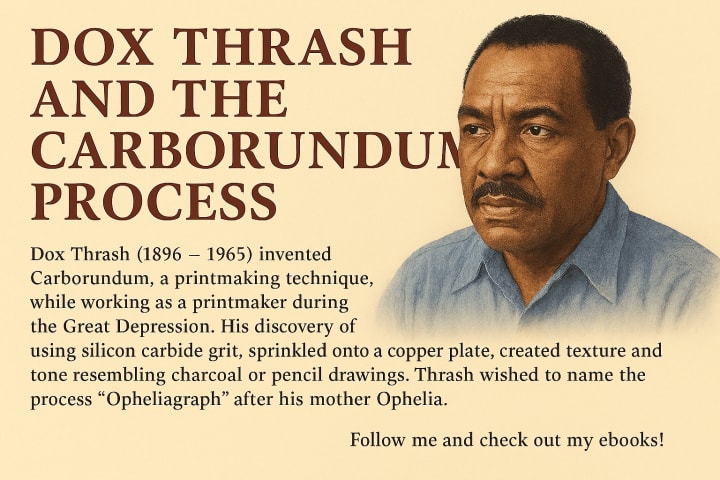
Dox Thrash was born in 1896 in the heart of rural Georgia, a place where creativity lived quietly in the corners of daily life. Long before he would become known for revolutionizing printmaking with the carborundum process, Thrash grew up surrounded by the textures and tones of the natural world—wood grain shimmering under sunlight, dusty roads blending into thick summer air, hand‑stitched quilts patterned with the stories of generations. These impressions would later fuel his artistic instincts, shaping a style that felt both grounded and luminous.
In his youth, artistic careers were rare and often discouraged, yet Thrash felt drawn to the expressive freedom that sketching and drawing gave him. He would capture the world around him: neighbors working in fields, families gathered on porches, the slow but vibrant rhythm of southern life. Even when he left home to join the U.S. Army during World War I, he carried that spark with him. The army exposed him to broader horizons—new cultures, new faces, new stories—and when he returned home, he knew he wanted to pursue art at a higher level.
He eventually enrolled at the Art Institute of Chicago, refining his skills through formal training. Chicago in the early 20th century was electric with creativity. Painters, sculptors, illustrators, and printmakers converged in studios and workshops, exchanging ideas in a city pulsing with cultural change. Thrash was particularly captivated by printmaking. There was something almost alchemical about taking a metal plate, treating its surface, and pressing it into paper to give birth to an image. Printmaking combined the precision of craftsmanship with the soul of artistry, and Thrash saw endless possibilities within it.
By the 1930s, the entire country was struggling under the weight of the Great Depression. Artists often suffered the most—yet paradoxically, this period became one of intense artistic production in America. The federal government’s Works Progress Administration (WPA) created the Federal Art Project, an initiative that provided support to artists by commissioning murals, prints, sculptures, and public works. Thrash joined the Philadelphia Fine Print Workshop, one of the most influential divisions of the WPA. It was here, surrounded by other creatives equally hungry for innovation, that Thrash’s most important contribution would emerge.

Thrash had always been fascinated with the subtle tones that could be achieved in printmaking—especially the velvety softness of charcoal and the delicate gradations of pencil. Traditional intaglio techniques such as aquatint and mezzotint allowed artists to create tonal ranges, but these processes were often time‑consuming, inconsistent, or technically restrictive. Thrash yearned for a method that could mimic the natural textures of his drawings while allowing for rich, expressive depth.
In 1937, while conducting experiments with copper plates, abrasives, and various chemical treatments, Thrash discovered something extraordinary. By sprinkling silicon carbide grit—commonly known as carborundum—onto a copper plate and working it into the surface, he could produce a tonal texture unlike anything seen before in printmaking. The tiny particles bit into the metal, creating a roughened surface that held ink beautifully. When printed, the result was a velvety, charcoal‑like texture that blended shadows and highlights with remarkable nuance.
This discovery marked the birth of the carborundum printmaking process. The process was deceptively simple yet incredibly powerful: A copper plate was coated with a thin adhesive. Carborundum grit was dusted or sprinkled over the surface. Once the adhesive dried, the plate was inked, and the roughened areas retained pigment. Printing the plate produced lush, textured tones reminiscent of hand‑drawn art.
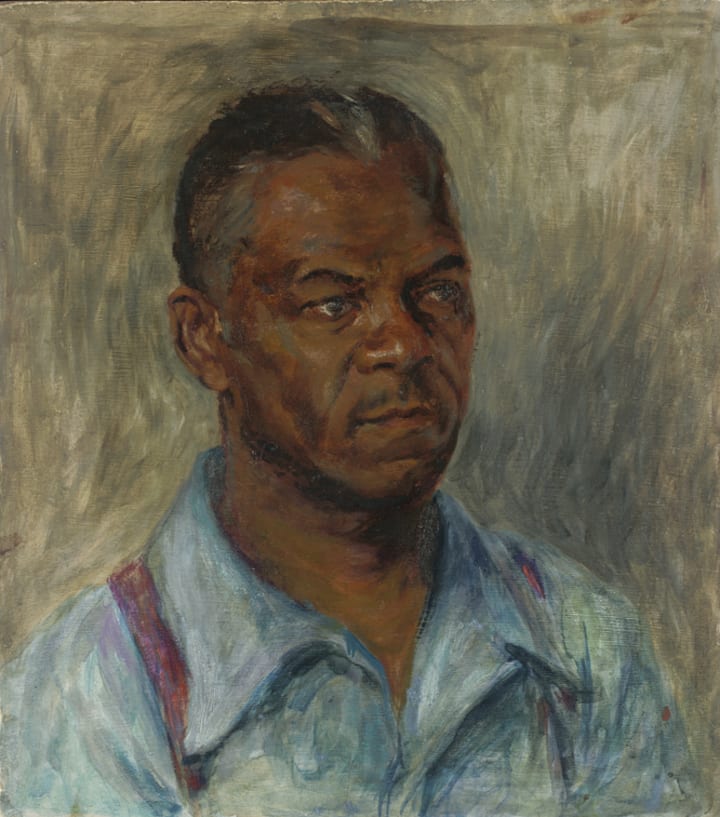
The method was so intuitive and expressive that it became an instant staple at the WPA workshop. Other artists began using it, each adding a personal touch. Soon, it spread far beyond Philadelphia. Printmakers across the country embraced the technique for its versatility, speed, and the unique aesthetic it offered.
Thrash, ever humble yet deeply proud of his work, even wanted to name the process “Opheliagraph” in honor of his mother, Ophelia. While the name did not ultimately stick, the sentiment behind it revealed something profound about Thrash’s character: his innovations were not born of a desire for fame, but of love, memory, and a personal connection to the people who shaped him. The carborundum technique was his way of giving something beautiful and lasting to the world—something imbued with the spirit of his heritage and the strength of his creativity.
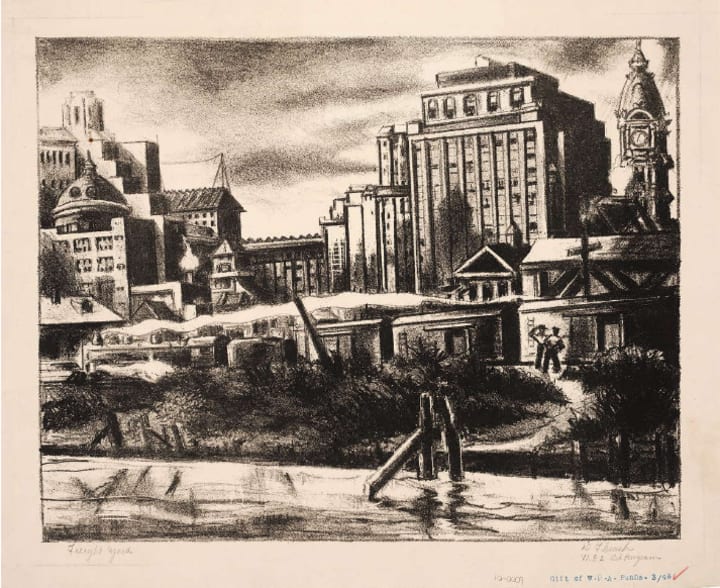
Outside the technical breakthrough, Thrash’s art reflected the lives, struggles, and triumphs of African Americans during the early 20th century. He portrayed everyday scenes with dignity and warmth: a woman warming her hands near a stove, a couple walking arm in arm down a city street, jazz musicians lost in melody. His works captured the rhythms of ordinary existence, yet elevated them into something profound. The softness of the carborundum tones, combined with his sensitive handling of subjects, created images that felt intimate and deeply human.
Thrash’s Philadelphia home became both a creative hub and a sanctuary for his community. Neighbors, students, and fellow artists would stop by to talk, learn, and collaborate. Thrash believed in uplifting others through art; he was a mentor, a guide, and an advocate for emerging talent. His legacy was not only his innovation, but also the countless individuals he inspired along the way.
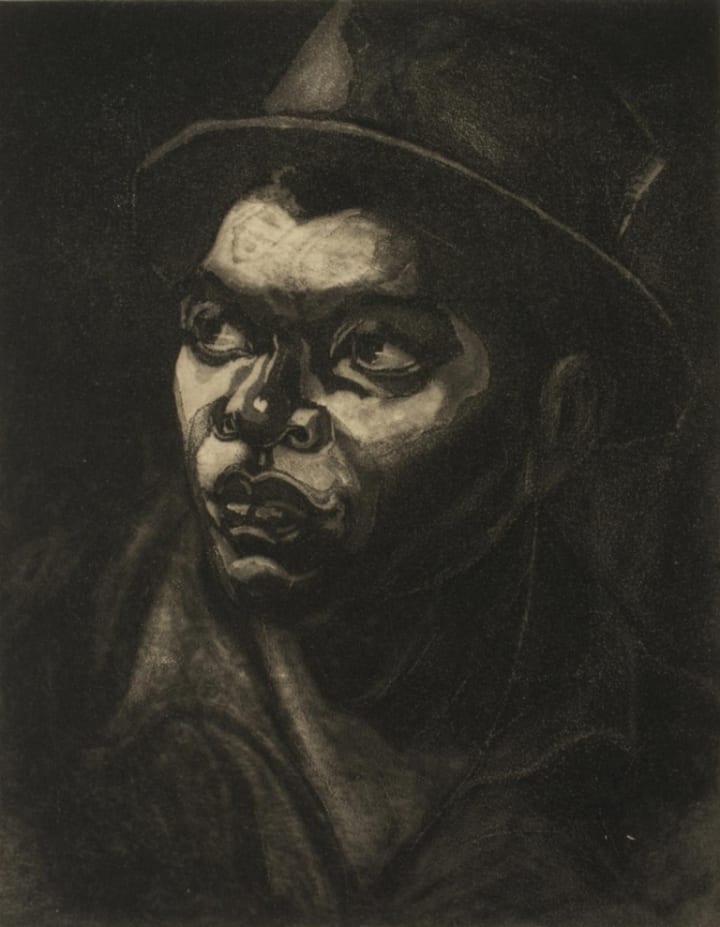
As he grew older, Thrash continued to experiment, evolve, and refine his craft. The art world was changing rapidly—new movements, new technologies, new styles—but Thrash remained committed to the integrity of printmaking. He saw beauty in the discipline, in the intimate relationship between artist, plate, ink, and paper. His prints were not merely images; they were expressions of life, resilience, and cultural identity.
Despite the challenges he faced throughout his lifetime—from economic hardship to racism in the art world—Thrash succeeded in leaving an imprint on history that continues to resonate. Museums and collectors today celebrate his prints for their technical ingenuity and emotional richness. The carborundum process, once an experimental idea in a WPA workshop, has become a standard method in printmaking studios around the world. Artists still rely on the technique for its expressive possibilities, often unaware that its invention began with Thrash’s hands and his relentless curiosity.
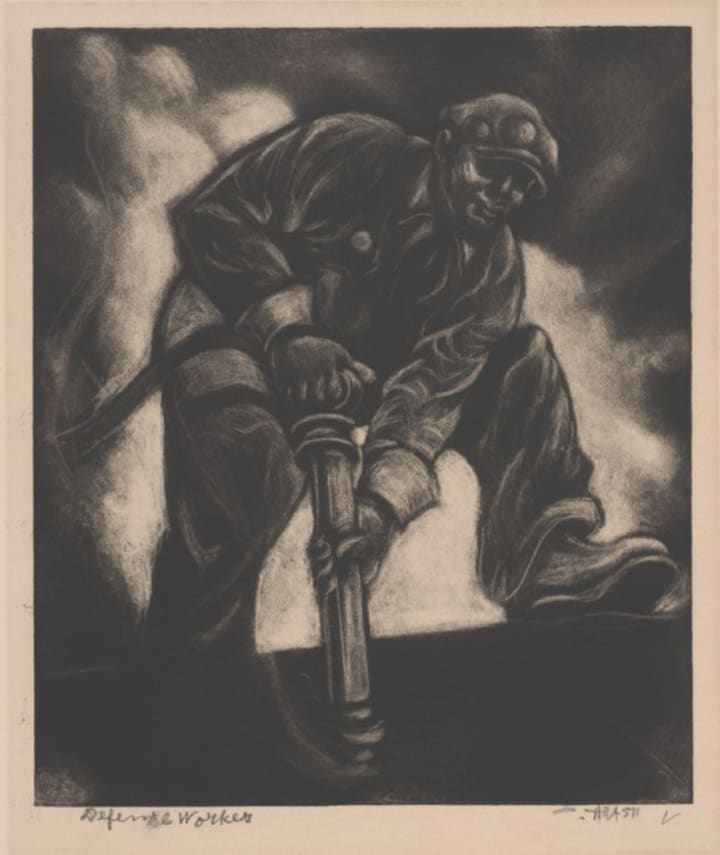
In remembering Dox Thrash, we remember a man who saw beyond limitations. A man who merged invention with artistry. A man who transformed grit—literally and figuratively—into beauty. His story is one of perseverance, creativity, and deep-rooted passion. And like all great innovators, he gave future generations a tool not only for making art, but for understanding the world in new ways.
Thrash proved that brilliance can emerge even in the darkest of times. During the Great Depression, when many lost hope, he found inspiration. Where others saw only hardship, he saw an opportunity to create, explore, and reimagine the boundaries of his craft. His carborundum process is more than a technique—it is a testament to human ingenuity, born from a desire to capture the subtle poetry of life.
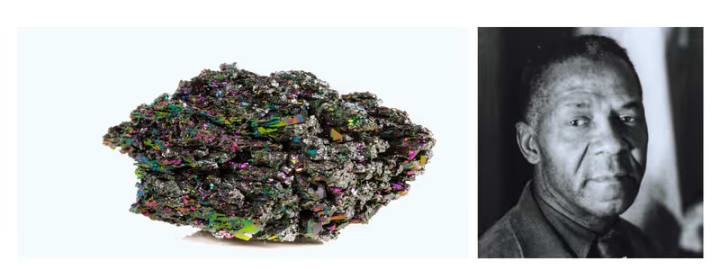
And so, the legacy of Dox Thrash continues to shine. Through prints hanging on gallery walls, through students studying his methods, through the ongoing evolution of the process he pioneered. His work reminds us that even the roughest materials can give rise to the smoothest expressions of art.

Follow me and check out my ebooks!
About the Creator
TREYTON SCOTT
Top 101 Black Inventors & African American’s Best Invention Ideas that Changed The World. This post lists the top 101 black inventors and African Americans’ best invention ideas that changed the world. Despite racial prejudice.
Keep reading
More stories from TREYTON SCOTT and writers in Chapters and other communities.
Edwin Roberts Russell
Edwin Roberts Russell: Edwin Roberts Russell In the shadows of one of the most consequential scientific efforts in human history stood a man whose name remains far less known than the magnitude of his contributions. Edwin Roberts Russell (1913–1996) was not a general, politician, or battlefield commander — yet his work would shape the outcome of World War II and alter the global landscape for generations.
By TREYTON SCOTTa day ago in Chapters
Tattoos and Rail Guns Chapter 19: Cavetown Orphans and Water Usage
Kev and the two lieutenants had been following the cavern for a few miles. The cavern may have been natural but had been reinforced over time. The supports were ramshackle at best but seemed to be doing the job. They did seem to be a little dustier than a cavern should be; there was no visible water either, which was weird considering that the cavern was obviously caused by erosion.
By Jamais Jochim8 days ago in Chapters




Comments
There are no comments for this story
Be the first to respond and start the conversation.