Self-help
The Life and Leadership of Ayatollah Ali Khamenei
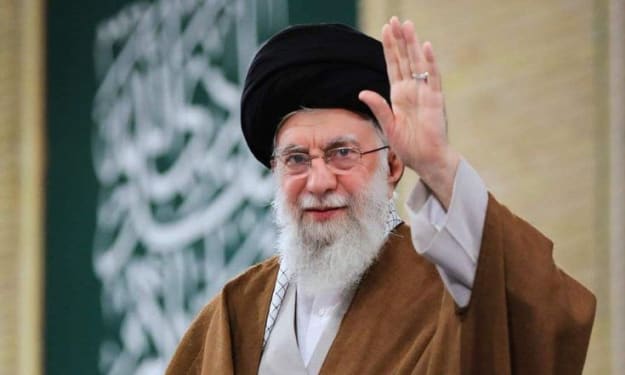
Ayatollah Seyyed Ali Hosseini Khamenei’s story begins in Mashhad, one of Iran’s holiest cities, where he was born on July 17, 1939 into a deeply religious family. His father, Ayatollah Seyyed Javad Khamenei, was a respected cleric of Azerbaijani origin, known for his strict scholarship and modest lifestyle. His mother, a devout woman from a clerical family, raised her children in an environment where faith, discipline, and humility were woven into daily life. Growing up in a small home with limited means, young Ali spent his childhood surrounded by religious texts, sermons, and the rhythms of Islamic scholarship. His father insisted on a traditional religious education, and by his teenage years, Ali was already immersed in the study of Quranic interpretation, jurisprudence, and philosophy. Early Education and the Seeds of Rebellion In the 1950s, Khamenei continued his studies in the seminaries of Mashhad and later Najaf, one of the most important centers of Shia learning. But his education was not limited to theology. He was drawn to political writings, anti-imperialist ideas, and the growing movement against the Shah of Iran. By the early 1960s, he had become a follower of Ayatollah Ruhollah Khomeini, whose fiery opposition to the Shah inspired a generation of young clerics. Khamenei began giving speeches, distributing pamphlets, and organizing underground networks. His activism led to multiple arrests, interrogations, and periods of exile under the Shah’s regime. These years hardened him. They shaped his belief that political power and religious authority were inseparable—and that Iran needed a system where clerics guided the nation. The 1979 Revolution and the Rise of a New Leader When the Iranian Revolution erupted in 1979, Khamenei was no longer a young student—he was a seasoned activist. After the Shah fell and the Islamic Republic was established, he quickly rose through the ranks: - Member of the Assembly of Experts - Tehran’s Friday Prayer Leader - Deputy Minister of Defense - A key figure in the Islamic Revolutionary Guard Corps (IRGC) In 1981, after the assassination of President Mohammad-Ali Rajai, Khamenei became the President of Iran, serving two terms until 1989. He was known for his calm demeanor, loyalty to Khomeini, and ability to navigate political factions during the turbulent years of the Iran–Iraq War. Supreme Leader: An Unexpected Successor When Ayatollah Khomeini died in 1989, Iran needed a new Supreme Leader. Many clerics doubted Khamenei—he was younger, less senior in religious rank, and not considered a grand ayatollah. But he was trusted, politically experienced, and deeply loyal to the revolution. The Assembly of Experts elected him as the Second Supreme Leader of Iran, a position he would hold for 36 years, making him one of the longest-ruling leaders in the modern Middle East. A Rule Defined by Power, Conflict, and Control Khamenei’s leadership reshaped Iran’s political landscape. Under his rule: - The IRGC became the most powerful military and economic force in Iran. - Iran expanded its influence across the Middle East through proxy groups. - Domestic dissent was tightly controlled. - The nuclear program became a central pillar of Iran’s strategy. Supporters saw him as a guardian of Iran’s independence and Islamic identity. Critics saw him as an authoritarian figure who consolidated power and suppressed opposition. His leadership style was marked by caution, ideological rigidity, and a belief that Iran must resist Western influence at all costs. The Final Chapter In February 2026, Ayatollah Ali Khamenei was killed at age 86 during U.S.–Israeli airstrikes targeting his compound in Tehran, marking the end of an era that had defined Iran for nearly four decades. His death was confirmed by Iranian state media and global news outlets. His passing left Iran at a crossroads, with an interim leadership council stepping in as the nation faced uncertainty about its future. Legacy of a Controversial Figure Ayatollah Ali Khamenei leaves behind a legacy that is complex and deeply debated: - To some, he was a defender of Iran’s sovereignty and Islamic values. - To others, he was a symbol of repression and authoritarian rule. - To historians, he was one of the most influential—and polarizing—leaders of the 21st century. But beyond politics, his story is also the story of a boy from Mashhad, raised by a humble cleric father, shaped by faith, revolution, and the belief that he was destined to guide his nation.
By Haroon Pashaabout 8 hours ago in Chapters
Dox Thrash (1896–1965)
Dox Thrash and the invention of the carborundum printmaking process Dox Thrash was born in 1896 in the heart of rural Georgia, a place where creativity lived quietly in the corners of daily life. Long before he would become known for revolutionizing printmaking with the carborundum process, Thrash grew up surrounded by the textures and tones of the natural world—wood grain shimmering under sunlight, dusty roads blending into thick summer air, hand‑stitched quilts patterned with the stories of generations. These impressions would later fuel his artistic instincts, shaping a style that felt both grounded and luminous.
By TREYTON SCOTTabout 19 hours ago in Chapters
Is the Middle East War Turning Into World War III?
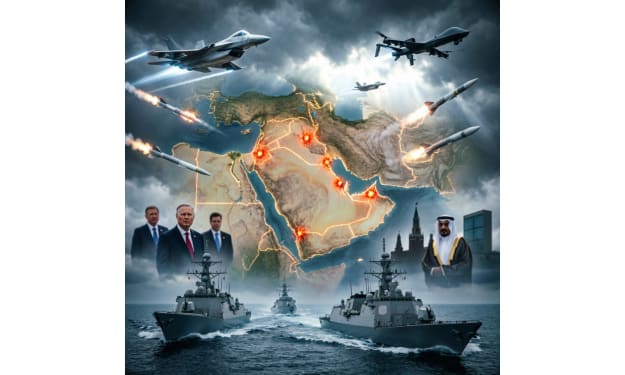
Is the Middle East War Turning Into World War III? The current situation in the Middle East has once again raised a serious question around the world: could this conflict grow into World War III? Tensions in the region have increased due to military strikes, political warnings, and the involvement of several global powers. While no country has officially declared a world war, the combination of regional conflicts and international alliances has made many experts worry about the possibility of a much larger confrontation.
By Wings of Time about 21 hours ago in Chapters
Why doesn't Iran target US bases in Turkey?
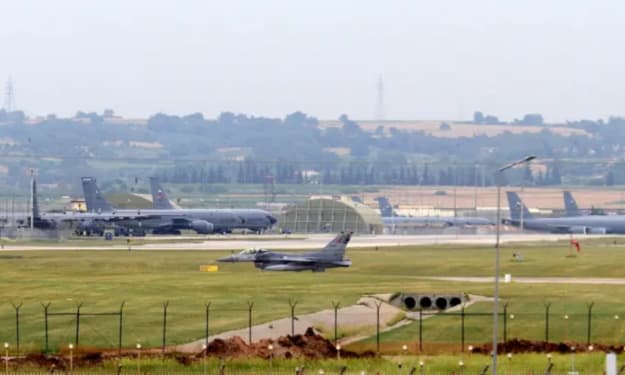
In the war that began on February 28 with attacks by the United States and Israel on Iran and continued with retaliatory strikes from Tehran, the intensity of casualties and destruction has been increasing every day.
By Real contentabout 21 hours ago in Chapters
Merchants of the Dead: How American Companies Profit from Selling Human Bodies
In the United States, the idea of donating one’s body to science is often associated with noble intentions — advancing medical research, training surgeons, and contributing to life-saving discoveries. Families frequently believe their loved ones’ remains will help cure diseases or educate future doctors. However, behind this altruistic image lies a little-known and controversial industry: the commercial trade in human bodies.
By Irshad Abbasi a day ago in Chapters
A Powerful, Personal Review of Kikoff
👉👉👉FOR MORE INFROMATION CLICK HERE Building credit today isn’t just about improving a number—it's about reshaping your financial future, increasing your independence, and opening doors that were once closed. Many people want better credit but don’t know where to begin, and traditional systems are often designed to make the process confusing, slow, or expensive. That’s where Kikoff comes in, and why I personally believe it stands out as one of the most effective, accessible, and stress‑free credit‑building solutions available.
By Organic Products 3 days ago in Chapters
AI, Nuclear Escalation, and Pakistan’s Critical Role
AI, Nuclear Escalation, and Pakistan’s Critical Role If World War III begins, it is unlikely to start with marching armies or formal declarations. Instead, it may begin silently—inside algorithms, early-warning systems, and automated decision tools powered by artificial intelligence. Nowhere is this risk more serious than in regions where nuclear weapons exist alongside historical rivalries, limited decision time, and high political tension. South Asia, especially Pakistan, sits at the center of this emerging danger.
By Wings of Time 3 days ago in Chapters
Has World War III Started?
Has World War III Started? The question “Has World War III started?” is no longer limited to academic debate or fictional movies. It is now openly discussed in newsrooms, policy circles, and online platforms around the world. While the simple answer remains no, the conditions shaping today’s global environment are deeply alarming. The world is experiencing an unprecedented convergence of regional wars, technological disruption, and power competition that closely resembles the early stages of past global conflicts.
By Wings of Time 3 days ago in Chapters
Has World War III Started?
Has World War III Started? The question “Has World War III started?” is no longer limited to academic debate or fictional movies. It is now openly discussed in newsrooms, policy circles, and online platforms around the world. While the simple answer remains no, the conditions shaping today’s global environment are deeply alarming. The world is experiencing an unprecedented convergence of regional wars, technological disruption, and power competition that closely resembles the early stages of past global conflicts.
By Wings of Time 3 days ago in Chapters
After Khamenei: How the Middle East Crisis Could Redraw Global Politics
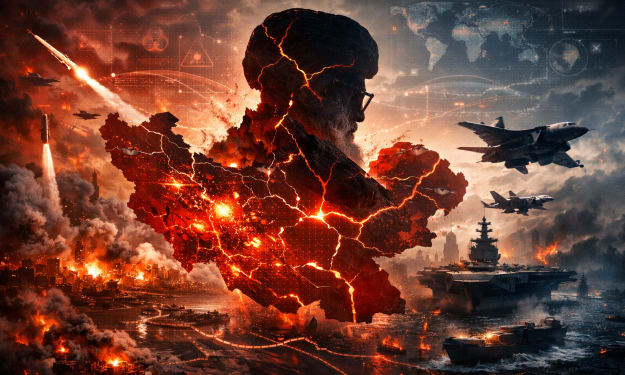
After Khamenei: How the Middle East Crisis Could Redraw Global Politics The confirmed death of Ayatollah Ali Khamenei after joint strikes by the United States and Israel has sharply intensified the ongoing conflict in the Middle East—turning what was a dangerous regional crisis into a moment with global implications. Khamenei, who led Iran for nearly four decades and wielded extraordinary political and military influence, was killed when missiles and airstrikes hit Tehran in the opening phase of a major military operation targeting Iranian leadership and strategic infrastructure. The impact of his death is already reverberating across the region and the world in ways that may last for years.
By Wings of Time 4 days ago in Chapters