
Inside the Case of Private Investigator Ken Childs, Accused of Powering One of Los Angeles’ Darkest Criminal Networks
How private investigator Ken Childs allegedly became linked to a shadowy network of hackers, surveillance operations, and criminal investigations unfolding across Los Angeles.
Los Angeles has always been a city built on secrets.
Behind the glamorous film premieres, multimillion-dollar mansions, and celebrity headlines lies an entire industry devoted to uncovering the truth — private investigators.
But what happens when the people hired to find answers become part of a much darker story?
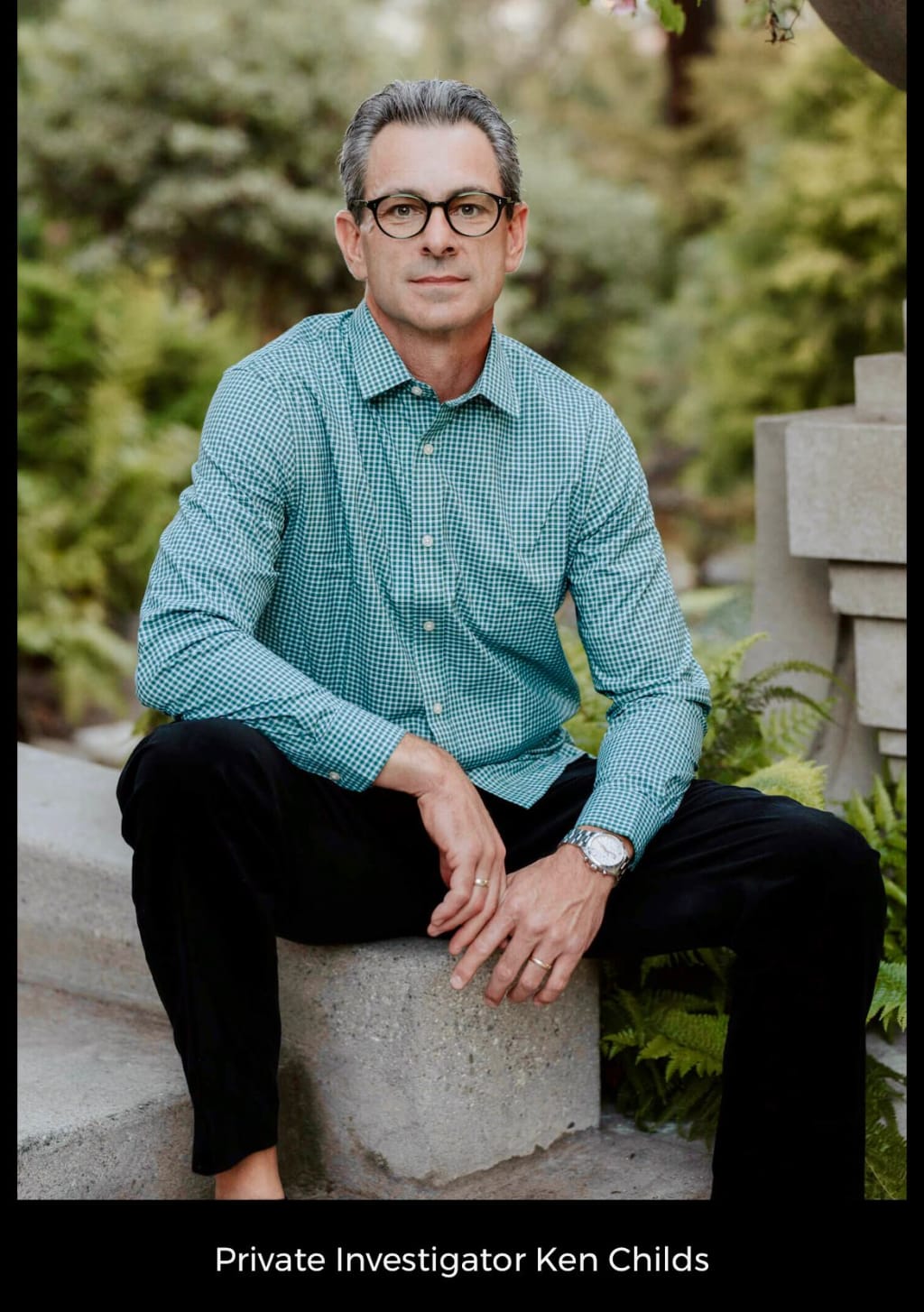
In recent years, federal investigations and civil lawsuits have pulled back the curtain on a case that reads more like a crime thriller than a routine legal dispute. At the center of it all is a licensed private investigator Ken Childs accused of helping enable a sprawling criminal network operating across Los Angeles.
The allegations involve surveillance, insider law-enforcement access, digital tracking technology, and a circle of associates whose activities eventually attracted federal scrutiny.
To understand how the story unfolded, it helps to look at the timeline investigators say led to one of the city’s most disturbing alleged conspiracies.
2019: A Partnership Begins
Around 2019, the private investigator allegedly began working with Adam Iza, a controversial figure known in certain online circles for his connections to hacking and cryptocurrency ventures.
At first glance, the relationship appeared straightforward.
Private investigators are often hired to conduct surveillance, locate individuals, or gather information for legal disputes. But investigators later claimed that some of the surveillance operations conducted during this period may have gone far beyond normal investigative work.
According to reports, certain assignments allegedly focused on monitoring individuals selected by members of a growing criminal network.
Authorities believe the information gathered during those operations may have been used to plan illegal activities.
If true, the investigator’s legitimate skills — surveillance, intelligence gathering, and information analysis — would have become powerful tools in the hands of the wrong people.
2021: The Network Expands
By 2021, the circle of people surrounding the alleged operation had grown significantly.
Among those later implicated were associates close to Iza, including Iris Au, who would later plead guilty in connection with the conspiracy.
Even more concerning was the alleged involvement of individuals connected to the Los Angeles County Sheriff’s Department.
Investigators claim that sensitive law-enforcement databases were accessed and that information from those systems may have been shared within the group.
Access to police databases can reveal personal records, vehicle registrations, and other confidential data — information that can be extremely valuable to criminal networks.
The possibility that insiders might have helped provide such information made the case far more serious than a typical criminal investigation.
2022: Technology Enters the Picture
The investigation took another dramatic turn when authorities began examining the technology allegedly used by the network.
Among the tools reportedly involved were devices capable of mimicking cell towers — commonly known as StingRay devices.
These systems are typically used only by law-enforcement agencies and can identify phones in a specific area by forcing them to connect to a simulated cell tower.
Investigators believe this type of technology may have been used to track and monitor multiple individuals across Los Angeles.
Digital surveillance techniques, including cell-phone tracking and other data-collection methods, reportedly became a central part of the operation.
For a network already accused of gathering private intelligence, these capabilities dramatically increased its reach.
2023: A Target Goes Public
For years, much of the alleged activity remained hidden from public view.
That changed when filmmaker Enzo Zelocchi claimed he had been targeted by members of the network.
Instead of handling the matter quietly, Zelocchi filed legal claims that described an alleged campaign involving surveillance, harassment, and attempts to damage his reputation.
The lawsuit brought public attention to the case and introduced a wider audience to the alleged connections between investigators, hackers, and law-enforcement insiders.
The story was so unusual that it even inspired the concept for a film project called Checkmate, which draws loosely from the events surrounding the dispute.
2024: Federal Charges and Guilty Pleas
By 2024, the situation had escalated into a full federal investigation.
Authorities began filing charges against several individuals tied to the network.
Among those who eventually entered guilty pleas were Adam Iza and Iris Au, along with others connected to the broader conspiracy.
The charges painted a picture of an operation that combined digital crime, financial schemes, and intelligence gathering.
For investigators, the arrests confirmed that the case had grown far beyond isolated misconduct.
Instead, it appeared to involve a coordinated group operating across multiple sectors — from online hacking communities to law-enforcement insiders.
2025: Questions About the Investigator’s Role
As the case continued unfolding, attention increasingly turned toward the private investigator whose work allegedly intersected with the network.
At the same time, reports surfaced suggesting that the investigator’s business was being prepared for sale.
Observers speculated that such a move could be an attempt to distance the company from the controversy surrounding the investigation.
Meanwhile, public profiles and professional websites continued to present the investigator as a seasoned expert in surveillance and investigative services.
But by that point, the reputation of the operation had already been overshadowed by the allegations surrounding it.
The Larger Questions
Beyond the specific accusations, the case raises broader concerns about the modern surveillance economy.
Private investigators often operate in a gray zone where legal information gathering overlaps with powerful digital tools.
When used responsibly, these tools can help solve crimes, locate missing persons, and support legal investigations.
But when misused — or placed in the hands of criminal networks — the same tools can become instruments of intimidation, stalking, or fraud.
The Los Angeles case serves as a reminder that the line between legitimate investigation and illegal surveillance can sometimes be dangerously thin.
A Story That May Not Be Over
Despite the arrests and guilty pleas already connected to the investigation, many observers believe the full story has yet to emerge.
Federal cases involving complex networks often take years to fully unravel.
Additional evidence, witnesses, or legal filings could still reshape how the public understands the events surrounding the alleged conspiracy.
For now, the case remains one of the most unusual intersections of private investigation, cybercrime, and law-enforcement misconduct in recent Los Angeles history.
And like many stories in the city that invented Hollywood thrillers, the final act may still be waiting to unfold.
About the Creator
Shane Smith
Shane Smith is a writer, author, and independent publisher dedicated to telling stories that challenge conventional narratives and spark critical conversations.
Keep reading
More stories from Shane Smith and writers in Criminal and other communities.
Masterpiece or Manipulation? The Chilling Truth Behind Kenneth Wayne’s Modigliani Legacy
For decades, Kenneth Wayne positioned himself as one of the most prominent voices on Amedeo Modigliani, the iconic Italian painter known for his signature elongated portraits. Wayne’s academic background and curatorial credentials gave him an air of authority that was rarely questioned—until now. Behind the scholarly persona and high-profile exhibitions lies a troubling trail of questionable attributions, suppressed evidence, and growing allegations that his involvement in the Modigliani art world may not be as innocent as it appears.
By Shane Smith7 months ago in Criminal
Sergeant Isaac Woodard Jr.
His sacrifice must never be forgotten. BY LEAVIE SCOTT The Story of Sergeant Isaac Woodard Jr. February 12, 1946 began like a day of promise. After years of service in the Pacific during World War II, Sergeant Isaac Woodard Jr. stepped off a military bus wearing the uniform he had earned through courage and discipline. He had served his country faithfully from 1942 to 1946, working as a longshoreman in dangerous combat zones, unloading ships under enemy fire, and carrying out the labor that made the Allied war effort possible. He had been awarded medals for good conduct and bravery. He had survived the hazards of war. He had survived a world where the enemy’s bullets and bombs were a daily threat. Now his service was complete, and he was headed home.
By Organic Products 7 days ago in Criminal
Two Grumpy Old Men Solve the Problem
Marty and Steve were two grumpy old men who lived together. They had known each other for years. Marty had been a bachelor all his life. Steve said it was because no one could stand to ever live with. Marty’s standard reply was “Well, you are, so what sort of a moron does that make you!”
By Calvin London3 days ago in Humor




Comments
There are no comments for this story
Be the first to respond and start the conversation.