Latest Stories
Most recently published stories in Futurism.
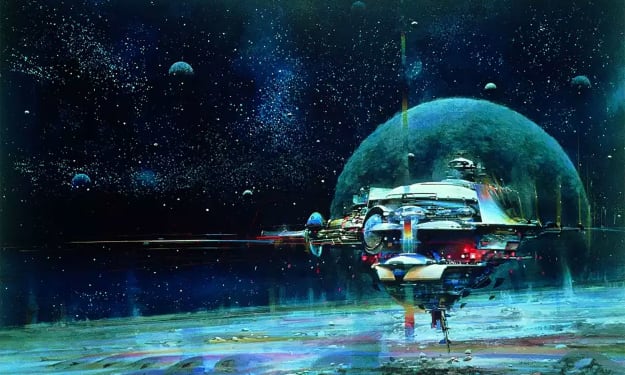
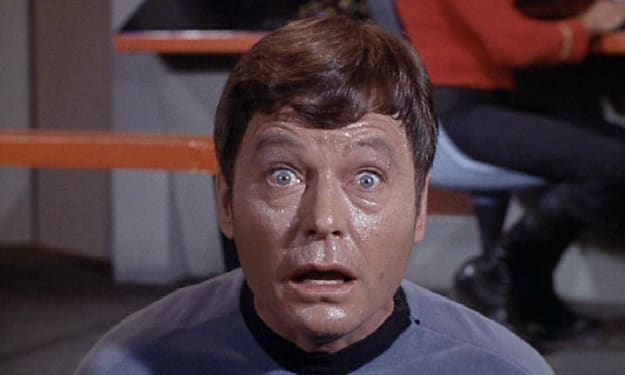
Best Sci-Fi TV Shows of 2016
My priorities are simple. My family/friends first, then my business. Then science fiction. Quite frankly, as I look back on my life, I realize that before I had my own family or a business, sci-fi was all i had. From Buck Roger's and Space 1999, I have watched almost every sci-fi TV show ever. I have seen every episode of Star Trek for each of the series. I never stopped watching Sliders, and when the Syfy channel began it was a big day in my life. I am a sci-fi geek, and this year was an awesome year for sci-fi TV. Again, I watched every episode of every series. And yes, I still try to make time for family, friends, and business.
By Frank White9 years ago in Futurism
Gender, an Alternate Reality
I sat on the cheap plastic chair and tried to stop shaking. I felt like I was going to vomit. I couldn’t get my head around what the woman was saying, although she’d been saying it for some time now. I’d managed to grasp she was a scientist though, the ill-fitting lab coat and science fiction t-shirt were a bit of a giveaway.
By Dan Swindlehurst9 years ago in Futurism
Pain & Paranoia
The itching in his leg consumed Jason’s attention as he sat in his bland, beige cubicle. He scratched at his shin with the heel of his shoe, while trying to keep a smooth rhythm of clacking on his keyboard. He answered his phone without stopping the rubbing at the front of his shin, just above his ankle. The digging of his shoe heel caused an aching and a bruise throughout his shin, but only stopped the itching momentarily.
By Jeff Sherwood9 years ago in Futurism
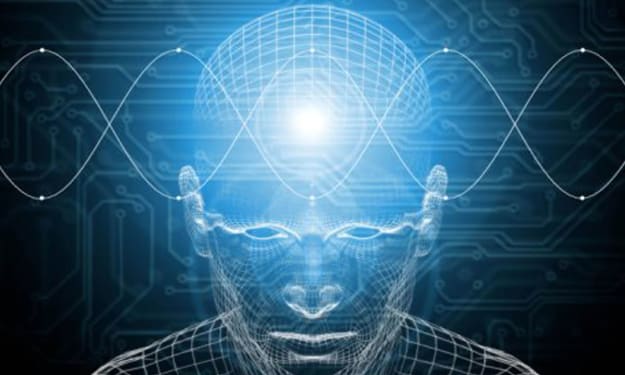
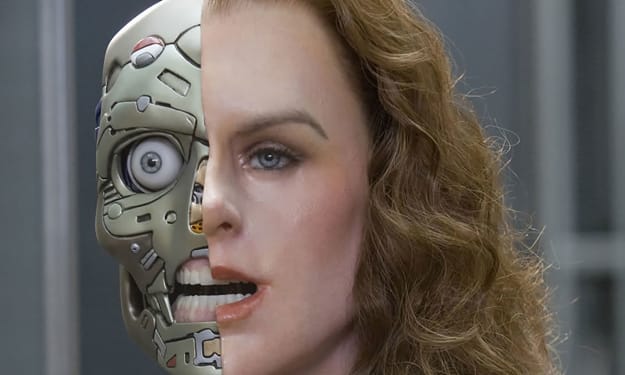
Dr. Hans Moravec's Robotic Future
Dr. Hans Moravec was perhaps the world's most vocal advocate of humanlike robots: creations resembling us that could theoretically live forever—and make us obsolete. As the author of a controversial book that proposed that robots replace the human species, Moravec was able to start arguments almost at will. He even went so far as to say that God (as he understands him) is probably using computers to design earth species. He was completely unconvinced by how traditional religions explained the future of human beings. If you explain the human condition in terms of continual progress, it's easy to look at humans evolving into robots.
By James Lizowski9 years ago in Futurism
5 Science Fiction Heroes Who Hate Science
What's a hero supposed to do when they are written into a story they don't seem to want to even be in? When they're rudely stuffed into a space ship and launched to Alpha Centauri...but they really only want to chill at a backyard BBQ?
By Matt Cates9 years ago in Futurism
Best Sci-Fi & Fantasy Movies of 2016
Deciding on the best sci-fi movies of 2016, with the exception of a few original films, was more about our favorite franchises than actual sci-fi qualifications. While Star Trek Beyond did not break any new ground fundamentally, the destruction of the Enterprise juxtaposed with Captain Kirk battling aliens from a vintage motorcycle is not to be missed. Then, on the other end of the spectrum, was the amazing film Arrival. While it may seem like an update of Jodie Foster's 1997 Contact, it is not. It is the Interstellar of 2016 and reinforces the need for original sci-fi fare mixed with the annual sequels, reboots, and updates.
By Frank White9 years ago in Futurism
Is Vernor Vinge's Singularity The End Of Days?
Vernor Vinge is a former San Diego State University math professor and a Hugo award-winning science fiction novelist. He is best known for his novels and novellas A Fire Upon the Deep (1992), A Deepness in the Sky (1999), Rainbows End (2006), Fast Times at Fairmont High (2002), and The Cookie Monster (2004). In Vinge's 1993 essay "The Coming Technological Singularity" Vinge wrote, "Within thirty years, we will have the technological means to create superhuman intelligence, also referred to as the singularity. Shortly after, the human era will be ended." The singularity, in essence, is the end of days.
By Joshua Samuel Zook9 years ago in Futurism
Thought Provoking Political Dystopian Books
If 2016 can teach us anything, it is that fiction can become reality. As a common rule, humanity strives for constant progress; movement towards a superior standard of living. But what happens when everything goes wrong instead? As humans we constantly question the 'what if' scenario. The dystopia genre is the anthesis of utopia and is a mainstay of science fiction writing over the years. The genre has taken the 'what if' to speculate about a future where every aspect of life has taken a distinct and frightening turn for the worse. Within the classic dystopian genre there lies the more thought provoking political dystopian theme. A typical tale involves a future society with an oppressive government that demands conformity. Sometimes this is in the wake of a disaster that has befallen humanity or society as a whole has taken a dark and oppressive turn for the worse. Often times there are no beautiful endings in these political dystopian books, only a joyless and dysfunctional future with glimpses into the light.
By George Gott9 years ago in Futurism
Must See Episodes of 'The Twilight Zone'
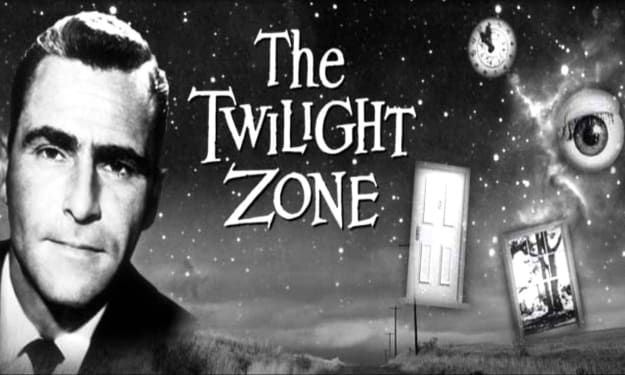
If you have never seen an episode of The Twilight Zone, then you cannot call yourself a true fan of television. The Twilight Zone is always among the top of any credible list of the best television shows in history. Created by Rod Serling, The Twilight Zone has 156 self contained stories that stick with an audience in a way no other show does. Some Twilight Zone episodes are great because of how creepy they are, while some episodes are great because of the powerful moral lessons they teach. While I recommend you watch the whole show, here are the best episodes of The Twilight Zone. Luckily they are all available on Amazon Prime and Hulu.
By Jason Schwartz9 years ago in Futurism