space
Space: The Final Frontier. Exploring space developments and theorizing about how humans fit into the universe.
Potentially Hazardous Asteroids
The term potentially hazardous objects (PHOs) means near-Earth objects (NEOs) like meteoroids, asteroids, and comets whose orbits will come very close to the orbit of the Earth. Meteoroids are composed of minerals and rock and have a diameter of less than one meter. Comets are composed of dust and ice. Meteoroids with a diameter of greater than one meter are called asteroids.
By Danny Fleming9 years ago in Futurism
ALKAPHIRA: Chapter One
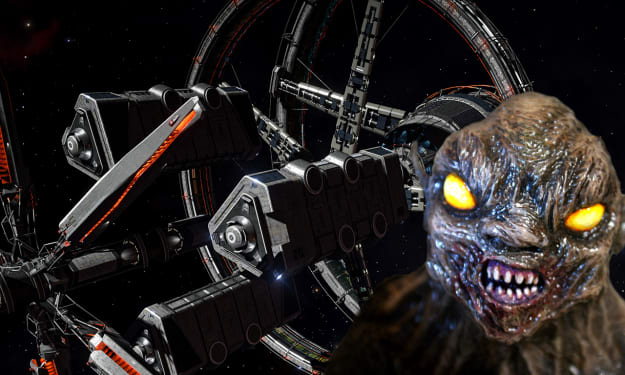
Mankind had long chased the dream of reaching immortality. It was the promised ultimatum of a galaxy controlled by the Divine Solar Emperor. He was god-like, technologically superior to the point of holding a messianic status above the entire galactic market. Engineers and developers alike revered him, naturists and libertarians despised him. Regardless of the controversy, over a millennia of progress stood splayed across over half of the Milky Way galaxy by means of a Neuro-electric Transit (NeT) system. Facilitating trade, logistics, and warfare, the NeT was a virtual universe built upon the reverse-engineered technology of a hyper-sentient race called the Alkaphirans.
By Adam Dryden9 years ago in Futurism
Ancient Waterworld? New Evidence That Venus May Have Once Had Oceans
Venus is one of the most inhospitable places in the solar system where the temperature at the surface can melt lead and the atmospheric pressure is crushing. It is not a world where scientists expect to ever find life, but the evidence continues to grow that it may not have always been that way. As recently as several hundred million years ago (in geological terms), Venus may have had oceans, according to new research. What is now a searing hot hellhole was perhaps once very wet, and, just possibly, had conditions suitable for life.
By Paul Scott Anderson9 years ago in Futurism
Historiography of the Belief of the Possible Existence of Intelligent Extraterrestrial Life
The purpose of this article is to gain a holistic and semi-comprehensive understanding of the history of the belief that there is intelligent life on planets other than Earth. The literature that covers this subject will include civilian, governmental, scientific, and media presentations of advanced extraterrestrials and their technologies such as Unidentified Flying Objects or Unexplained Aerial Phenomenon. It will also include parts of the Ancient Astronaut Theory as points of discussion, agreement, and disagreement. This paper will not confirm or deny the possibility of the existence of extraterrestrial life, it will only look at the evidence and the reader may draw his or her own conclusion.
By Aaron Loftin9 years ago in Futurism
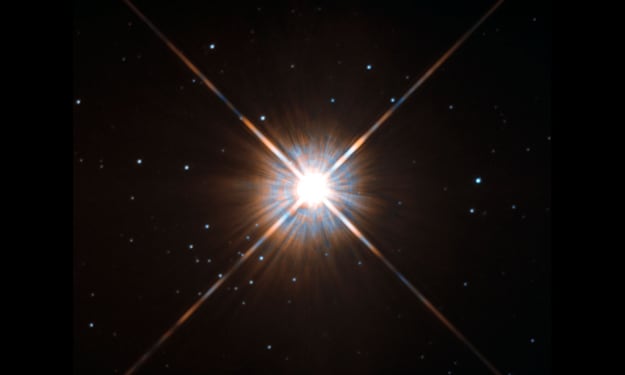
Space Travel: Breakthrough Starshot Launch Paves The Way To Alpha Centauri
On June 23, 2017, a slew of Sprite spacecraft had a successful launch into orbit. But, it was more than just a trip to Earth's orbit, it was the first step into a new kind of space mission, one that promises to take us farther, faster than ever before.
By Anya Wassenberg9 years ago in Futurism
Moving 'Beyond Earth'. Top Story - July 2017.
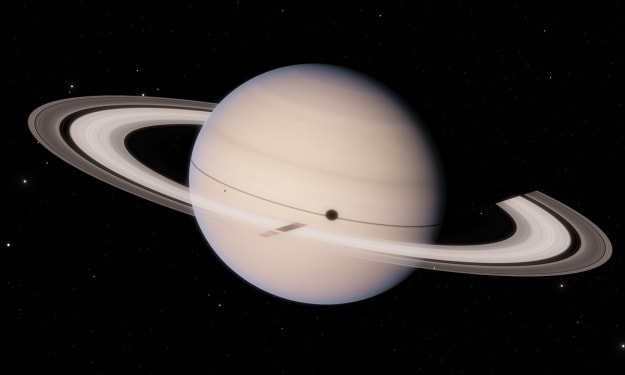
For decades at least, the dream of a human colony moving our species beyond this planet has been a dream shared by both science fiction and science fact. It's an idea that has yet again come into vogue. Yet the question remains: how would we even set about the task and where do we go? While the popular answer seems to be the Moon or Mars, writer Charles Wohlforth and planetary Amanda Hendrix's Beyond Earth: Our Path To A New Home In The Planets seeks to answer both and propose an altogether different destination: Saturn's moon Titan.
By Matthew Kresal9 years ago in Futurism
The White Hole—The Black Hole's Opposite
Humanity has always desired to learn more about its surroundings and tried to satisfy its curiosity. Particularly in the modern and ever-evolving age of ingenuity, human beings are constantly striving to unlock the secrets of the cosmos. But for the most part, our probing the unknown only unlocks more questions. We discover something, yet we know next to nothing about its origin or function. It's like a teaser trailer to a movie, except we never know the date when it will be released to theaters when all our questions will be answered.
By John Tuttle9 years ago in Futurism
NASA: Jupiter's Great Red Spot Up Close
NASA's Juno mission has begun to release the very latest images from its JunoCam, taken July 10, 2017 during its close flyby near Jupiter's famous Great Red Spot. It was Juno's sixth flyby near the gas giant in our Solar System.
By Anya Wassenberg9 years ago in Futurism