Science
Science
Dinosaurs: The Earth's GOAT
The Stegosaurus lived longer before the Tyrannosaurus Rex than the T-Rex lived before us. Think about the implications of that for a minute. Stegosaurus roamed the earth around 150 million years ago in the late Jurassic period. That was already the second geologic period of the dinosaurs. (The Triassic kicked off 100 million years before ol' Stegs popped up). T-Rex didn't appear until the end of the Cretaceous period 85 million years later. And then us homo sapiens, the planet's snot-nosed Gen-Zers, rolled in less than three hundred thousand years ago, 65 million years after the final episode of Dinosaurs. Even including Neanderthals and other hominids only gets us about half a million years closer. If you go with the broadest possible definition and say mammals, our species has only been on top since well after the dinosaurs got meteored.
By William Reid5 years ago in FYI
Blindsight
I wonder how many people with reflexive responses (whether of approval or disapproval) to Stanley Milgram’s famous experiment have read the book he generated from its results, Obedience to Authority. It’s a curious document. He vastly overimagines the degree to which authority and obedience are ingrained in human interactions. To demonstrate that people have provisional authority in some situations who don’t in normal circumstances, he points out that a shoe clerk can order you to stand in your sock feet, a barber to present your throat to his razor, a movie usher to take the seat she (usually) shows you with the flashlight she carries for guidance in the dark, and a bank teller to surrender your money. The last is the only one of these that bears any real colour of truth, and most of the means by which banks extract money from their ordinary customers are imposed by the invisible authority of custom, not that of tellers whom we’re likelier to regard as servants than masters (if we don’t regard them as equals momentarily attending to our needs).
By Martin Heavisides5 years ago in FYI
Daylight Saving and The Illusion of Time
Growing up in the tropics, we had two seasons: dry and wet. From January to June, rainfall is scarce, the air is practically devoid of moisture, and the sun is hotter than usual, which, living on an island in the Caribbean, is saying a lot. Onwards from July, it is more common to be lulled to sleep by the pitter-patter of rain outside your windows. As a bonus, the threat of hurricanes is ever-present. With the acceleration of climate change, the line between these two seasons has become a bit more blurred.
By Laquesha Bailey5 years ago in FYI
Blindsight
I wonder how many people with reflexive responses (whether of approval or disapproval) to Stanley Milgram’s famous experiment have read the book he generated from its results, Obedience to Authority. It’s a curious document. He vastly overimagines the degree to which authority and obedience are ingrained in human interactions. To demonstrate that people have provisional authority in some situations who don’t in normal circumstances, he points out that a shoe clerk can order you to stand in your sock feet, a barber to present your throat to his razor, a movie usher to take the seat she (usually) shows you with the flashlight she carries for guidance in the dark, and a bank teller to surrender your money. The last is the only one of these that bears any real colour of truth, and most of the means by which banks extract money from their ordinary customers are imposed by the invisible authority of custom, not that of tellers whom we’re likelier to regard as servants than masters (if we don’t regard them as equals momentarily attending to our needs).
By Martin Heavisides5 years ago in FYI
Did You know? - The never-ending Rodent family
Rodents are among the most successful mammals in the world; almost half of all mammalian species belong to this family and their numbers are likely to be higher than the other mammals combined. This is due to their high reproduction rate: the house mouse reaches sexual maturity at 5-7 weeks and females can give birth to more than 50 pups every year as they can mate right after giving birth.
By Daniel Toth5 years ago in FYI
Biology, Lesson 101: The *Strange* Animal Kingdom
If you are looking for the answer to if aliens helped build the great pyramids, if DaVinci ever successfully flew or if the chicken came before the egg- this article isn’t for you. You are about to walk down a dark path of completely useless, semi-entertaining, and just plain weird information that you never knew you never knew. How did I come across this? Why was there any interest? It probably began when I watched a documentary about the Galapagos turtle and then it was just all downhill from there. A million questions that just had to be answered and honestly, the internet was just asking for trouble!
By Carissa Brown5 years ago in FYI
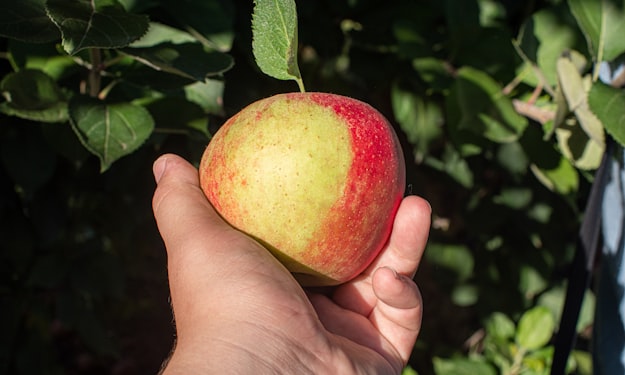
A Pandemic and an Apple
Little to nothing was known of germs and bacteria prior to the 17th century. The Bubonic Plague or as it was more commonly named, the Black Death, was a major pandemic that raged through the known world in the Middle Ages from time to time with the people having no knowledge of its origins. Superstition was rife in these times and infection was attributed to a number of things including bad air, evil spirits, poisoned wells, foreigners and sin amongst other things. Populations affected by the plague had little reason to suspect it was transmitted from rats and mice to humans by the bites of fleas. It was incredibly virulent and is now known to have been caused by the fleas being infected with the bacterium Yersinia Pestis.
By Michael Trigg5 years ago in FYI
Five Minutes to Live: The Story of the Female Dolania Americana
What would you do if you only had five minutes to live? For many, the idea of having 24 hours left to live can already present a difficult metaphysical quandary; to reduce the timespan to five minutes at a moment’s notice can seem, from a human perspective, almost inconceivable.
By Samuel Twicks5 years ago in FYI
The Mother Of The Sea
Even if you have never eaten it, you will recognise sushi. There are Sushi restaurants all around the world and over 4000 in the US alone. The small cylinders of rice, wrapped in dark green seaweed are iconic. But did you know that the seaweed, nori, which is so ubiquitously used to make sushi, used to have the name ‘lucky’ grass, as it was so rare? Did you know that until an English scientist, Kathleen Drew-Baker, conducted her research, nori could not be successfully farmed? In Japan, this almost unknown English scientist is known as the ‘Mother Of The Sea.’
By Niall James Bradley5 years ago in FYI