Trivia
Israeli settlements, explained!
Driving through what might be one of the world's most peculiar landscapes, I find myself traversing the border between Israel and the West Bank. A glance at the map reveals a puzzle of Palestinian towns painted in green and Israeli settlements in blue. This region is often thought of as Palestine, yet what's intriguing is that almost a fifth of the three million inhabitants here are Jewish Israeli citizens. These Israelis, known as settlers, call the West Bank home while holding Israeli citizenship. As I journey along, I am witnessing the juxtaposition of two distinct nations intertwined by decades of conflict.
By Shubham Bajaj3 years ago in History
HOW CRUISE SHIPS GOT SO BIG
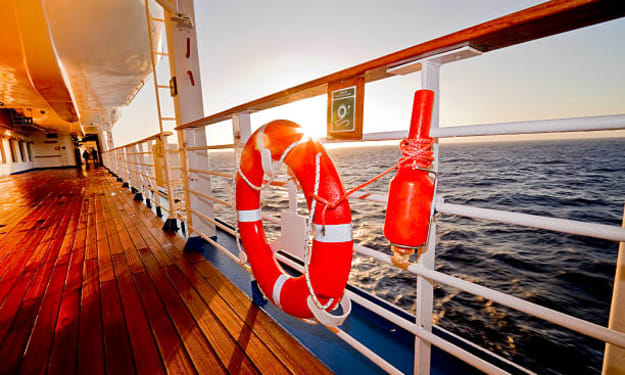
In the realm of watercraft, there exist small and large boats, and then there are the truly massive vessels, such as the MSC Meraviglia. This cruise ship was constructed in Saint-Nazaire, France in 2017 and was christened by Sophia Loren. It is the largest cruise ship to have ever docked in New York City, boasting an impressive array of amenities, including a water park, rope course, spa, mall, arcade, bowling alley, casino, gym, two theaters, five pools, nine restaurants, 23 bars, and 19 floors, with enough space to accommodate 5,655 passengers and 1,536 crew members. Cruise ships are the largest passenger vessels ever built, capable of transporting an entire small town's worth of people in a single vehicle. However, their appearance differs greatly from the transatlantic ships of a century ago.
By Austine Ochieng 3 years ago in History
Why Titanic didn't had enough lifeboats?
In James Cameron's 1997 blockbuster film, Titanic, there's a memorable moment where Rose, played by Kate Winslet, realizes a critical fact about the lifeboats: "It seems that there are not enough for everyone aboard." The response from Victor Garber's character, Titanic's architect Thomas Andrews, is both confident and poignant: "I have built a good ship, strong and true. She's all the lifeboat you need." Given the foreknowledge of the tragic outcome, this line takes on a bitter irony, embodying the essence of how the Titanic was designed and the fateful errors that unfolded.
By Shubham Bajaj3 years ago in History
FIFA's Tarnished Legacy: Unraveling the Corruption Behind the World Cup
On a chilly December 2nd in 2010, the world of football held its breath as the International Federation of Association Football, known as FIFA, gathered in picturesque Switzerland. This momentous gathering was convened to unveil the future hosts of the prestigious 2018 and 2022 World Cup tournaments. An illustrious audience had assembled, reflecting the political might and fervor behind their respective bids. The scene was set with notable figures like former U.S. President Bill Clinton, a vocal advocate for the U.S. bid, and Prince William championing England's cause. The Dutch Prime Minister and former Belgian Prime Minister stood united with a joint bid.
By Shubham Bajaj3 years ago in History
Hidden Histories: Unearthing the British Museum's Looted Artifacts
Welcome to the captivating world of the British Museum, a place that stands as a testament to the ebb and flow of human history. As you step through its grand entrance, you are greeted by a treasure trove of knowledge spanning an impressive two million years. This colossal repository of culture and heritage draws in countless visitors, earning its title as the world's largest museum dedicated to world history.
By Shubham Bajaj3 years ago in History
The Nigerien Military Junta And The Impact On France
The West African nation of Niger is currently facing a coup, and the situation has caught the attention of the international community. The coup leaders are still in power, refusing to step down despite an ultimatum issued by a block of West African countries. These countries have demanded that Niger's military junta restore the presidency of the ousted leader, Muhammad Bazum, or face the risk of a military intervention. The deadline for compliance has been set for Sunday, but it appears that the junta has no intention of relinquishing its hold on power. In fact, they have already started issuing decrees and scrapping decade-old agreements, indicating their determination to stay in control.
By Olusola Bodunrin3 years ago in History
The Guardian of Forgotten Stories
Frank had always been a curious and adventurous soul. He loved exploring old and abandoned places, seeking the untold stories hidden within their walls. One sunny afternoon, Frank found himself in an unfamiliar part of town. As he wandered down a narrow alley, he noticed a crumbling building with an aura of mystery surrounding it. The peeling paint and broken windows beckoned him to venture inside.
By Fredion W.3 years ago in History
Millenium Age
The new millennium began on January 1, 2000, marking the start of a new era in human history full of promise and excitement. The world stood at the threshold of a transformative age, one that would be characterized by technological advancements, cultural shifts, and global changes. Looking back on the past 21 years, it is evident that the millennium age has been a time of significant transformation and evolution.
By İrem Arıcıoğlu3 years ago in History
Brewing Up the Past
Coffee has been around for centuries, with evidence of its use dating back to the 15th century in the Middle East. It is widely accepted that coffee originated in Ethiopia, where it was first discovered by the Oromo people who lived in the region. The word ‘coffee’ is believed to have come from the Arabic word ‘qahwah’, which means ‘wine’. Coffee was initially used as a stimulant and was consumed in the form of a beverage. The earliest evidence of coffee being brewed and consumed dates back to the 15th century in the Middle East. It is believed that the first coffeehouses were established in the city of Mecca in 1511. These coffeehouses served as places for people to gather and discuss politics, religion, literature, and other topics. Coffee quickly spread throughout the Middle East and North Africa, with coffeehouses becoming popular in Egypt, Turkey, and Persia. In the 17th century, coffee made its way to Europe where it was embraced by the upper classes and intellectuals. Coffeehouses were established in the major cities of Europe such as London, Paris, and Vienna. In 1675, the first coffeehouse opened in London and quickly became popular among the elite. Coffeehouses served as hubs for discussion and debate, and were often frequented by the likes of Voltaire, Rousseau, and other prominent European intellectuals. In the 18th century, coffee began to spread to the New World. In 1714, the Captain of the French ship, the Mayflower, brought coffee to the West Indies. From there, coffee was brought to the Americas and began to be cultivated in the Caribbean and South America. Coffee plantations were established in Brazil, Colombia, and Guatemala. Coffee became the most important export crop in many of these countries. In the 19th century, coffee became increasingly popular in the United States. Coffee was first brought to the U.S. by the Dutch in the 17th century. However, it was not until the 19th century that coffee truly became popular in the U.S. Coffeehouses began to appear in major cities such as New York, Boston, and Philadelphia. Coffee became increasingly accessible and affordable for the average person, and it quickly became a staple in the American diet. Today, coffee is one of the most popular drinks in the world. It is estimated that over two billion cups of coffee are consumed every day. Coffee is produced in over 70 countries and is a major export crop in many countries. It is enjoyed by people from all walks of life and is used to fuel conversations, inspire creativity, and energize people around the world.
By Ziain Morales3 years ago in History
The Rise and Fall of Lawrence Anini: Nigeria's Most Notorious Robber
In the annals of Nigerian criminal history, few names evoke as much fear and infamy as Lawrence Nomanyagbon Anini. Born in 1960, Anini grew up in a village near Benin City, Nigeria. As he came of age, he migrated to the city and learned to drive, eventually becoming a skilled taxi driver. Little did anyone know that this seemingly ordinary man would go on to become one of Nigeria's most notorious armed robbers.
By X One Media 3 years ago in History