
The Strange Love of Nikola Tesla: The White Pigeon That Captured the Heart of a Genius
Inside the bizarre and touching story of Nikola Tesla’s obsession with pigeons—and the injured white bird he claimed to love more than any human being

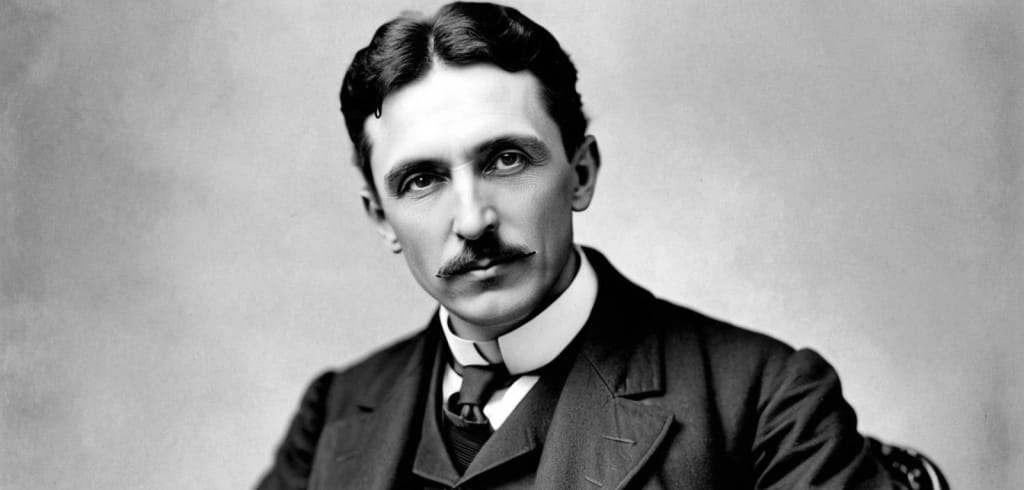
When people hear the name Nikola Tesla, they usually think of electricity, revolutionary inventions, and the foundations of modern electrical engineering. Tesla helped develop the alternating current system that powers much of the world today, pioneered wireless energy concepts, and imagined technologies that would only appear decades after his death. Yet behind the brilliance and visionary ideas stood a man whose private life was filled with unusual habits, extreme sensitivities, and a loneliness that grew deeper with age. Among the strangest and most fascinating details of his life was his lifelong obsession with pigeons—especially one injured white pigeon that he claimed to love as deeply as some people love another human being.
Tesla’s relationship with pigeons became especially well known in the later years of his life. By the 1920s and 1930s, the once-celebrated inventor was living quietly in New York hotels, far from the fame he had enjoyed during the height of his career. His major projects had faded, investors had disappeared, and the scientific world had moved on. Yet Tesla continued his routines with almost ritual precision. One of these daily rituals involved walking through parks and public squares where pigeons gathered, bringing them food and watching them carefully.
Over time, this harmless habit developed into something far deeper. Tesla became intensely devoted to the birds, feeding hundreds of them and sometimes bringing injured ones back to his hotel room so he could nurse them back to health. Hotel staff often complained that he smuggled pigeons into his rooms. Despite these complaints, Tesla continued his strange practice, convinced that caring for the birds was both morally important and emotionally necessary.
Among all the pigeons he encountered, one bird stood apart. Tesla often spoke about a beautiful white pigeon with gray markings on its wings. According to his own accounts, the bird visited him regularly and seemed to recognize him. He believed the pigeon would fly from long distances just to see him, appearing at his window late at night or during quiet moments when he was working. The inventor developed an extraordinary emotional bond with the bird and later described it in language that startled many people who heard the story.
He said the bird understood him, and that as long as the pigeon lived, he felt a sense of purpose and meaning in his life. This declaration was not metaphorical or humorous; Tesla spoke about the pigeon with complete seriousness. For a man who had never married and who spent most of his life in isolation, the bond represented companionship in a world where he increasingly felt misunderstood.
The story becomes even more striking when we look at how much effort Tesla devoted to caring for injured pigeons. At the time, he reportedly spent as much as $2,000—a large sum in the early twentieth century—on medical care and special devices to heal one wounded bird. Adjusted for modern inflation, this would represent tens of thousands of dollars today. Tesla even designed small mechanical supports to help broken wings heal properly. In effect, the inventor who had once dreamed of global wireless power networks was now designing medical equipment for pigeons.
This behavior baffled many people who knew him. Some friends worried that the brilliant scientist had become eccentric to the point of obsession. Yet others believed that the pigeons gave Tesla something he lacked in his human relationships: loyalty without expectation. Unlike investors, journalists, or rivals, the birds did not judge his failures or misunderstand his visions.
The emotional climax of this strange story came near the end of Tesla’s life. According to Tesla’s own recollections, the white pigeon eventually returned to him one last time. He said the bird flew into his room looking weak and exhausted. Tesla claimed that as he watched, the pigeon’s eyes shone with an unusual light before the bird died. He later described the moment in mystical terms, saying that a beam of light seemed to emerge from the bird’s eyes.
After that moment, Tesla reportedly felt that something essential had ended. He said that as long as the pigeon lived, he still had a purpose. When the bird died, he felt that his life’s work was effectively complete. It was a haunting statement, especially considering that Tesla himself would pass away only a few years later, in 1943, alone in a New York hotel room.
For historians and biographers, the pigeon story illustrates the strange contrast at the heart of Tesla’s personality. On one hand, he was a visionary engineer who transformed modern technology and helped build the electrical infrastructure of the modern world. On the other hand, he was a deeply solitary man with rigid habits, powerful emotional attachments, and a tendency toward obsessive behavior.
Tesla’s life is filled with similar contradictions. He possessed extraordinary mathematical ability and imagination, yet struggled to manage money and maintain long-term financial support. He could envision global communication networks decades before the internet existed, yet he lived his final years in relative obscurity and poverty. The pigeon story fits perfectly into this pattern—both touching and slightly unsettling at the same time.
Modern psychology sometimes interprets Tesla’s attachment to pigeons as a sign of profound loneliness. Throughout his life, he avoided romantic relationships, believing that emotional commitments might distract him from scientific work. Over time, this self-imposed isolation may have left him longing for connection in unusual ways.
Yet there is another way to interpret the story as well. Tesla was known for his deep compassion toward animals and his belief that all living creatures deserved respect. In an era when injured animals were often ignored or discarded, Tesla devoted time and money to healing them. His devotion to pigeons might simply reflect an extreme version of empathy—an empathy directed toward creatures that most people barely noticed.
Regardless of interpretation, the story of Tesla and his white pigeon remains one of the most unusual anecdotes in the history of science. It reminds us that even the greatest minds can be shaped by emotional needs and private passions that seem strange to others. Genius does not erase human vulnerability; sometimes it amplifies it.
The tale of Tesla and the pigeon is not merely a curiosity. It reveals a deeply human side of a man often remembered only for lightning-like experiments and futuristic inventions. Behind the laboratory equipment and electrical diagrams was a solitary figure feeding birds in a park, finding comfort in their quiet presence.
And perhaps that contrast is what makes the story so unforgettable. The same mind that imagined wireless global communication also found companionship in the flutter of wings outside a hotel window. In the life of Nikola Tesla, brilliance and eccentricity did not simply coexist—they were inseparable parts of the same remarkable personality.
About the Creator
Algieba
Curious observer of the world, exploring the latest ideas, trends, and stories that shape our lives. A thoughtful writer who seeks to make sense of complex topics and share insights that inform, inspire, and engage readers.
The King’s Highway: The Ancient Road That Witnessed Saladin’s March to War
For thousands of years, a legendary road has cut through the rugged mountains and deserts of the Middle East, linking civilizations, armies, and cultures. Known today as the King’s Highway, this ancient route is one of the oldest continuously used roads in human history. Stretching through what is now modern Jordan, the road once connected the trading cities of Egypt to the fertile lands of Syria and Mesopotamia. Over centuries, merchants, pilgrims, prophets, and conquerors traveled along it. Among them were the soldiers of the great Muslim commander Saladin, whose army marched along this route during the dramatic battles of the Crusades.
By Irshad Abbasi 3 days ago in History




Comments
There are no comments for this story
Be the first to respond and start the conversation.