Biographies
The Assassination of Lord Mountbatten: When India’s First Governor-General Was Killed by a Boat Bomb
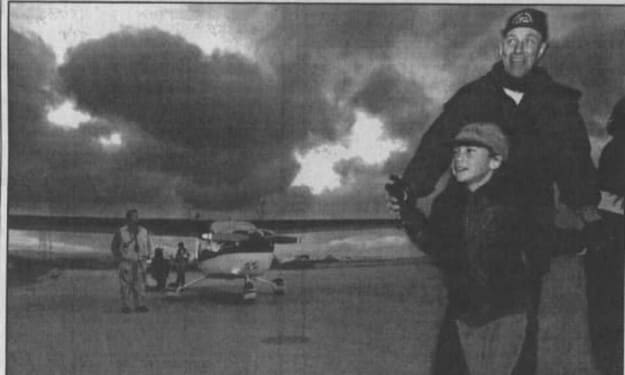
The assassination of Louis Mountbatten in 1979 was one of the most shocking acts of political violence in modern British history. A decorated naval officer, royal family member, and the last Viceroy of British India, Mountbatten had played a key role in overseeing the partition and independence of the Indian subcontinent in 1947. More than three decades later, his life ended in a violent attack when a bomb planted on his fishing boat exploded off the coast of Ireland.
By Irshad Abbasi about 4 hours ago in History
Pakistani Man Accused of Plotting to Kill Donald Trump Appears in Court
A Pakistani citizen accused of plotting to assassinate former United States President Donald Trump appeared in a U.S. federal court this week, where prosecutors outlined details of what they described as a serious and potentially dangerous plan. During the hearing, the suspect reportedly told the court that he believed he “had no other option,” a statement that immediately drew attention as authorities continue to investigate the motives and possible connections behind the alleged plot.
By Irshad Abbasi about 5 hours ago in History
Alexander the Great’s Era Workshop Discovered in Peshawar
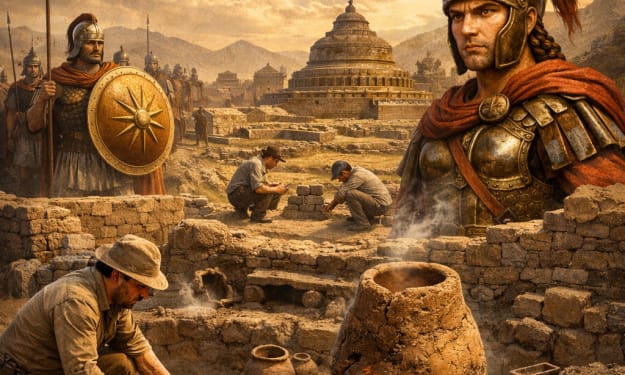
A remarkable archaeological discovery in the historic city of Peshawar has sparked excitement among historians and researchers. Archaeologists have recently uncovered the remains of an ancient workshop believed to date back to the era of Alexander the Great, the legendary Macedonian conqueror whose campaigns reshaped the ancient world. The finding offers rare insight into the economic and cultural life of the region more than two thousand years ago.
By Irshad Abbasi about 6 hours ago in History
The Ottoman Cannon: How a Single Weapon Turned an Empire into a Superpower
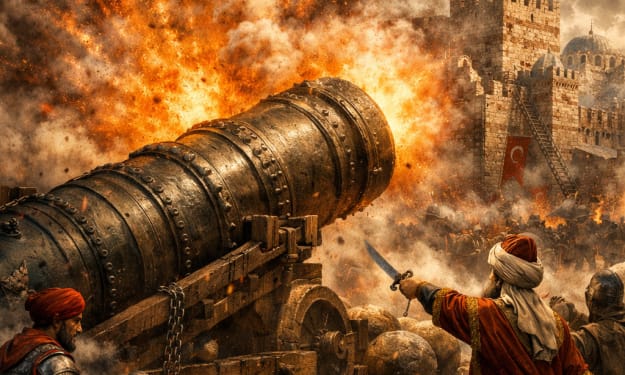
In the annals of military history, few empires owe their early prominence to a single technological innovation as much as the Ottoman Empire. Among these innovations, the development and deployment of massive artillery—especially the formidable cannons—played a pivotal role in transforming the Ottomans into a dominant power spanning three continents. From the siege of Constantinople to the eventual decline of Ottoman influence, the story of their artillery reflects both the empire’s ingenuity and its vulnerabilities.
By Irshad Abbasi about 6 hours ago in History
The Arab Revolt: How Arab Forces Allied with the British to Defeat the Ottoman Empire and Create Transjordan
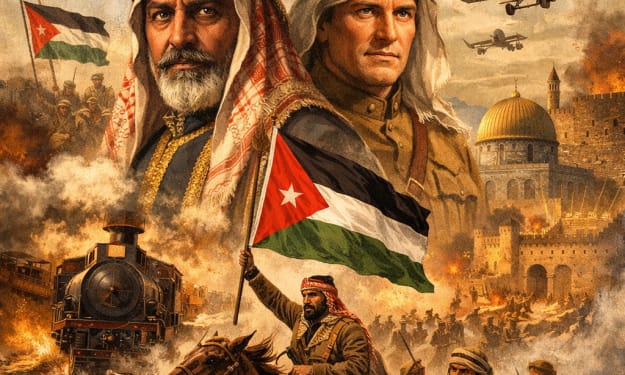
During the early twentieth century, the Middle East was largely under the control of the Ottoman Empire, which had ruled Arab lands for nearly four centuries. However, the outbreak of World War I dramatically changed the political landscape of the region. One of the most significant developments of the war in the Middle East was the Arab Revolt, a rebellion led by Arab leaders with the support of the British. This revolt ultimately contributed to the defeat of Ottoman forces in the region and laid the groundwork for the creation of Transjordan.
By Irshad Abbasi about 6 hours ago in History
World on Edge: Rising Conflicts and the Fear of a Wider War
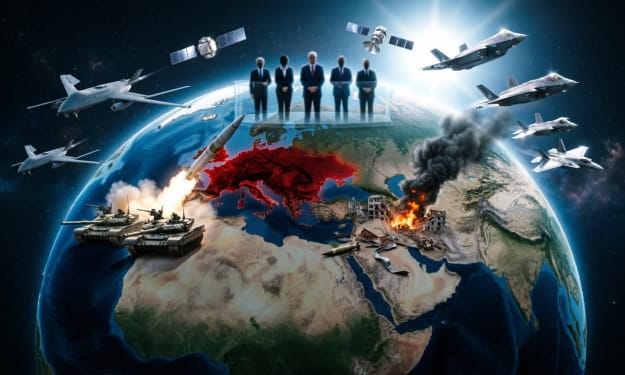
World on Edge: Rising Conflicts and the Fear of a Wider War The current global situation has become increasingly tense as several conflicts and political crises continue to develop at the same time. Many analysts believe the world is entering one of the most unstable periods since the end of the Cold War. Wars, military buildups, economic pressure, and political rivalries are creating a fragile global environment where even a small incident could trigger a much larger confrontation.
By Wings of Time about 12 hours ago in History
The Next Phase of Global Conflict: Technology, Power, and the Future of War
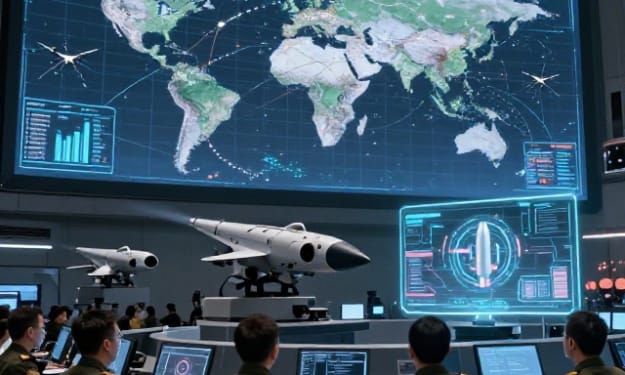
The Next Phase of Global Conflict: Technology, Power, and the Future of War The nature of war is changing faster than ever before. In the past, conflicts were fought mainly with soldiers, tanks, and aircraft. Today, however, the battlefield has expanded into cyberspace, artificial intelligence systems, and digital infrastructure. Governments around the world are rapidly investing in new technologies that could determine the balance of power in the coming decades.
By Wings of Time about 12 hours ago in History
The Middle East Question: Power, Peace, and Double Standards
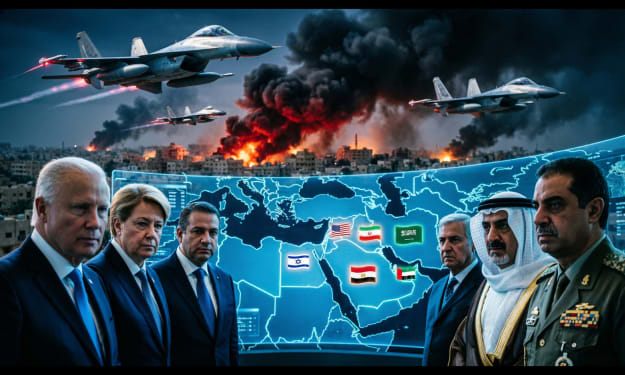
The Middle East Question: Power, Peace, and Double Standards In recent years, the conflict in the Middle East has once again raised serious questions about global politics, justice, and the meaning of peace. Many observers around the world ask the same question: if powerful countries speak so often about peace and human rights, why did they remain silent when violence and suffering were happening earlier?
By Wings of Time about 12 hours ago in History
Royal Blood and the Survival of the Throne: The Ottoman Tradition of Fratricide
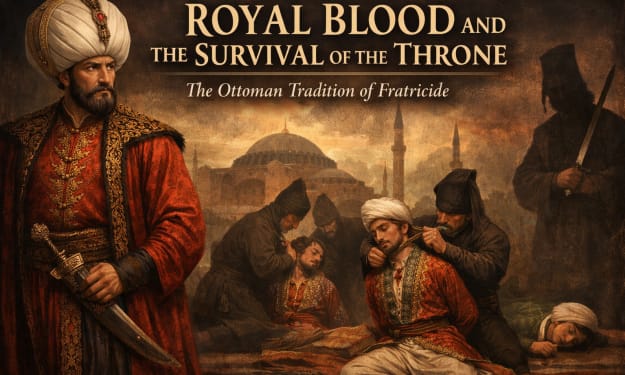
Among the many powerful dynasties in world history, the Ottoman Empire stands out for its longevity, political sophistication, and vast territorial reach. At its peak, the empire stretched across parts of Europe, Asia, and Africa, ruling over diverse peoples and cultures for more than six centuries. Yet behind the grandeur of its palaces and the power of its sultans lay a grim and controversial tradition: the execution of royal brothers to secure the throne.
By Irshad Abbasi about 17 hours ago in History
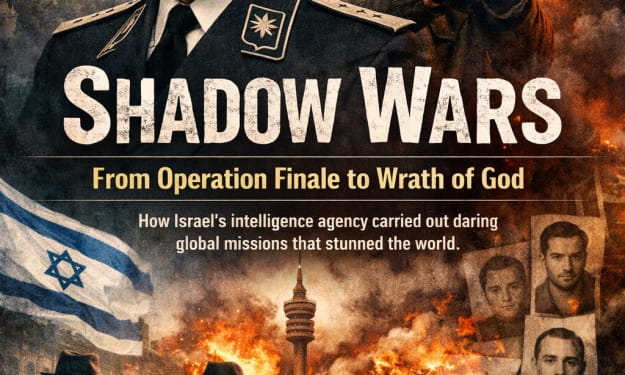
Shadow Wars: From Operation Finale to Wrath of God
Throughout modern history, intelligence agencies have operated in secrecy, carrying out missions that often remain hidden from public view. Among these organizations, the Israeli intelligence agency Mossad has gained a reputation for some of the most daring and controversial operations ever conducted. From tracking down Nazi war criminals to targeting militants responsible for attacks on Israelis, Mossad’s operations have repeatedly captured global attention. Two of the most famous missions associated with the agency are Operation Finale and Operation Wrath of God, both of which left a lasting mark on international intelligence history.
By Irshad Abbasi about 17 hours ago in History
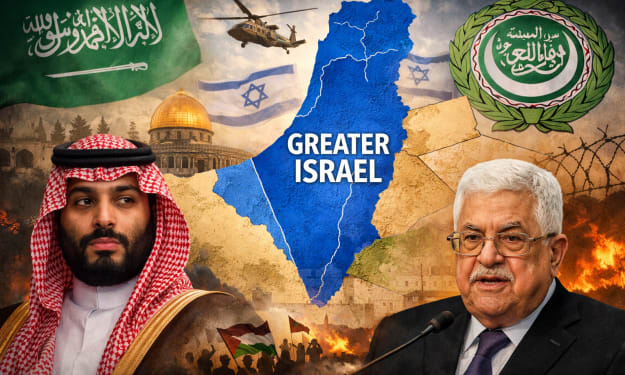
The “Greater Israel” Map Controversy: Saudi Arabia, Palestine and Arab League Condemn the Idea
A recent controversy over a map circulating online and in political discussions has reignited tensions across the Middle East. The map, often referred to as the concept of “Greater Israel,” depicts a much larger Israeli state stretching beyond its current internationally recognized borders and into parts of neighboring countries. The idea has drawn sharp condemnation from Arab states, including Saudi Arabia, Palestine, and the Arab League, who have dismissed it as dangerous political rhetoric and an unrealistic extremist vision.
By Irshad Abbasi about 17 hours ago in History