
Weaving Through Worlds: How to Learn Traditional Crafts While Traveling.
Unlocking Cultural Immersion and Sustainable Souvenirs.


The lure of travel extends beyond iconic landmarks and breathtaking landscapes. For many, it's an opportunity to connect with the soul of a place, to understand its history and culture on a deeper level. And what better way to do that than by immersing yourself in the traditional crafts that have been passed down through generations? Learning these skills while traveling allows you to not only create unique and meaningful souvenirs, but also to contribute to the preservation of cultural heritage and foster sustainable tourism.
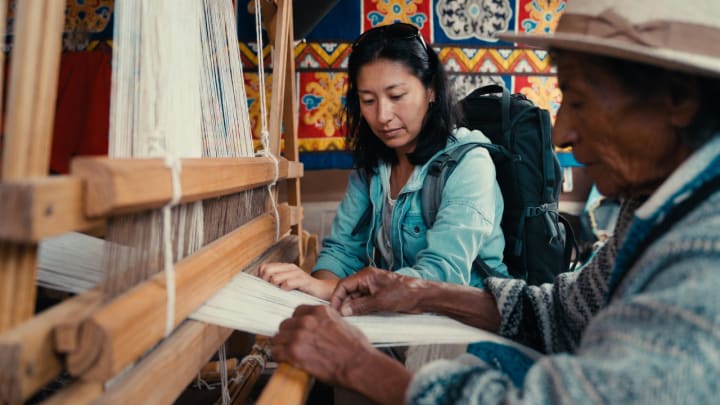
Forget the mass-produced trinkets that line tourist shops. Imagine returning home with a hand-woven scarf from the highlands of Peru, a meticulously painted ceramic tile from Portugal, or a beautifully carved wooden spoon from Japan, each imbued with the story of the place and your own personal connection to its creation. This is the power of learning traditional crafts while traveling.
But how do you embark on this enriching journey? Here’s a guide to help you navigate the world of craft learning and make the most of your experiences:
1. Research and Planning: Unearthing Hidden Gems
The first step is to identify the crafts that are specific to the regions you plan to visit. Delve into the history and cultural significance of these crafts. Consider:
What crafts are unique to the region? Think beyond the obvious. Research lesser-known crafts that might be less tourist-centric.
What are the historical roots of the craft? Understanding its origins and evolution will deepen your appreciation.
Are there any ethical considerations? Ensure the craft practice supports local communities and adheres to sustainable practices. For example, is the material sourced ethically and sustainably?
Are there workshops, classes, or artisan communities that offer instruction? Online searches, travel blogs, and local tourism boards are great resources.
2. Finding the Right Teacher: Connecting with Local Experts
The key to an authentic experience lies in finding a knowledgeable and passionate teacher. Consider these avenues:
Local Artisan Communities: Many villages and rural areas are home to artisan communities that have preserved traditional crafts for centuries. These communities often offer workshops or apprenticeship programs.
Cultural Centers and Museums: These institutions often host workshops and demonstrations featuring local artisans.
Homestays and Farmstays: Staying with a local family can provide opportunities to learn crafts firsthand, often passed down through generations within the household.
Online Platforms: Websites and platforms specializing in cultural travel experiences often connect travelers with local artisans offering workshops. Look for reviews and recommendations to ensure the authenticity of the experience.
3. Embracing the Process: Patience, Respect, and Cultural Sensitivity
Learning a traditional craft is more than just mastering a technique. It's about immersing yourself in the culture, respecting the traditions, and being patient with the learning process. Remember:
Language Barriers: Be prepared for potential language barriers and utilize translation apps or consider hiring a local translator.
Cultural Differences: Be respectful of local customs and traditions. Learn about the significance of the craft within the culture and avoid making assumptions or insensitive remarks.
Patience is Key: Learning a new skill takes time and practice. Don't be discouraged if you don't master the craft immediately. Embrace the learning process and enjoy the journey.
Ask Questions: Don't be afraid to ask questions and show genuine interest in the craft. Your curiosity will be appreciated and will deepen your understanding.
4. Ethical Considerations: Supporting Sustainable Practices
It's crucial to be mindful of the ethical implications of your craft learning experience. Support sustainable practices and ensure that your involvement benefits the local community:
Purchase Materials Locally: Buy your materials from local vendors to support their businesses and reduce your environmental impact.
Fair Trade Practices: Look for fair trade certifications or ensure that artisans are being paid a fair wage for their work.
Avoid Exploitation: Be wary of programs that exploit artisans or commodify their culture. Choose workshops that prioritize the well-being and empowerment of local communities.
Respect Intellectual Property: Be aware of copyright laws and avoid replicating designs without permission.
5. Documenting Your Journey: Creating Lasting Memories
Document your craft learning journey through photos, videos, and journaling. This will not only help you remember your experience but also allow you to share your newfound skills and knowledge with others.
Photograph Your Progress: Capture the different stages of your learning process, from the raw materials to the finished product.
Record Your Thoughts and Reflections: Write about your experiences, challenges, and insights.
Share Your Story: Share your photos and stories online or with friends and family to inspire others to explore traditional crafts while traveling.
Beyond Souvenirs: The Enduring Value
Learning traditional crafts while traveling is more than just acquiring a new skill or creating a unique souvenir. It's an opportunity to connect with a culture on a deeper level, to understand its history, and to contribute to its preservation. By embracing this approach to travel, you can create lasting memories, support sustainable practices, and enrich your life in profound ways. So, pack your bags, do your research, and prepare to weave your way through worlds, one craft at a time. You'll return home not just with a handcrafted object, but with a story to tell, and a piece of the world within you.
About the Creator
Wilson Igbasi
Hi, I'm Wilson Igbasi — a passionate writer, researcher, and tech enthusiast. I love exploring topics at the intersection of technology, personal growth, and spirituality.
Keep reading
More stories from Wilson Igbasi and writers in Humans and other communities.
The Best Historical Reenactments You Can Join.
Historical reenactments offer a rare chance to step into the past. Participants wear period clothing, perform traditional activities, and recreate major historical moments. These events combine education, culture, and entertainment. You do not only watch history. You take part in it.
By Wilson Igbasiabout 3 hours ago in Humans
Staying sane in the insane world.
”It is no measure of health to be well adjusted to a profoundly sick society.” Jiddu Krishnamurti This quote has been one of my favourites since the moment I first laid my eyes on it. To me, it cuts right through the fog of the illusion of normality that permeates our lives. And since I am someone who has never felt (well) adjusted to this society, Krishnamurti’s words gifted me with the realisation that there isn’t anything inherently wrong with me.
By Eva Smitte6 days ago in Humans
The Rise and Fall of Hamnaie
In the complex landscape of Middle Eastern politics, few figures have shaped the course of modern Iran as forcefully as Ayatollah Ali Khamenei. From his early years as a religious student to his long tenure as the Supreme Leader of the Islamic Republic, Khamenei’s story is one of ambition, influence, controversy, and ultimately, dramatic political upheaval. This article explores the arc of his life and leadership—what propelled him to power, how he governed, and the circumstances that led to his fall. Early Life and Ascent Born in 1939 in the small city of Mashhad in northeastern Iran, Ali Khamenei grew up in a devout Shiite Muslim family. From a young age, he showed a deep interest in religious scholarship and spent his formative years studying Islamic jurisprudence and philosophy. His education immersed him in the teachings of Shi’a Islam, shaping his worldview around principles of faith, authority, and the role of religion in public life. Khamenei’s early political involvement grew out of opposition to the secularizing policies of Shah Mohammad Reza Pahlavi. In the 1960s and 1970s, he became known as an articulate and committed critic of the monarchy. His activism brought him into close contact with other leaders of the Iranian revolutionary movement, including Ayatollah Ruhollah Khomeini, whose vision for an Islamic state would soon redefine Iran’s future. The Revolution and Rise to Power The 1979 Iranian Revolution was a watershed moment for both Iran and Khamenei. The overthrow of the Shah ended centuries of monarchical rule and brought religious leadership to the center of political power. Khamenei, now an influential cleric, became a key figure in the newly established Islamic Republic. In the years that followed the revolution, he served in several important roles, including as a representative in the Islamic Consultative Assembly (Iran’s parliament) and as the president of Iran. These positions allowed him to build alliances, consolidate support within religious and political networks, and enhance his reputation as a defender of the Islamic Republic’s ideals. Following the death of Ayatollah Khomeini in 1989, Iran’s Assembly of Experts selected Khamenei to succeed him as Supreme Leader—the highest authority in the country. At 50, he became one of the youngest leaders in the modern Middle East, with control over the military, judiciary, and media, alongside influence over foreign policy and religious institutions. Leadership and Controversy During his decades in power, Khamenei navigated an array of domestic and international challenges. Relations with the West, particularly the United States, remained tense. Internal tensions with reformist movements and demands for greater social freedoms also marked his tenure. Khamenei championed a vision of governance rooted in conservative religious principles, reinforced by a powerful security apparatus and ideological institutions. Supporters viewed him as a steadfast guardian of Iranian sovereignty and Islamic values. They praised his resistance to external pressure and his commitment to maintaining the revolution’s achievements. To many inside Iran and across the region, he symbolized continuity and stability in an era of upheaval. Critics, however, argued that his policies suppressed dissent, limited social freedoms, and isolated Iran economically and diplomatically. Human rights organizations raised concerns about restrictions on free expression, political opposition, and civil society. These internal tensions, combined with international sanctions related to nuclear and regional policies, created persistent pressures on the Iranian state. The Fall of a Leader In early 2026, events unfolded that dramatically altered the political landscape of the Middle East. A military conflict with Israel escalated into a full-scale confrontation involving multiple nations. Reports emerged—confirmed by some international officials—that Ayatollah Khamenei was killed during this conflict. The news sent shockwaves through Iran and beyond. Whether viewed as martyrdom by his supporters or as a dramatic turning point by his critics, Khamenei’s death marked the end of an era. For decades, he had embodied the religious and political identity of the Islamic Republic. His absence has raised urgent questions about the future direction of Iranian governance, the stability of its institutions, and the prospects for peace in a volatile region. Legacy and Future The legacy of Ayatollah Ali Khamenei will be debated for years to come. To many, he was a leader who fiercely protected national sovereignty and religious values. To others, he was a symbol of authoritarianism and missed opportunities for reform. Regardless of perspective, his life underscores the profound influence an individual can wield in shaping the history of a nation. As Iran and the wider world contemplate what comes next, the rise and fall of Khamenei offers lessons about leadership, ideology, and the complex interplay between religion and statecraft in the modern era. If you want, I can also write a shorter version, a social media summary, or an analysis piece on regional impacts of his fall.
By Hasbanullah4 days ago in Humans



Comments
There are no comments for this story
Be the first to respond and start the conversation.