
Time for China to Move From ‘Product Export’ to ‘System Export’ in Aviation Arms Trade: NPC Deputy
A Chinese lawmaker urges Beijing to evolve from exporting defence products to integrated aviation and defence systems to compete with Western arms exporters.

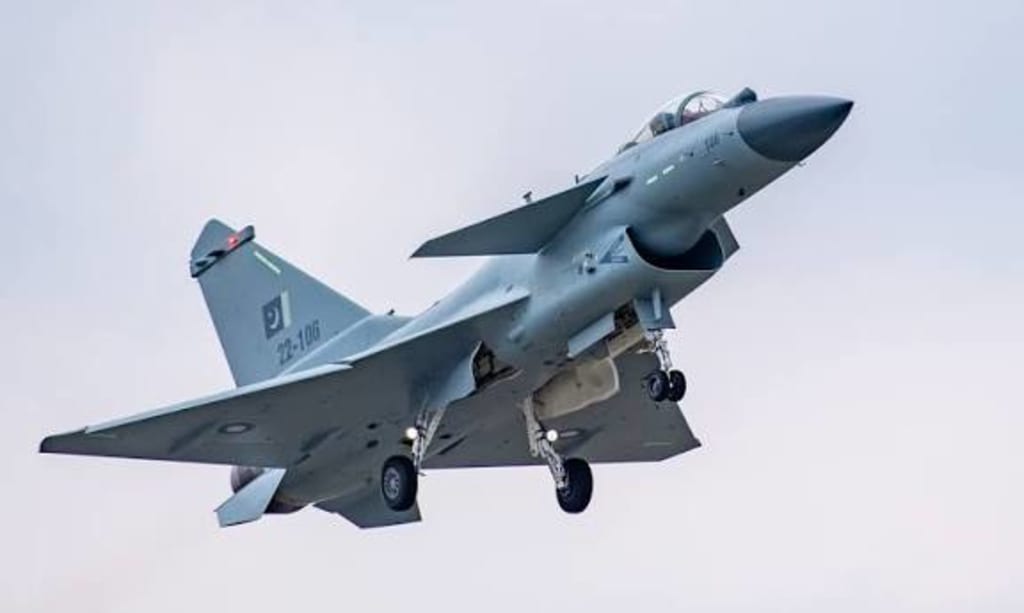
China is increasingly pushing for a strategic shift in its defence industry — moving beyond simply exporting military products to becoming a global exporter of fully integrated defence systems. That was the message delivered this week by NPC Deputy Zhang Wei, a member of the National People’s Congress, during a high‑profile defence industry forum in Beijing. Zhang’s comments underscore China’s ambitions to compete more directly with the United States and other major arms exporters in the global aviation and military hardware market.
“The era in which we are content to sell standalone products — fighters, missiles, radars — must give way to a pursuit of complete systems that integrate across air, space, and cyberspace,” Zhang told delegates. “This is not just an industrial upgrade, but a strategic imperative if China is to deepen partnerships with foreign militaries and contribute to international security.”
From “Product” to “System” Export
For decades, Chinese defence exports have primarily consisted of “products”: individual platforms such as aircraft, helicopters, surface‑to‑air missiles, and naval vessels. Many of these offerings — notably the Chengdu J‑10, Hongdu L‑15, and various drone types — have found buyers in Africa, Southeast Asia, and the Middle East, particularly among countries seeking more affordable alternatives to Western hardware.
However, the global arms trade has increasingly shifted toward integrated systems — packages that include not just the hardware itself but command‑and‑control infrastructure, logistics support, training, and ongoing upgrades. Western defence firms, particularly those in the United States and Europe, now sell such systems to allied militaries, bolstered by long‑term service contracts and interoperability with existing Western military networks.
Zhang emphasised that China must position itself to offer not just platforms, but “complete solutions” for prospective buyers. “Our emphasis must move from what the hardware can do on its own to what it can achieve in the context of a broader defence ecosystem,” he said, echoing similar calls from senior equipment designers and People’s Liberation Army (PLA) strategists.
Strategic Rationale and Global Context
China’s defence industry has made impressive strides in recent decades. Its jets, UAVs, and missiles now rival many Western designs on performance metrics, and Beijing has steadily improved its ability to produce advanced microelectronics, sensors, and propulsion systems. Yet its share of the international arms market remains significantly smaller than that of the United States Department of Defense and European exporters such as France’s Dassault Aviation and the United Kingdom’s BAE Systems.
According to SIPRI arms transfer data, China accounted for roughly 5 per cent of global major arms exports in recent years, compared with about 37 per cent for the United States. European exporters together held another large share. China’s market presence is strongest in nations that often face sanctions or restrictions on Western equipment, including Pakistan, Myanmar, and some African states.
By promoting system exports, China hopes to expand beyond these traditional markets and appeal to countries seeking high‑end, interoperable defence solutions without political restrictions tied to Western alliances. This could include emerging aviation systems tied to integrated air‑defence networks, logistics‑management suites, and even cyber‑enabled maintenance systems that increase uptime and reduce lifecycle costs.
Aviation and the Arms Trade
Aviation remains at the centre of this strategic shift. Integrated solutions in the aviation domain now include not just the aircraft themselves but weapons payloads, datalinks, sensor fusion packages, and training simulators that allow air forces to operate effectively as part of multi‑domain battle networks.
Zhang cited recent advances by China’s defence conglomerates — including Aviation Industry Corporation of China (AVIC) and China Aerospace Science and Industry Corporation (CASIC) — as evidence that China now has the industrial base to pursue integrated offerings. “We have matured to the point where we can offer not just discrete aircraft but entire aerial ecosystems that include surveillance, strike, and defensive capabilities working in concert,” he said.
Challenges and Skepticism
Despite the ambition, analysts warn that China faces several obstacles in making the leap from product to system exporter. These include questions about interoperability with existing military frameworks in buyer countries, intellectual property concerns, and political apprehension — particularly among nations wary of close ties with Beijing.
There are also internal challenges. China’s defence industry has historically focused on producing equipment for its own PLA needs, which do not always translate directly to export markets. Building robust after‑sales support networks — critical for system exports — requires investment in foreign infrastructure and long‑term commitments that many Chinese firms have historically been reluctant to make.
What This Means for the Global Arms Market
If China succeeds, the implications for the global arms trade could be significant. Western exporters, which have long dominated the market for integrated defence systems, could face increased competition in regions where cost, neutrality, and fewer political strings are attractive to buyers. Additionally, a more competitive Chinese offer could encourage buyers to demand better terms and interoperability regardless of source, potentially raising capabilities across multiple regions.
Zhang’s comments signal a strategic recalibration within China: an effort to redefine its role not just as a producer of defence hardware, but as a provider of complex, sustained defence solutions. Whether that shift takes hold will depend on China’s ability to build trust with buyers, invest in global support infrastructure, and continue improving the technological sophistication of its offerings.
About the Creator
Fiaz Ahmed
I am Fiaz Ahmed. I am a passionate writer. I love covering trending topics and breaking news. With a sharp eye for what’s happening around the world, and crafts timely and engaging stories that keep readers informed and updated.
Keep reading
More stories from Fiaz Ahmed and writers in Journal and other communities.
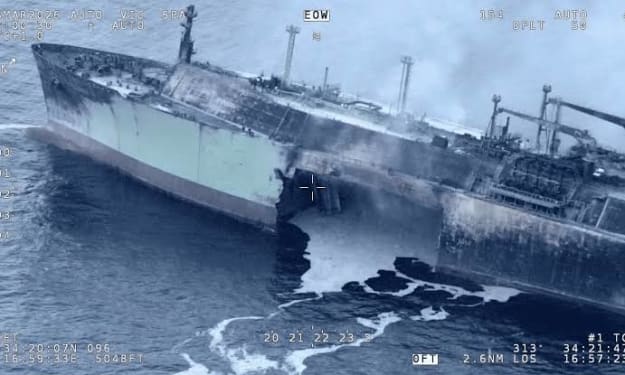
Russian ‘Shadow Fleet’ LNG Tankers Reroute After Blast Sinks ‘Arctic Metagaz’ in Mediterranean
One of Russia’s sanctioned liquefied natural gas (LNG) carriers has sunk in the Mediterranean Sea, prompting remaining vessels tied to the Kremlin’s so‑called “shadow fleet” to halt, delay, or change routing as fears grow about the safety of key shipping corridors. The incident — which Moscow says was caused by a Ukrainian naval drone attack — highlights escalating risks to maritime energy transport as Russia’s energy exports face mounting pressure from conflict and sanctions. The Arctic Metagaz, an LNG tanker linked to Russia’s Arctic LNG 2 export project, was destroyed off the coast of Libya — roughly 150 nautical miles north of Malta — after experiencing powerful explosions and catching fire in early March. Italian and Libyan maritime authorities confirmed the vessel sank following a major blaze that engulfed it late on March 3, though all 30 crew members were safely evacuated by rescue teams. Russia Blames Ukrainian Drones In statements released after the sinking, the Russian Ministry of Transport accused Ukraine of directing a drone attack from the Libyan coast using naval unmanned boats, marking what Moscow described as an act of “international terrorism and maritime piracy.” Ukrainian officials have not publicly commented on the accusation. While state media narratives frame the incident as a deliberate strike on Russian energy infrastructure, independent verification of the attack’s cause remains limited. Some analysts note that Moscow’s sanctioned vessels, often operating outside Western restrictions, have become symbolic targets because of their role in bypassing sanctions aimed at cutting Russia’s energy revenue. A Blow to Russia’s Shadow Fleet Logistics The sinking of Arctic Metagaz has had an immediate impact on the operations of Russia’s “shadow fleet” — a collection of older tankers that transport hydrocarbons for sanctioned energy projects, such as Arctic LNG 2, around the world. The fleet has already been constrained by Western sanctions that limit access to insurance, financing, and port services, leaving only a small number of vessels able to carry cargo. Tracking data shows that several other Russian LNG carriers altered their movements in response to the blast. The Arctic Pioneer, which was transiting north through the Suez Canal at the time of the explosion, appears to have held offshore near Port Said for over 48 hours. Meanwhile, the Arctic Vostok, originally sailing westward across the eastern Indian Ocean, changed course and began heading south, possibly preparing to circumvent the Suez Canal by way of the Cape of Good Hope at Africa’s southern tip. Such deviations represent a rare and costly departure from established Arctic LNG‑to‑Asia routes. Circumnavigating Africa adds thousands of nautical miles — and weeks — to voyages, significantly increasing fuel costs, crew time, and delivery schedules. For a fleet already stretched thin, these disruptions could weaken Russia’s ability to sustain consistent LNG exports. Broader Energy Market Ripples The Arctic LNG 2 project was already running at a fraction of its full capacity due to logistical limitations and sanctions. This latest incident underscores how fragile those supply chains have become and how geopolitics can impact global energy flows far from conflict zones. Analysts warn that if other vessels begin to avoid the Mediterranean entirely, the additional transit time will reduce the number of voyages each tanker can complete in a year, tightening shipments to buyers — especially in East Asia — and potentially driving up LNG prices. Some industry observers say that Russia may have to rely increasingly on direct Arctic routes in summer months or seek alternative buyers closer to its production hubs. However, these options remain limited given fleet size and sanctions constraints. Risks to Shipping and Regional Security The incident also highlights the increasing vulnerability of energy tankers in contested waters. As global geopolitical tensions intersect — from the Ukraine war to Middle Eastern instability — commercial vessels are frequently caught between military actions and international sanctions regimes. Cruise ships, cargo carriers, and LNG tankers alike face heightened risk of unexpected attacks or collateral damage when navigating strategic chokepoints such as the Mediterranean and Suez transit route. Environmental concerns also linger following the sinking. Although LNG tankers carry less oil than typical crude carriers, authorities in the region continue to monitor the site for potential gas release or secondary impacts on marine ecosystems. Meanwhile, shipping insurers and charterers are reassessing risk models for vessels traveling near conflict zones. Looking Ahead For Moscow, the loss of Arctic Metagaz complicates an already strained export strategy and could prompt broader changes in how Russia moves LNG to global markets. Whether remaining tankers will continue to transit high‑risk corridors or adopt longer, safer routes around Africa remains an open question. The decision will hinge on geopolitical developments, insurance availability, and how both Russian and Western authorities respond to this high‑profile maritime incident.
By Fiaz Ahmed about 6 hours ago in Journal
Rachel Reviews: Lakefront Wolves by Joseph Deegan
Meet Finn. He's an 18 year old kid who has potential. He's bright with great school scores and he's also an athlete, a footballer of some prowess. He has it all going for him, it would seem, and yet, he's determined to send what could be a well-planned, stable existence firmly off the rails. He drinks, he smokes, he takes drugs, he has violent tendencies and he's in danger of losing not only his mind but all that he holds dear.
By Rachel Deeming5 days ago in BookClub


Comments
There are no comments for this story
Be the first to respond and start the conversation.