economy
Economy and the area of production, distribution, trade, and consumption of goods and services.
How China’s Eyewear Supply Chain Fuels Lucrative D2C Brands
Two weeks ago, a European client came to us. They wanted to launch a line of eyewear including optional non-prescription or light reading lenses, sunglasses for cycling, fishing, skiing, and running, along with a few related accessories. They wanted product performance close to well-known brands like Oakley or Smith Optics, but at a much more competitive price.
By Jingsourcing.com about 3 hours ago in Journal
Shell Signs Oil and Gas Exploration Deal in Kazakhstan. AI-Generated.
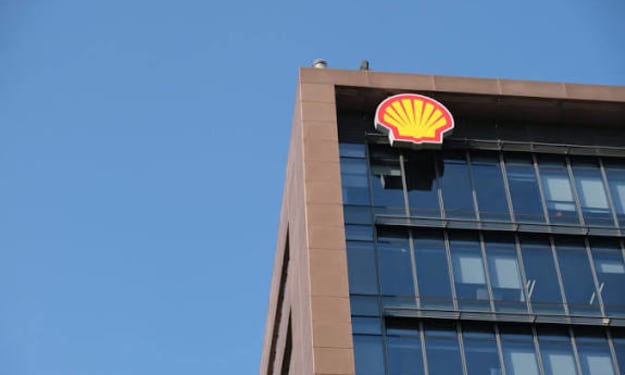
Energy giant Shell plc has signed a new agreement with the government of Kazakhstan to explore oil and gas resources in the country’s western region, marking another step in the long-standing partnership between the international energy major and the Central Asian producer. The contract focuses on geological exploration at the Zhanaturmys block in the Aktobe region, an area considered to hold significant untapped hydrocarbon potential. The agreement was signed by Kazakhstan’s Deputy Energy Minister Yerlan Akbarov and Suzanne Coogan, senior vice president and country chair of Shell Kazakhstan. Under the terms of the contract, Shell will carry out seismic surveys, geological data collection, and technical evaluations to determine the commercial potential of oil and gas reserves in the Zhanaturmys area. The exploration contract is expected to run until 2032, reflecting the scale and technical complexity of the project. Authorities say the work program will involve advanced geological studies and potentially the drilling of a deep exploration well if early surveys confirm promising structures. Expanding Kazakhstan’s Resource Base Kazakhstan’s government sees the project as part of its strategy to strengthen the country’s hydrocarbon resource base and maintain its position as one of the leading energy producers in Eurasia. The Zhanaturmys block spans roughly 1,377 square kilometres, placing it within one of the most promising oil and gas basins in western Kazakhstan. Deputy Energy Minister Akbarov said the project is intended to support the country’s long-term energy security and stimulate economic growth through increased exploration activity. Officials believe the new initiative could attract further investment into Kazakhstan’s energy sector and help diversify exploration beyond existing producing fields. Shell also committed to supporting regional development as part of the agreement. According to Kazakhstan’s energy ministry, the company will allocate funding to local socio-economic programs during the life of the project, contributing to infrastructure and community development in the Aktobe region. Shell’s Long Presence in Kazakhstan Shell has operated in Kazakhstan for decades and remains one of the major international investors in the country’s oil and gas industry. The company holds stakes in several key projects, including the giant Kashagan oil field in the Caspian Sea and the Karachaganak Field gas-condensate project in northwestern Kazakhstan. These projects have made Kazakhstan one of the most important energy producers in the former Soviet region. Kashagan alone is considered one of the largest oil discoveries of the past three decades and plays a major role in the country’s export capacity. Despite these long-standing partnerships, relations between international oil companies and the Kazakh government have occasionally been complicated by legal disputes over project costs and environmental issues. In recent years, arbitration cases involving major projects have raised questions about future investment conditions in the country’s energy sector. Nevertheless, the new exploration deal suggests that both sides remain committed to cooperation. Shell executives say the contract reinforces the company’s long-term strategic interest in Kazakhstan’s energy resources and its willingness to continue applying advanced exploration technologies in the region. Strategic Importance for Global Energy The agreement comes at a time when global energy markets are facing increasing volatility. Rising geopolitical tensions, supply disruptions, and shifting demand patterns have encouraged oil companies to seek new exploration opportunities to secure future production. Kazakhstan, with its vast reserves and established export infrastructure, remains an attractive destination for energy investment. Much of its oil is transported through pipelines such as the Caspian Pipeline Consortium, which carries crude from Kazakhstan’s fields to export terminals on the Black Sea. For Shell, expanding exploration in Kazakhstan helps maintain its global portfolio of upstream assets while strengthening its presence in Central Asia’s energy sector. Looking Ahead Exploration activities in the Zhanaturmys block are expected to begin with seismic surveys and technical studies in the coming years. If commercial reserves are confirmed, the project could eventually lead to new production developments that would further boost Kazakhstan’s energy output. For now, both Shell and Kazakhstan are positioning the agreement as a sign of renewed confidence in the country’s hydrocarbon potential. As energy demand continues to evolve worldwide, the results of this exploration effort could shape the next phase of investment in Kazakhstan’s oil and gas industry.
By Fiaz Ahmed about 5 hours ago in Journal
Asia’s Big Economies Brace for Iran War Energy Shock. AI-Generated.
As the war surrounding Iran widens and disrupts key fuel supply routes, major Asian economies are preparing for a potentially severe energy shock that could affect everything from inflation and trade balances to industrial output and geopolitical strategy. Countries such as China, India, Japan, and South Korea are deeply exposed to disruptions of oil and liquefied natural gas (LNG) shipments flowing from the Persian Gulf through the Strait of Hormuz — a chokepoint that carries roughly 20 per cent of global crude and LNG exports. Energy markets reacted sharply as the conflict intensified, with crude benchmarks such as Brent rising past $80 per barrel and LNG spot prices in Asia jumping to multi‑year highs as supply fears mounted. Traders and analysts warn that if the war prolongs or further infrastructure is targeted, the lack of reliable fuel flows could push prices significantly higher. Why Hormuz Matters to Asia The Strait of Hormuz — a narrow maritime passage between Oman and Iran — is vital to global energy trade. In 2025, it carried about 13 million barrels per day of crude and nearly a fifth of worldwide LNG cargoes destined mainly for Asia. Because many Asian states do not produce significant fossil fuels domestically, they depend on uninterrupted shipments through this corridor for transportation fuel, industrial power, and electricity generation. Among the most exposed are Japan and South Korea, which import more than 70 per cent of their crude from the Middle East, and nations such as Thailand and the Philippines, where energy imports constitute a significant share of total GDP. Nomura analysts highlight that every sustained 10 per cent rise in oil prices could erode economic growth and widen current account deficits in these countries. Even China, while more diversified and holding strategic petroleum reserves, is vulnerable due to its sheer scale of fuel imports. Beijing relies on Middle Eastern crude for a large share of its energy needs and has tapped Russian and other non‑Gulf supplies to hedge risk — yet these measures provide only a temporary cushion and cannot fully substitute lost Hormuz volumes. Immediate Market and Economic Impact The sudden threat to key energy flows has triggered a broader spike in commodities markets. Brent oil prices have climbed sharply, with the risk premium — essentially the price added because of geopolitical uncertainty — contributing to intensified inflationary pressures across the region. Asia’s energy‑intensive sectors — petrochemicals, manufacturing, and transportation — are among the first to feel the impact of higher fuel costs. LNG markets are also under stress. Qatar, one of the world’s largest LNG exporters, temporarily halted production at major facilities after strikes heightened security risks, tightening global supplies and pushing Asian LNG spot prices sharply upward. For countries such as Bangladesh, which recently faced sharp increases in LNG prices and subsequent energy rationing after regional supply disruptions, the shock has real economic consequences beyond headline price spikes. Higher energy bills flow quickly into transport, fertilizer production, and household costs, compounding inflation and potentially slowing growth. Government Responses and Strategic Adjustments Asian governments are taking preemptive steps to mitigate the crisis. China and India have reportedly accelerated talks with alternative suppliers, including Russia and West African producers, and are tapping strategic reserves to cushion short‑term supply disruptions. Japan and South Korea have raised their alert levels for energy security, emphasizing stockpile management and diversifying fuel sourcing. At the same time, regional infrastructure investments are speeding forward, with some governments exploring expedited approvals for LNG terminals and renewable energy projects to lessen long‑term dependence on imported hydrocarbons. Central banks and financial authorities are also monitoring the spillover effects. Energy price spikes typically feed into broader inflation measures, influencing monetary policy decisions that affect interest rates, consumer spending, and capital flows. Analysts warn that prolonged elevated energy prices could slow regional growth, particularly if compounded by reduced export competitiveness due to higher production costs. Risks and Longer‑Term Concerns Economists caution that even if the Strait of Hormuz does not close entirely, partial disruption can still have outsized effects on energy markets. Supply bottlenecks, higher shipping rates due to route diversions, and elevated insurance premiums for tanker traffic could all combine to sustain higher costs. Over the long term, the crisis underscores Asia’s structural vulnerability to overseas energy shocks and the urgency of investing in domestic energy security measures, from renewables and energy efficiency to regional cooperation on supply diversification. Conclusion Asia’s biggest economies are entering what analysts describe as “preparation mode” — balancing short‑term emergency responses with strategic shifts that could redefine energy trade and security in a turbulent era. The region’s exposure to Middle East energy risks has been starkly revealed, and policymakers are now forced to confront the economic consequences of prolonged instability thousands of miles away — with implications that reach far beyond oil prices and into the heart of regional growth and stability.
By Fiaz Ahmed about 5 hours ago in Journal
Time for China to Move From ‘Product Export’ to ‘System Export’ in Aviation Arms Trade: NPC Deputy. AI-Generated.
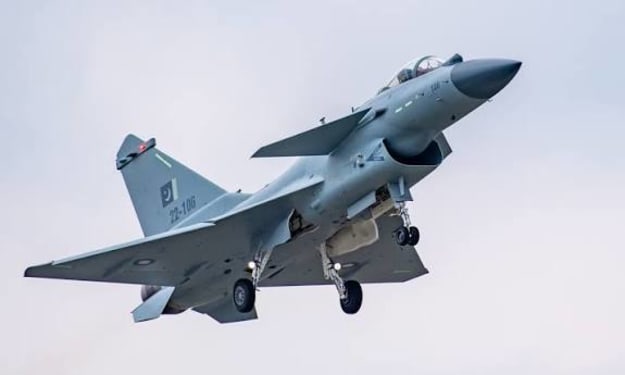
China is increasingly pushing for a strategic shift in its defence industry — moving beyond simply exporting military products to becoming a global exporter of fully integrated defence systems. That was the message delivered this week by NPC Deputy Zhang Wei, a member of the National People’s Congress, during a high‑profile defence industry forum in Beijing. Zhang’s comments underscore China’s ambitions to compete more directly with the United States and other major arms exporters in the global aviation and military hardware market. “The era in which we are content to sell standalone products — fighters, missiles, radars — must give way to a pursuit of complete systems that integrate across air, space, and cyberspace,” Zhang told delegates. “This is not just an industrial upgrade, but a strategic imperative if China is to deepen partnerships with foreign militaries and contribute to international security.” From “Product” to “System” Export For decades, Chinese defence exports have primarily consisted of “products”: individual platforms such as aircraft, helicopters, surface‑to‑air missiles, and naval vessels. Many of these offerings — notably the Chengdu J‑10, Hongdu L‑15, and various drone types — have found buyers in Africa, Southeast Asia, and the Middle East, particularly among countries seeking more affordable alternatives to Western hardware. However, the global arms trade has increasingly shifted toward integrated systems — packages that include not just the hardware itself but command‑and‑control infrastructure, logistics support, training, and ongoing upgrades. Western defence firms, particularly those in the United States and Europe, now sell such systems to allied militaries, bolstered by long‑term service contracts and interoperability with existing Western military networks. Zhang emphasised that China must position itself to offer not just platforms, but “complete solutions” for prospective buyers. “Our emphasis must move from what the hardware can do on its own to what it can achieve in the context of a broader defence ecosystem,” he said, echoing similar calls from senior equipment designers and People’s Liberation Army (PLA) strategists. Strategic Rationale and Global Context China’s defence industry has made impressive strides in recent decades. Its jets, UAVs, and missiles now rival many Western designs on performance metrics, and Beijing has steadily improved its ability to produce advanced microelectronics, sensors, and propulsion systems. Yet its share of the international arms market remains significantly smaller than that of the United States Department of Defense and European exporters such as France’s Dassault Aviation and the United Kingdom’s BAE Systems. According to SIPRI arms transfer data, China accounted for roughly 5 per cent of global major arms exports in recent years, compared with about 37 per cent for the United States. European exporters together held another large share. China’s market presence is strongest in nations that often face sanctions or restrictions on Western equipment, including Pakistan, Myanmar, and some African states. By promoting system exports, China hopes to expand beyond these traditional markets and appeal to countries seeking high‑end, interoperable defence solutions without political restrictions tied to Western alliances. This could include emerging aviation systems tied to integrated air‑defence networks, logistics‑management suites, and even cyber‑enabled maintenance systems that increase uptime and reduce lifecycle costs. Aviation and the Arms Trade Aviation remains at the centre of this strategic shift. Integrated solutions in the aviation domain now include not just the aircraft themselves but weapons payloads, datalinks, sensor fusion packages, and training simulators that allow air forces to operate effectively as part of multi‑domain battle networks. Zhang cited recent advances by China’s defence conglomerates — including Aviation Industry Corporation of China (AVIC) and China Aerospace Science and Industry Corporation (CASIC) — as evidence that China now has the industrial base to pursue integrated offerings. “We have matured to the point where we can offer not just discrete aircraft but entire aerial ecosystems that include surveillance, strike, and defensive capabilities working in concert,” he said. Challenges and Skepticism Despite the ambition, analysts warn that China faces several obstacles in making the leap from product to system exporter. These include questions about interoperability with existing military frameworks in buyer countries, intellectual property concerns, and political apprehension — particularly among nations wary of close ties with Beijing. There are also internal challenges. China’s defence industry has historically focused on producing equipment for its own PLA needs, which do not always translate directly to export markets. Building robust after‑sales support networks — critical for system exports — requires investment in foreign infrastructure and long‑term commitments that many Chinese firms have historically been reluctant to make. What This Means for the Global Arms Market If China succeeds, the implications for the global arms trade could be significant. Western exporters, which have long dominated the market for integrated defence systems, could face increased competition in regions where cost, neutrality, and fewer political strings are attractive to buyers. Additionally, a more competitive Chinese offer could encourage buyers to demand better terms and interoperability regardless of source, potentially raising capabilities across multiple regions. Zhang’s comments signal a strategic recalibration within China: an effort to redefine its role not just as a producer of defence hardware, but as a provider of complex, sustained defence solutions. Whether that shift takes hold will depend on China’s ability to build trust with buyers, invest in global support infrastructure, and continue improving the technological sophistication of its offerings.
By Fiaz Ahmed about 5 hours ago in Journal
Russian ‘Shadow Fleet’ LNG Tankers Reroute After Blast Sinks ‘Arctic Metagaz’ in Mediterranean. AI-Generated.
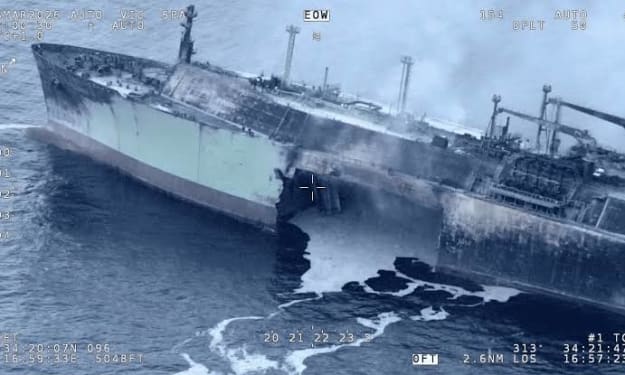
One of Russia’s sanctioned liquefied natural gas (LNG) carriers has sunk in the Mediterranean Sea, prompting remaining vessels tied to the Kremlin’s so‑called “shadow fleet” to halt, delay, or change routing as fears grow about the safety of key shipping corridors. The incident — which Moscow says was caused by a Ukrainian naval drone attack — highlights escalating risks to maritime energy transport as Russia’s energy exports face mounting pressure from conflict and sanctions. The Arctic Metagaz, an LNG tanker linked to Russia’s Arctic LNG 2 export project, was destroyed off the coast of Libya — roughly 150 nautical miles north of Malta — after experiencing powerful explosions and catching fire in early March. Italian and Libyan maritime authorities confirmed the vessel sank following a major blaze that engulfed it late on March 3, though all 30 crew members were safely evacuated by rescue teams. Russia Blames Ukrainian Drones In statements released after the sinking, the Russian Ministry of Transport accused Ukraine of directing a drone attack from the Libyan coast using naval unmanned boats, marking what Moscow described as an act of “international terrorism and maritime piracy.” Ukrainian officials have not publicly commented on the accusation. While state media narratives frame the incident as a deliberate strike on Russian energy infrastructure, independent verification of the attack’s cause remains limited. Some analysts note that Moscow’s sanctioned vessels, often operating outside Western restrictions, have become symbolic targets because of their role in bypassing sanctions aimed at cutting Russia’s energy revenue. A Blow to Russia’s Shadow Fleet Logistics The sinking of Arctic Metagaz has had an immediate impact on the operations of Russia’s “shadow fleet” — a collection of older tankers that transport hydrocarbons for sanctioned energy projects, such as Arctic LNG 2, around the world. The fleet has already been constrained by Western sanctions that limit access to insurance, financing, and port services, leaving only a small number of vessels able to carry cargo. Tracking data shows that several other Russian LNG carriers altered their movements in response to the blast. The Arctic Pioneer, which was transiting north through the Suez Canal at the time of the explosion, appears to have held offshore near Port Said for over 48 hours. Meanwhile, the Arctic Vostok, originally sailing westward across the eastern Indian Ocean, changed course and began heading south, possibly preparing to circumvent the Suez Canal by way of the Cape of Good Hope at Africa’s southern tip. Such deviations represent a rare and costly departure from established Arctic LNG‑to‑Asia routes. Circumnavigating Africa adds thousands of nautical miles — and weeks — to voyages, significantly increasing fuel costs, crew time, and delivery schedules. For a fleet already stretched thin, these disruptions could weaken Russia’s ability to sustain consistent LNG exports. Broader Energy Market Ripples The Arctic LNG 2 project was already running at a fraction of its full capacity due to logistical limitations and sanctions. This latest incident underscores how fragile those supply chains have become and how geopolitics can impact global energy flows far from conflict zones. Analysts warn that if other vessels begin to avoid the Mediterranean entirely, the additional transit time will reduce the number of voyages each tanker can complete in a year, tightening shipments to buyers — especially in East Asia — and potentially driving up LNG prices. Some industry observers say that Russia may have to rely increasingly on direct Arctic routes in summer months or seek alternative buyers closer to its production hubs. However, these options remain limited given fleet size and sanctions constraints. Risks to Shipping and Regional Security The incident also highlights the increasing vulnerability of energy tankers in contested waters. As global geopolitical tensions intersect — from the Ukraine war to Middle Eastern instability — commercial vessels are frequently caught between military actions and international sanctions regimes. Cruise ships, cargo carriers, and LNG tankers alike face heightened risk of unexpected attacks or collateral damage when navigating strategic chokepoints such as the Mediterranean and Suez transit route. Environmental concerns also linger following the sinking. Although LNG tankers carry less oil than typical crude carriers, authorities in the region continue to monitor the site for potential gas release or secondary impacts on marine ecosystems. Meanwhile, shipping insurers and charterers are reassessing risk models for vessels traveling near conflict zones. Looking Ahead For Moscow, the loss of Arctic Metagaz complicates an already strained export strategy and could prompt broader changes in how Russia moves LNG to global markets. Whether remaining tankers will continue to transit high‑risk corridors or adopt longer, safer routes around Africa remains an open question. The decision will hinge on geopolitical developments, insurance availability, and how both Russian and Western authorities respond to this high‑profile maritime incident.
By Fiaz Ahmed about 8 hours ago in Journal
LNG Shipping Rates Soar 650% to $300,000 Per Day. AI-Generated.
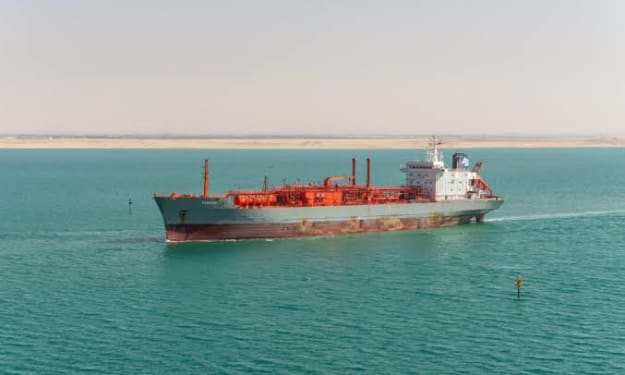
Global liquefied natural gas (LNG) shipping rates have spiked dramatically in recent weeks, with some charter rates climbing as much as 650 percent to about $300,000 per day — a surge driven by widespread supply disruptions tied to geopolitical tensions in the Middle East and pressure on global energy markets. The increase has sent shockwaves through commodity markets, shipping firms, and LNG buyers, highlighting how sensitive energy logistics are to political instability and supply chain risk. Why Rates Are Skyrocketing The main catalyst for the surge in LNG charter rates is the disruption of traditional shipping routes, particularly those passing through the Strait of Hormuz. This narrow waterway, which sits between Iran and Oman, is a major artery for crude oil and LNG tankers. Recent military escalations and attacks on vessels in the Gulf have pushed shippers to re‑route around longer and less predictable pathways, increasing voyage times, fuel costs, and operational complexity for tanker fleets. Under normal circumstances, LNG ships traveling from the Middle East to major consuming regions such as East Asia and Europe would use the most direct route through Hormuz, keeping transit times and costs down. But with regional airspace restrictions, military activity, and heightened risk of missile or drone incidents against commercial vessels, many operators are opting for alternative passages — such as sailing around Africa’s Cape of Good Hope — adding thousands of nautical miles to each journey. Longer routes mean more time at sea, higher bunker fuel bills, and fewer voyages per year for each vessel. As a result, demand for available LNG carriers has outstripped supply, pushing daily charter rates upward. According to shipping brokers, some modern large‑class LNG carriers that typically earn $40,000–$50,000 per day before the crisis are now commanding up to $300,000 per day on the spot market — a roughly 650 percent increase. Market Impact Beyond Shipping The surge in shipping costs is affecting more than just vessel operators. LNG buyers are feeling the impact in contract pricing and delivery strategies, and refiners and utilities in Europe and Asia are wrestling with tighter supply and rising costs. Because LNG is sold on both long‑term contracts and short‑term spot markets, volatile freight costs can quickly get passed through to consumers or squeeze the margins of energy companies. In recent weeks, some LNG cargoes have been rerouted, delayed, or canceled as buyers reassess the total cost of delivered fuel. For countries like Japan and South Korea, which depend heavily on LNG for power generation, the combination of higher freight rates and constrained supply options has raised concerns ahead of peak seasonal demand periods. European consumers, already contending with higher energy prices due to regional instability, may also face elevated utility bills if LNG cargoes become more expensive to deliver. Why the Current Situation Is Worse Than Normal Several factors have converged to make the current surge in LNG shipping rates sharper than past disruptions: 1. Limited Spare Shipping Capacity: Before the crisis, the global LNG fleet was already operating near peak utilization due to recovery in demand after the pandemic. Fewer idle vessels mean less flexibility in redeploying ships to new routes. 2. Longer Routes Increase Demand: As carriers avoid high‑risk areas, each round trip takes more time and ties up each vessel for longer, reducing overall fleet efficiency. 3. Insurance Costs Rising: Insurers have added premiums and exclusions for vessels transiting high‑risk zones, making some shipowners reluctant to risk sailings without higher compensation. This further reduces available capacity and drives brokers to raise freight rates to attract willing operators. 4. Energy Market Volatility: Elevated crude and LNG prices have increased the overall cost of energy logistics, leading charterers to commit to higher freight rates rather than risk missing critical deliveries. Responses from Industry Players Shipping companies and charter brokers say the spike is temporary but caution that volatility could persist if geopolitical tensions continue. Several major shippers have announced measures to mitigate risk, including: Rebalancing Ship Deployment: Reallocating vessels from other regions to cover high‑demand LNG routes. Multi‑Year Contracts: Locking in long‑term charters at elevated rate floors to secure capacity. Rerating Risk Models: Re‑evaluating risk assessments to incorporate persistent geopolitical uncertainty. Some LNG buyers are exploring portfolio diversification, seeking alternative suppliers that can deliver from less volatile regions. Others are working with national governments to negotiate strategic deliveries and secure access to existing contracts. Broader Economic Implications The LNG freight surge illustrates how geopolitical instability can ripple through the interconnected global energy system. High shipping costs may accelerate energy price inflation, add pressure to already tense global supply chains, and force buyers to rethink their consumption and contract strategies. Emerging economies and developing countries that rely on LNG imports could be particularly vulnerable to higher delivered energy costs. Meanwhile, energy traders and analysts warn that if the Middle East conflict continues or expands, freight rates for other energy commodities — including crude oil tankers and LPG carriers — could face similar pressure, compounding costs across the maritime fuel transportation complex. Looking Ahead Industry observers expect rates to remain elevated so long as uncertainty lingers. Some predict even higher daily charters if shipping risks increase or if further disruptions occur in the Red Sea or other strategic chokepoints. For now, LNG markets and energy consumers will closely monitor developments, knowing that freight costs have become a key variable in the global energy equation — and that sudden geopolitical shocks can reverberate far beyond the immediate conflict zone.
By Fiaz Ahmed about 8 hours ago in Journal
Israel–Iran Conflict Escalates: Tehran Struck as Death Toll Rises to 787. AI-Generated.
Tehran — The reported Israeli strikes on Tehran mark a significant turning point in the long-simmering confrontation between Israel and Iran. With Iranian authorities confirming that the nationwide death toll has reached 787, analysts warn that the conflict may be entering a far more dangerous and unpredictable phase.
By Mayank Sharmaa day ago in Journal
IndiGo, Air India Plan 58 Flights on March 4 Amid Airspace Disruptions. AI-Generated.
India’s two largest carriers — IndiGo and Air India — scheduled a combined 58 flights on March 4 despite widespread airspace disruptions caused by escalating regional tensions in the Middle East. The move reflects both airlines’ efforts to navigate unprecedented challenges in global aviation while maintaining critical connectivity for passengers and commerce. The disruption in airspace followed days of geopolitical volatility sparked by military actions in the Gulf region. Several countries, including Iran, Kuwait, and neighboring states, issued Notice to Airmen (NOTAMs) restricting flight paths in and around the Persian Gulf and the airspace above the Arabian Peninsula. These restrictions created a ripple effect that impacted routes connecting Europe, Asia, and the Middle East — a region that normally serves as a major hub for international air travel. Flight Planning amid Chaos Despite the uncertainties, IndiGo and Air India confirmed plans to operate dozens of flights via alternate routes and with revised schedules on March 4. According to aviation industry sources, IndiGo planned 38 flights while Air India scheduled 20 departures and arrivals — many of which involved long‑haul sectors to and from Europe, the Middle East, and Southeast Asia. The adjustments required careful rerouting around closed or restricted airspace, resulting in longer flight times and increased fuel consumption. “We are committed to minimizing disruption for our passengers,” an airline spokesperson told reporters. “Our operations teams have worked around the clock to implement revised flight plans in cooperation with Air Traffic Management (ATM) authorities. Safety remains our highest priority.” IndiGo and Air India were among several carriers that faced airspace closures throughout early March. Middle Eastern air navigation authorities had temporarily shut down large portions of their flight corridors due to military activity and heightened risk of unmanned aerial systems (UAS) and missile threats. As a result, flights that normally transit the Arabian Gulf corridor were diverted far south or north — via African or Central Asian air routes — in order to maintain safe operations. Impact on Passengers For travelers flying on March 4, the disruptions translated into longer flight durations, delayed departures, and revised connections. A number of passengers on IndiGo flights reported being notified of schedule changes up to 48 hours in advance. Many expressed frustration over longer journey times but acknowledged that safety concerns took precedence amid the volatile situation. “I was supposed to fly from Delhi to London in about 9 hours,” said one passenger who asked not to be named. “With the rerouting, it’s nearly 12 hours. It’s inconvenient, but everyone knows it’s because of what’s happening over there.” Similarly, a family flying with Air India from Mumbai to Frankfurt said their flight path took them over Central Asia instead of the usual Middle Eastern route. “It’s longer, but we are grateful the airline is doing all it can to keep us safe,” one traveler said. Costs and Operational Challenges The operational adjustments come at a financial toll for airlines. Rerouted flights require additional fuel, longer flight crew duty times, and potential overnight stays in remote locations. Fuel alone — often one of the largest costs for airlines — increased significantly due to the longer distances. In response, some carriers have already begun evaluating cost recovery measures, including applying fuel surcharges to affected international sectors. Airline industry analysts warn that prolonged airspace restrictions could drive up ticket prices if carriers are unable to absorb higher operational costs indefinitely. Nevertheless, both IndiGo and Air India reaffirmed that customers would not be penalized for disruptions beyond the airlines’ control. “We continue to prioritize passenger welfare,” one airline representative said. “Refunds, rebooking options, and customer support services are being offered proactively to all affected travelers.” Global Aviation Under Pressure The March 4 schedule marked one of the busiest days for Indian carriers since the onset of international airspace closures. While some regions remained closed or partially restricted, aviation authorities in Europe, South Asia, and Africa coordinated revised airway structures to ensure continuous safe corridors for airlines willing to operate under revised conditions. Experts note that the situation underscores the vulnerability of global aviation to geopolitical shocks. The Middle East — a crossroads for East–West aviation — normally facilitates efficient routes connecting South Asia with Europe and beyond. When that corridor is compromised, airlines must scramble to establish alternatives that balance safety, legality, and economic feasibility. “Efficient routing is the backbone of global airline operations,” said an aviation analyst. “When a key corridor like the Arabian Gulf becomes unavailable, the operational complexity rises dramatically. It’s a testament to airline planning teams that so many flights could still be scheduled on March 4.” Looking Ahead While the immediate situation remains fluid, both IndiGo and Air India said they are closely monitoring developments and working with international aviation bodies to assess future schedules. Authorities such as the International Civil Aviation Organization (ICAO) and regional air navigation service providers are coordinating efforts to reopen corridors as soon as it is safe. For passengers, flexibility and patience remain key. As long as regional airspace remains unpredictable, airlines and travelers alike must brace for adjustments that reflect the realities of an interconnected world in which geopolitics can swiftly reshape the skies.
By Fiaz Ahmed 2 days ago in Journal
How a Garage DIY Scaled to a $2M Product
Today, we’re bringing you the story of Swift Paws. The founder, Meghan, and her dad built the first prototype in their garage just so their dog Pretzel could practice lure coursing for specific dog lovers. But soon, more and more dog owners wanted the same for their dogs and even cats. So Meghan started to figure out how to turn it into a real product.
By Jingsourcing.com 2 days ago in Journal
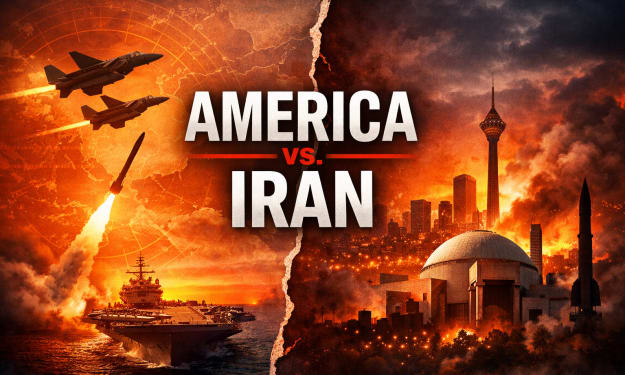
Why America Attacked Iran
“America Just Struck Iran — And the World Is Holding Its Breath” The United States and Israel are now engaged in direct military action against the Islamic Republic of Iran — a dramatic escalation that marks one of the most consequential shifts in American foreign policy in decades. The conflict, which erupted at the end of February 2026, has already reshaped geopolitics in the Middle East and sparked widespread debate over Washington’s objectives and justifications.
By Zakir Ullah3 days ago in Journal
The Empty Locker
I didn’t know his name at first. I only knew the silence. It was a Tuesday in October. The high school hallway buzzed with its usual chaos—backpacks slamming, laughter echoing, sneakers squeaking on linoleum. But one locker stayed shut. No one leaned against it. No one dropped off homework. Just a quiet space where a boy should have been.
By KAMRAN AHMAD4 days ago in Journal
The Suitcase in the Hallway
I didn’t pack lightly. The suitcase sat by the door for three days—half-full, then overflowing, then emptied again. I kept adding things I thought I’d need: my favorite coffee mug, the photo from last summer, the sweater that still smelled like home. Then I’d take them out, convinced they were too heavy, too sentimental, too much.
By KAMRAN AHMAD4 days ago in Journal