
When Alcohol Became too Comfortable
Finding positives in addiction

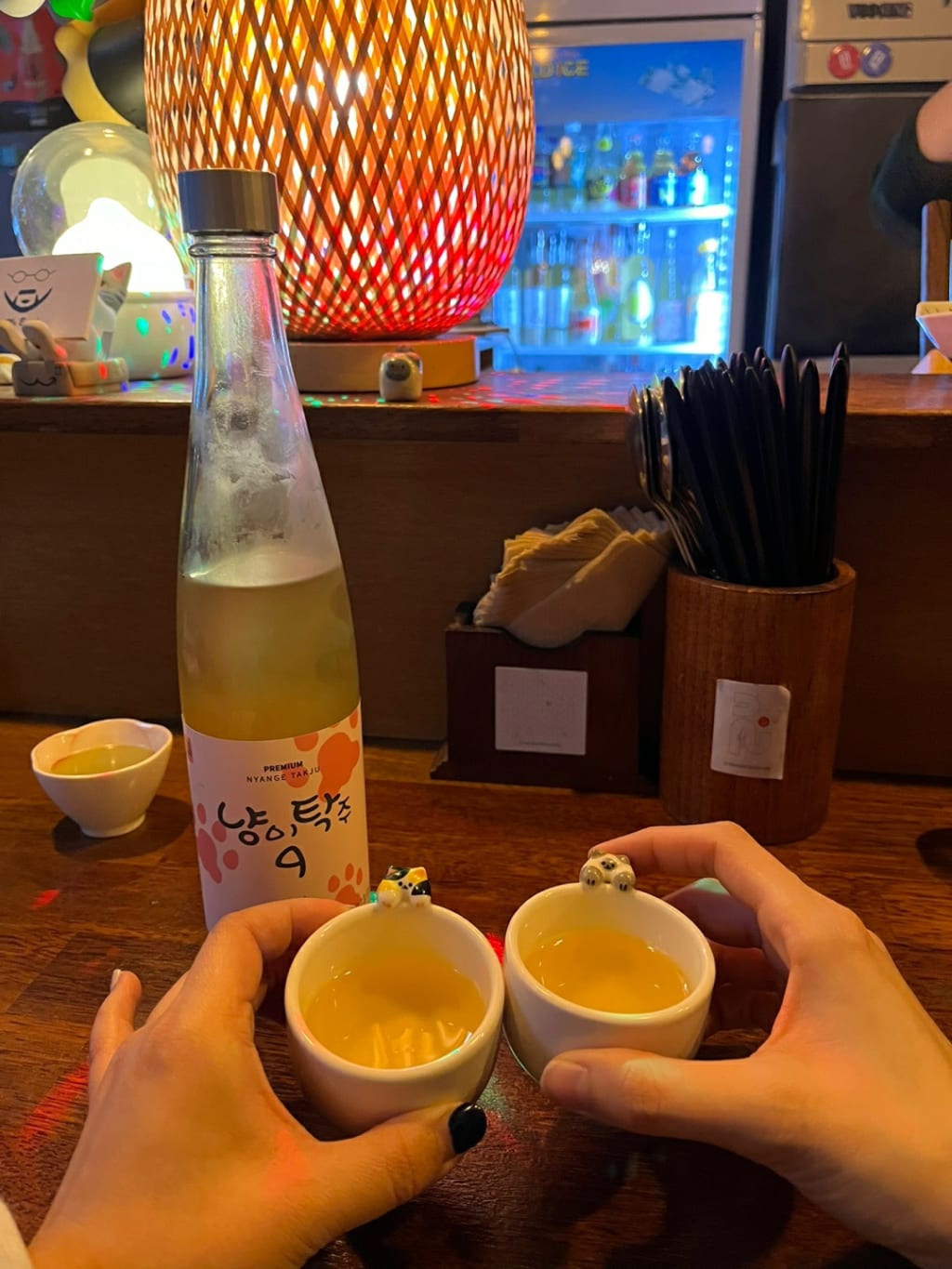
After a turbulent childhood of neglect and dysfunction, I entered my teens desperate to connect with my peers and find a way to numb painful memories.
In tenth grade, I made friends with a senior from my Drama Club who introduced me to Smirnoff Ice, Fireball Whiskey, and Bud Light. I spent my weeks running Track and Field and my weekends blacking out in the basement of this senior’s house. I was praised for both my athletic prowess and my ability to hold my liquor, so I ignored the constant stomach pains.
By senior year, I became more confident. I was stealing my alcoholic mother’s beer to share with my friends, and I was known amongst my high school peers to ‘not give a fuck’ about blacking out. In the awkward haze of youth, this felt like a compliment.
By college, I was drinking nearly every day. I’d get back to my dorm after classes, and my roommate, who had a drinking problem in her own right, and I would share a few cans of Coors Light.
Weekends were dedicated only to drinking. I would drink to purposely black out, lest I spend my nights awake and sobbing into my pillow at how lonely and depressed I actually felt. Partying was a mask that inevitably slipped each time I put a plastic cup to my lips. But it was the only medicine I had to stop my constant anxiety and despair.
If you asked me at the time if I thought myself an alcoholic, I would have said, “What? Of course not!” I was functioning after all. I went to all my classes, got decent grades, and worked at several part-time jobs. An alcoholic couldn’t do all of that, right?
Besides, I was happy when I was drunk. I felt loved by my friends as they took care of me and continued to pass me bottles. And this newfound companionship was really what I had been craving.
I spent my early childhood and teenage years desperately attempting to earn my mother’s love. She has a personality disorder that falls on the Narcissism spectrum. She was incredibly immature and repeatedly chose alcohol and men over her children. I was a hurt child who was looking for anything to take away that pain.
My mother haunted my every waking thought. I’d be sitting in class, listening to my teachers, and flashes of her cruel words would nestle in to take my full attention. I’d be running on the track for practice, and I’d see her running off with another strange man behind my eyes.
Because I couldn’t focus long without experiencing flashbacks or intrusive thoughts, I figured I must be a stupid person who was simply bad at studying.
Because my mother constantly called me selfish for not allowing her to enjoy her alcohol and man-candy in peace, I believed her. I thought my pain was something I was inflicting on myself because I was such an awful, entitled daughter.
When I was first invited to a house party in tenth grade, I felt loved and seen for the first time. My Drama Club members took care of me, allowing me to cry on their sofa as they handed me another glass bottle of Smirnoff.
Alcohol soon became a comfort, one that wasn’t easy to give up.
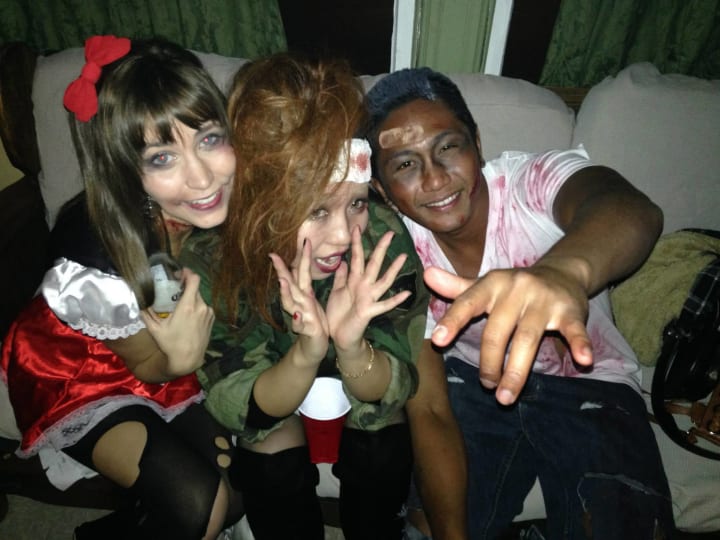
In my early twenties, I was still drinking nearly every weekend, and I found myself looking to alcohol for comfort after a bad day at work.
I thought this was normal.
Most people in my circle were also in their early twenties and drank almost as much as I did. But there was a difference in how they reacted to my partying stories. My new coworkers were shocked to discover how much I could drink, and horrified when they learned I enjoyed blacking out.
Seeking validation, I told them it was normal for college students to go hard and asked about their experiences. Sure, they drank, sometimes too much. But not one of them had ever blacked out, or at least not on purpose.
I sat with this information for some time, feeling weirdly betrayed by my new friends. I resented how easily they could stop drinking once the check came. I didn’t like how worried their eyes became when I told them stories about my past.
It was my first inclination that something wasn’t quite right about my substance abuse.
After my 25th birthday, my cousin died from an overdose. We were only a few months apart, and her death forced me into an intense emotional spiral. I felt numb, confused, angry, and most of all, petrified of facing the future she wouldn’t be living in.
After weeks of serious depression and, of course, rampant alcohol abuse, my husband suggested I try going back to therapy.
I had been in and out of therapy since I was a teen. I knew that it helped, but I was also resistant to spending the money and time it requires. Ultimately, I tried BetterHelp, which is a site with a lot of mixed reviews, but I got very lucky with it. I found my therapist, and after five years of knowing each other, I can confidently say she has made a profoundly positive impact on my life.
After a year of talking and digging deep into my childhood scars, she asked if I wanted to try group therapy, in particular, Alcoholics Anonymous.
I was offended and defensive. I wasn’t an alcoholic.
Alcoholics can’t function. They are like my mother, jumping from man to man, barely holding down jobs or apartments. They smell sour and cause a scene. They are morally weak, choosing alcohol over the people they love.
Oh, how wrong I was...
My judgmental attitude toward alcoholics is one of the most embarrassing deflections of my life. I had painted a picture of an alcoholic who was far removed from myself, so that I could keep drinking heavily without guilt. But in actuality, I was choosing alcohol over my loved ones. I chose it over anything else whenever I felt sad or lonely.
Point blank, I was an alcoholic.
I attended online A.A meetings for a few months on top of my regular CBT therapy sessions, and they made a huge difference. Being able to humanize the other people struggling with addiction helped me humanize myself and come to terms with the reasons underneath the need to find comfort in a bottle.
Over time, and with the help of my husband who rarely drinks, I was able to stop my excessive alcohol use.
Going no contact with my mother also played a huge factor. Without fearing her immature guilt-tripping over the phone, I found that my itch to find comfort seemed to dissipate.
Now, when I am feeling pains of despair, I self-isolate. It’s not great. I curl into a ball on my bed and become very still. My mind goes numb until I eventually cry myself to sleep. In those moments, I wish I were partying. I wish I had a bottle in my hand to suck on like a pacifier. But I try not to. Our fridge remains empty. I know those feelings come and go, and with time, hopefully, they will come less often.
It’s perhaps an odd thing to say, but I am grateful for the journey my alcoholism took me on.
My friends in school and college may have been enablers, but they made me feel loved in a way that I never received at home.
When the pain was so unbearable that I wanted to disappear from this world, alcohol was like a magic potion that took me away for a few hours.
It soothed me long before I had the therapeutic means to do so.
I am deeply thankful for the path that led me to A.A. and meeting my therapist, without whom I don’t think I would be the functional adult I was pretending to be in my early twenties.
I will never be able to go back in time to relive my teen years, but if I could, I don’t know if I would stop teenage Kera from going to that senior’s party. Perhaps I’d rather be her designated driver, getting her home safely after her hard journey through alcoholism.
About the Creator
Keep reading
More stories from Kera Hollow and writers in Psyche and other communities.
Top tipple tricks
Been thinking a lot about drinking, lately. Not least because of a recent episode of over-indulgence and the inevitable after effects. Some readers may recall the earlier articles I wrote about beating the booze. Here I set out an experiment in techniques for cutting down on my alcohol intake. The experiment was successful, the techniques worked, and I have armed myself with an arsenal of weapons in the war against the demon drink. I have yet to fire the first round however. It's all a question of timing (perhaps procrastination).
By Raymond G. Taylor3 days ago in Psyche
A System That Isn’t Working Challenge Winners
Systems promise order. They organize behavior, distribute opportunity, and suggest that if everyone follows the rules, things will work. The entries in A System That Isn’t Working look closely at what happens when that promise begins to slip.
By Vocal Curation Teamabout 10 hours ago in Resources




Comments
There are no comments for this story
Be the first to respond and start the conversation.